
Teaching AI to Think Like a Small Business Underwriter with Ilya Fridman, CEO of Byzfunder
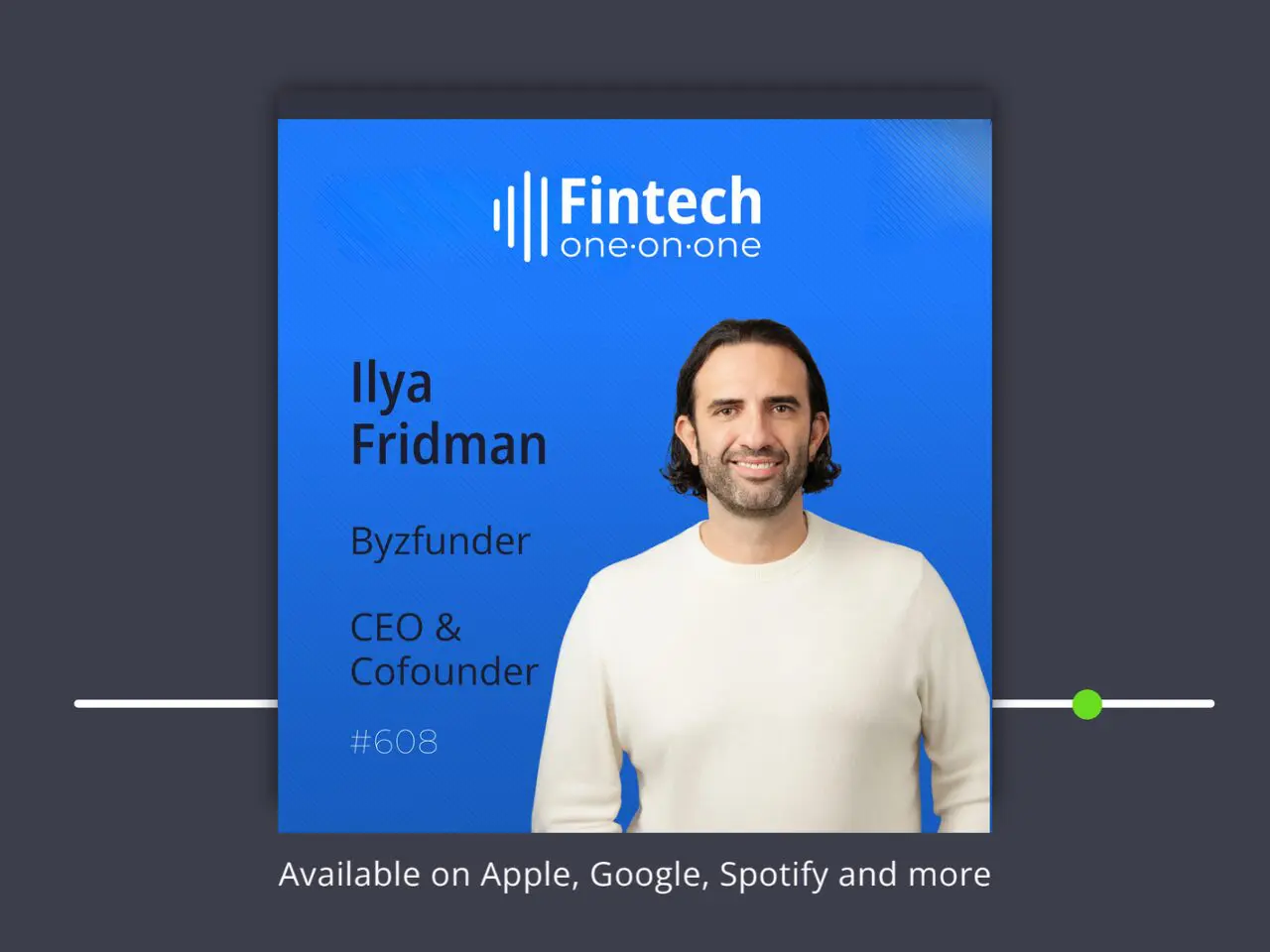
Ilya Fridman is the founder and CEO of Byzfunder, a small business lender that started originating just as COVID hit in 2020 and is on track to fund more than $700 million this year with only 100 employees. In September Byzfunder launched TraceDataIQ, an AI underwriting platform that layers multiple large language models on top of bank, tax, background and public records data. We talk about how it was built, what it has done to performance and staffing, and why Ilya thinks AI will create a new wave of small business owners.
What We Covered
- From Morgan Stanley to mortgages to merchant cash advance
- Building one of the top independent sales offices in the country
- Why COVID was a blessing in disguise for a brand new lender
- Term loans, MCAs and a fast-growing revolving credit line
- The 60,000 small businesses Byzfunder sees every month
- Why off-the-shelf bank statement parsers fall short for small business lending
- Writing down every rule a human underwriter follows
- Running nine language models across the underwriting process
- Funding with just a Plaid link in under an hour
- How the human underwriter’s job went from 10 minutes to two
- Byzfunder’s first ABS deal and becoming more institutional
- Pricing transparency in revenue-based finance
- Why AI will produce more entrepreneurs
Key Takeaways
- Better data lets you lend deeper, not just safer. Byzfunder is not using AI to push its default rate down. It holds charge-off targets steady and uses more predictive models to approve more businesses at the same cost, with early 90-day-plus performance running about 250 basis points better than baseline.
- AI underwriting is mostly codified human judgment. The team wrote down every rule a human underwriter applies, from reading bank statements to spotting a mismatched name on a tax return, then trained a stack of roughly nine language models from different providers to apply them.
- Humans stay in the loop, but their job changes. Underwriters now get an instant summary of every risk flag instead of digging through 300-page background reports, cutting review time from about 10 minutes to two. Human oversight remains above a certain dollar amount because hallucinations still happen.
- Operating leverage is the real prize. Headcount is up around 15% year over year while originations are up 75% and units more than 150%, so Byzfunder can onboard more partners without sacrificing speed or service.
About Ilya Fridman
Ilya Fridman is the founder and CEO of Byzfunder. He began his career as an investment banker at Morgan Stanley before moving into residential mortgages, then built a merchant cash advance independent sales office that he sold to BFS Capital in 2014. He ran revenue at BFS Capital for about three and a half years before launching Byzfunder.
Cleaned Transcript
Ilya (00:10):
But what does a human underwriter really do? They parse the information that they see, right? So all the facets that a human underwriter will go and go through the bank statements, assess this, read this, look at the CLEAR background reports. All they’re doing is parsing the data in a formulated way. So then I challenged myself, I said, can we and the team sit down and write every single rule, right? And train the models on every single rule that we have that a human underwriter does. And we did it.
Peter:
This is the Fintech One-on-One Podcast, the show for fintech enthusiasts looking to better understand the leaders shaping fintech and banking today. My name is Peter Renton, and since 2013 I’ve been conducting in-depth interviews with fintech founders and banking executives. My guest today is Ilya Fridman, the founder and CEO of Byzfunder, a small business lender that he launched in 2020 just before COVID hit.
In our conversation, we talk about why the pandemic turned out to be a blessing in disguise for Byzfunder, the products they offer today, and the 60,000 small businesses it sees every month. We go deep on TraceDataIQ, the AI underwriting platform they just launched, and how it combines disparate data sources with multiple large language models, and how it has changed the role of the human underwriter. We also discuss their first ABS deal, his take on pricing transparency and revenue-based finance, and why he believes AI will create a new wave of entrepreneurs. Now let’s get on with the show.
Peter (02:02):
Welcome to the podcast, Ilya.
Ilya:
Hey Peter, how are you?
Peter:
I’m great. Good to have you. So let’s kick it off by giving the listeners a little bit of background about yourself. So tell us a little bit about your career to date before Byzfunder.
Ilya (02:17):
Before Byzfunder, I started my life as an investment banker at Morgan Stanley many moons ago. Early on I realized that I wasn’t made for corporate America. The structure just didn’t work for me. I like to get my ideas out there quickly and have an impact right away. And I wasn’t feeling that. So after a couple of years, I actually moved over to the mortgage business, which was nothing like what I was doing. A friend of my father’s owned a mortgage company. He’s like, do you want to do this? I’m like, pretty simple product. And fast forward two years, I’m 24 years old, we have 75 salespeople on the floor, and we’re selling half a billion dollars a year in residential mortgages.
Peter:
Wow.
Ilya:
Yeah, it was a quick run, but I remember telling my partner in late ’06, early ’07, I go, this run’s gonna end. We gotta figure out what are we gonna do next. And there was a little rumor about a small business product called merchant cash advance. And coming from the mortgage world, where we’re, you know, five percent rates, this is, you know, absurd. It’s a hundred percent APRs, and what is this? I’m thinking this is some sort of scam, it doesn’t make any sense. But as we dove into it a little bit more, we realized it’s a real business, there’s opportunity.
The thesis from, you know, late ’06, early ’07, which is now twenty years later, transcends today. The same concepts that were hurting small businesses, you know, are hurting them today. So it was a much smaller business. And we started off as an ISO, an independent sales office, selling product for other lenders. We grew that pretty quickly. By the time we actually exited that business in late 2014, sold it to a company called BFS Capital, we were probably, you know, top three independent sales offices in the country, a couple hundred reps on the phone. And it was a fun, fun experience. Looking back, it taught me a lot about the space. It taught me the ins and outs of what customers need. And what it really did is, you know, later on, fast forward years later when we started Byzfunder, I understood who our partners were. I knew their needs and I understood what we’d have to do if we built our own platform.
That background was critical for me to understand who really our customer was. We always have two end customers. We have the customer that provides us, partners and different platforms that provide us files daily. But at the same time, we have our end user, who’s the customer itself. And the combination of what I learned by running that independent sales office, called Entrust back in the day, was how to service our main customer also, who’s the partner. And that experience transcended into Byzfunder, which I think gave us an edge later on.
Peter (05:19):
So then what was the catalyst there? What was the seed that really made you decide you wanted to, you know, start Byzfunder?
Ilya:
I ran revenue for BFS Capital, who acquired the independent sales office, for about three and a half years. And I saw the need. Yeah, they were around for a while at the time. And the mistakes that they were making in how the process flowed were, in my eyes, you know, simple to fix. And I saw that if I tweak the models a little bit, from the customer experience, from the partner experience, from the credit models, it would be something that no one else is really doing. And in 2019, we started putting together the original Byzfunder platform, you know, the simple credit models, what we thought it’s gonna be. And we really launched. I came over as CEO. I was finishing up some other projects at the time. Three months into it, COVID hit, which for us was a blessing in disguise. It really was. We had a tiny book. We didn’t have to restructure hundreds of clients. And our COVID year performance was incredible because we had a small book. We knew what we were doing. We shut down probably for a couple of months fully. We didn’t do anything. We didn’t understand the lay of the land. But by June of 2020, we were already accepting applications and starting to originate files.
What it gave us also is that larger players had many of their books, I would say, call it in simple words, beat up, right? And they had to, you know, it was because they had to do workouts with their lenders, with their warehouse lines, with their ABS facilities. And we didn’t have any of that. You know, we had a clean slate. So we were able to quickly grab market share because everybody was a little bit disorganized at the time from the chaos that happened. And we were able to penetrate into the market very quickly. Running revenue for BFS also gave me the ability to, I knew the larger players out there. So it was like an in right away. Just, Ilya, you’re doing your own thing? Sure, we’ll test you out. It gave me instant credibility.
Peter:
Did you do PPP loans at all?
Ilya:
We did not. We didn’t touch PPP loans. There’s nothing wrong with it. We just didn’t want to get involved.
Peter:
Right. That’s understandable, but so there was enough demand beyond PPP that you started underwriting, you started originating loans.
Ilya:
The demand was insane. If I look back at the data, I think we ran a three percent charge-off rate in 2020. We cherry picked anything we wanted, you know, and we were conservative on our terms and our pricing. So we were able to really pick the best out there, probably paper that we shouldn’t have been winning at the time. We did. And that gave us the foundation. And it immediately gave us credibility with our partners because we were out there and getting it done for them. And that was our start. And we grew from there. I think in 2020 we originated 20 million dollars. And that, you know, seemed like a lot at the time because we were just starting out. We were self-funding. We brought institutional capital on pretty quickly, I think within nine months of really starting to originate. And I think our background, mine, helped a little bit also, and we were able to get a warehouse pretty quickly, and that really kind of took us to the races from there.
Peter:
So then take us through to today. Maybe you could tell us a little bit about what you’re offering today, what type of loans, what type of businesses. Tell us the lay of the land with Byzfunder today.
Ilya:
Currently, today we have three main products. One is your term loan product, one is your merchant cash advance product, and we also have a revolving credit line facility that allows businesses to borrow, draw, borrow, draw, and it really helps out the ones that are in need, when timing’s more of an issue, they need it for shorter periods of time, it reduces their costs. And that’s really taken off in the last year for us. It’s a big chunk of our volume now, definitely from a unit perspective. So the standard term loan is what you think it is. We do it in seven various states in the US. The MCA product is in the rest of them. Both close and underwrite pretty quickly. Our models price them pretty closely together. But that’s our standard offering today, and that’s just the beginning. We’re working on a bunch of other stuff that’s coming out in the near future.
Peter:
And what’s the typical small business that comes and gets a loan or an MCA?
Ilya:
So we see sixty thousand small businesses a month. And our average transaction is fifty thousand. And it’s going to be spread between your construction companies, your manufacturing, your healthcare providers, retail. And then after that, there’s, you know, the plethora of three hundred other NAICS codes that flow right through. And from a state concentration, as you can imagine, it’s the population centers of the country, you know. More than probably 35% of the book is your standard Florida, Texas, and California. And after that, it dribbles out.
To us, it’s always about performance. It’s customer service and performance. And we pride ourselves on the performance. And I spend many hours through the nights analyzing it. And the technology that exists today gives us the ability to analyze a portfolio in ways that we could only dream of. Because I’m the type of person that it’s question after question after question. And those questions were always, you know, theoretical. Like, can this be proven? Yes, maybe directionally it’s right. There’s no more directionally right ideas. In today’s world, any type of question that I can think of, we have it connected to our MCP. Either Astra is answering that question for me, or Fable is, or someone’s answering that question for me in many different derivatives. It’s called up to questions I want it to be. And that has really, I think, in the last year, given us the ability to double our originations. We see it happening live. And the technology we’ve embedded in the last year and change is revolutionizing our business. We’re growing, like, we’ll be up year over year probably 75%.
Peter:
Okay, well let’s dig into some of that. So I wanna first talk about TraceDataIQ, which you launched just last month, or was announced last month. So tell us what that is and how it’s different to what you were doing before.
Ilya:
So the most important thing to feed your models is data, right? And bad data gives bad results. And that’s the truth. And I’m not going to mention who they are, but the competitive landscape out there that does, you know, bank transactional parsing is built for many different businesses. That’s the issue. It’s not built specifically for small business lending. They built it for mortgage, they built it for accounting, they built it for various things. And the nuances that are specific to this industry are enormous. So it’s directionally right 76% of the time. That’s great, but I’m not in the 76% business, right? So the error rate was huge. And your models can only price as well as the data being fed in.
So I would say probably about a year ago, for years we talked about it, can we build our own parser? And it was hard. It was a lot of work. The competitors spent years building that technology. But I would say late ’25, I think ChatGPT’s model at the time showed us that the OpenAI model that was out there was able to start parsing bank statements, and the accuracy was almost on par with what we have today. TraceDataIQ started off as a bank parser. But what does a human underwriter really do? They parse the information that they see, right? So all the facets that a human underwriter will go and go through the bank statements, assess this, read this, look at the CLEAR background reports. All they’re doing is parsing the data in a formulated way. So then I challenged myself. I said, can we and the team sit down and write every single rule, right? And train the models on every single rule that we have that a human underwriter does. And we did it.
And it took an entire team to build it, and there were many, many iterations and months of working on it. But as the LLM models got better, the nuance that was kind of left even as early as six to nine months ago was now catchable. And the ability to add multiple LLMs into the mix, if it doesn’t go through Gemini’s model, it goes through Anthropic’s models, and different levels. And so in every single part of the process, there’s probably nine different language models sitting in there doing different parts of it. One is better than the other. And it took us time. We tested tens of thousands of files through it. We had human testers sitting there verifying. It was a complex project, and it’s training every day. Every day we’re watching it and training it, tweaking it, and making it better.
What it can do today gave us the ability to grow. It really did. Otherwise we couldn’t staff as quickly. Processing 60,000 files a month while keeping our charge-off rates the same is the challenge, right? It’s easier to grow, and as you grow, you scale, your write-offs will go up. That’s not the case with us. That was the challenge I gave to the team and I’m pretty happy with the results. And it does so much more, you couldn’t imagine. It analyzes tax returns for you. It analyzes accounts receivables, you know, ARs. If someone sends us in a tax return and the name doesn’t match the name on the person’s application, it flags it. There’s so many, like, I’m giving just the simplistic stuff that it does, but it goes so much deeper. And then think of it this way. As you start feeding the data into your bank transactional models, right? The nuances in the actual data itself, and how it’s parsed and how it’s put together, it changes the game.
Peter (16:05):
So then is this system, the TraceDataIQ system that you’ve built, is it just for bank transaction data, or are you also pulling in, you mentioned tax returns, public records, like, so it’s any kind of document, right? Where does it get the documents from? Because I mean, one of the big things about small business lending is obviously small business owners are busy, and it requires a lot of documentation to process a small business loan. So…
Ilya:
Yeah.
Peter (16:35):
Maybe take us through, when someone fills out an application, what are you doing?
Ilya:
So the first thing, think of it this way. Business owners are busy. They don’t have the time to sit there, you know, gather the documents together. Up to three hundred thousand dollars, roughly, we ask for almost nothing. They have to connect a Plaid link. That’s it. They do it on their phone and it connects. After that, it’s up to us to provide the service for them to be able to get the capital quickly. And if they do it in a timely manner, they’ll have their money within the hour. That’s how fast this works.
And then it’s our job to go out there. Some of the stuff, we obviously use third-party vendors to pull in the different information sources. Some of it is public source. But if you have the ability to quickly aggregate it all together and instantly decision it based on that, and we can decision a file in under a minute. From the parsing to all the background checks to all the court searches to all the business searches to everything else, it gets done within an hour. And we still have human oversight. We do. Because at the end of the day, you want to have a set of eyes. There are, you know, we like to say it, there are LLM hallucinations on a daily basis. We see it. Because, you know, if it doesn’t have the answer, it suggests an answer for you, which might be wrong. So there’s human oversight at a certain dollar amount. There’s someone overlooking it.
But that’s only going to get better with time. As the language models come out and there’s newer versions, it’s making less and less errors, and there’s tons of different stop gaps that we set up, so if one catches the other, it checks its research. I think the entire lending world is going to change dramatically in the next twelve months, even more. In a good way.
Peter (18:26):
As you say, there’s less humans involved, you can process more applications, and that should lead to better pricing. So I saw the press release that was in mid-September. It sounds like this has been in development for, you know, at least all of this year. It’s all well and good to have a really efficient system to underwrite a loan, but the proof comes in the charge-offs. So what have you noticed on, not just charge-offs, but delinquencies, late payments, since you started using this more sophisticated system?
Ilya:
It’s still early, but anything that’s ninety days or above, we can start tracking a little bit directionally, and we’re seeing it performing roughly 250 basis points better than expected for the same population off the baseline. So we’re seeing the results right away. Our concept is not to sit there and run the business at a lower default rate. That is not our mission statement. What it does is it allows me to buy more, to buy deeper into the market. Have the same charge-off policy that we had in the past, the same metrics, but buy deeper into the market and give more businesses in need additional capital at the same cost we did in the past. We’ve had so many success stories and, you know, many customers through the years renew, come again, borrow when they need it, write us an email saying thank you so much for letting me buy my fifth Subway, or whatever the story was. But that to me is the biggest win here. As our models become more predictive, right, we can buy a larger piece of the market share.
Peter (20:04):
So I wanna go back to something you said earlier. You said, like, obviously this is all running in an automated fashion, but there is still a human underwriter checking everything. Tell us a little bit about the role of the human underwriter and how that’s changed from what they were doing twelve months ago.
Ilya:
Twelve months ago, they would have to, you know, they had all the data, in a sense, parsed for them and formulated in our system. But today, it’s interactive. It gives them a summary immediately of every data point that is at risk. In the past, they’d have to do their individual research, sometimes open up some tabs to get, you know, additional information, dig a little deeper. Their time to get that information at one click, instead of sitting there and sifting through the data itself, allows them to process that same application, instead of spending 10 minutes on one, they could do it in two minutes. It’s a cursory review before it’s sent to funding. That time period has given us the ability to process so many more files. That’s the big piece.
If someone goes and does a CLEAR background report, it comes with 300 pages, and they’d have, you know, there was tech set up there before to parse it a little for them, but now the models are trained to look at specific nuances depending on the industry, depending on the situation, depending where they are in the country. All that’s trained into the models today to give them specifically what they need to look at and put out the red flags immediately. It’ll tell us if there ever was any poor payment history in the bank statements. In the past, they’d have to go look at it. And the regular bank OCRs, they don’t understand what poor payment history even means. Because it means one thing for one lender and something else for another. And all those rules have to be coded in and learned and trained. And there’s hundreds of different competitors out there that process files differently, that have different payment schedules, that have different lines of credit or payment structures. All of that was not out there. And today it is.
It sounds very simple, but if you could imagine that, you know, OnDeck might have a line of credit, might have a monthly payment, looking at the draws at the same time, Intuit could have, you know, a bi-weekly payment. There’s so much nuance in the data that comes in. And if there were any issues in the past that would cause charge-offs to go up, it was hard to notice at all because this is a quick process. The customer wants the money immediately. The partner wants the deal funded immediately. So at the same time, we have to do this very quickly. So at some point you sacrifice speed. Today, speed is no longer a sacrifice.
Peter:
Okay, so you mentioned earlier growing very fast. The small business lending space, as you’re well aware, is extremely competitive. There’s a lot of fintech lenders out there doing good work. Where is your demand coming from, and how are you winning more deals than you were this time last year?
Ilya:
I think there’s a couple of different reasons why. One of the pieces, as I said, because our data is more accurate, right? We can price more accurately, we’ve been able to buy deeper into the market, yet retain the same charge-off rates, which we couldn’t do in the past. We only have a hundred employees here. That’s it. And with that number, we’re gonna originate over 700 million this year. When some of our competitors probably have, you know, two, three times that FTE count. But what the tech has given us is the ability to buy deeper, onboard more partners, because we couldn’t onboard more partners and still provide the same level of service we had. We’re very big on the customer service approach. So to hire someone, to train them, to figure it out, there’s a lead time for it. It doesn’t happen overnight. And what the tech gave us is we were able to continue to grow, but only increase our FTEs by maybe 15% year over year, yet grow originations by 75%. Our unit count is up over 150%. That’s what it’s given us the ability to do. And we couldn’t do it in the past. And I think that’s our main reason for the growth recently. And to me it’s always been, like, the most important thing is that the market wants to have your product. If it’s a necessity, right, and not a commodity, then it changes the game. And we feel that as the Byzfunder stack keeps growing, we become more of a necessity than a commodity.
Peter:
So I do wanna touch on your first ABS transaction. That was a hundred and seventy million dollar deal in June. It was rated by KBRA. Tell us a little bit about what you learned from that experience and what’s your capital markets approach going forward?
Ilya:
It was a Herculean effort, I’m gonna use that word. But what it did, it’s part of growing up. Yeah, that’s a simple way of saying it, that it forced us. We’ve always been, you know, buttoned up. We’ve always run this in a pretty rigorous way. But what it did is it gave us the ability to make sure every single part of the process is perfect, from a regulatory perspective, from a tracking perspective, from a finance perspective. It’s just more checks and balances. That’s what it does. With your regular warehouse lines, obviously, you get audited a couple of times a year. You go through financial audits. But in ABS, there’s an audit monthly. And you have to be ready and everything has to be perfect. If not, there’s an issue. And so there’s been a lot more safety checks and processes that were developed from it that, you know, just helped us across the entire company itself, and obviously lowered our cost of capital. But beyond that, what it really did was it made us more institutional as a company from a processes perspective.
Our view going forward is we’re gonna continue. I think we have an accordion of up to half a billion bucks on it. And as our portfolio grows, we’ll probably be doing an add-on within the next six months. We’re gonna be adding on to it. We love the process, it was good. The teams that ran it did a phenomenal job. Very happy with it overall.
Peter:
Great. So I want to talk about, there is some criticism. There’s been some laws passed around transparency on pricing with revenue-based finance, like the merchant cash advance products specifically. I’m curious, what is your approach to pricing and transparency?
Ilya:
The more the merrier. No, why not? Just to give you an idea, we provide a funding call on 95% of our files, which means we’re gonna call the customer. We’re gonna explain the exact product. We’re gonna go over everything, any concern, their fees, their payments. We want them to know exactly what they’re doing, and answer all their questions before they take the capital. Our objective has always been making sure that we never hurt the customer, that it’s always a benefit. So if there’s no benefit to the borrower, I don’t want to lend the money. That’s the rule. Simple. You know, if they’re nervous about it, you shouldn’t do it. Like, we are the complete opposite. If someone, you know, has concerns, we’ll talk them out of doing it, because we don’t want to hurt them in any kind of way.
I think what the transparency does overall, as there’s more automated funding, so you click, click, click and you receive the capital. And if it’s not all spelled out for you, and, you know, most of our customers are busy. They don’t have time to read a 20 page contract, right? They’re not going to sit there and understand all the nuances of it. And so the more transparency, the better the businesses are going to perform, the more revenue it generates into the economy, which generates even more businesses. There’s, I think, 250,000 new businesses being created a month, which all enter the pipeline. It’s a cycle that trickles down and flows across. So I’m all for it overall.
Peter:
So looking out, I think small business lending, you just already mentioned this, it’s really being impacted by technology more than it ever has, I think, in the last year especially, from what I’ve seen. I’d love you to kind of look into your crystal ball, shall we say, and where do you think this is going? Can you kind of paint a picture for me, you know, three to five years out? Who is doing most of the lending in small business? What’s it look like? And what’s Byzfunder’s role in the industry?
Ilya:
Three to five years out is a hard thing to say, because it’s moving so quickly. That’s the issue. Like, it’s so hard.
Peter:
Yeah.
Ilya:
I’m gonna talk about the next two, because five is really, really hard. I think in the next two years, it is a gold rush. The AI age is a true gold rush for the companies that embed it into their lives every single day. And the ones that are using it will flourish. And sadly, the ones that don’t, you know, become accustomed to it pretty quickly will fall by the side. That’s gonna be the big differentiator between them. So I think it will give the ability for many smaller organizations that don’t have the capital to build out quickly. They can scale. They can scale in ways they never dreamed about, and they can do that, you know, today, where you’d have to hire 10 different people to review your legal docs. Even today, I’m gonna give you a simplistic idea. When you get a simple attorney letter or a document, the first thing everyone’s doing, or should be doing, is throwing it to, you know, OpenAI, to give you a quick summary of what it is. In the past you’d have to call the attorney, which is expensive. All these additional efficiencies reduce the barrier of entry to many different things.
So I think as we reduce the barriers of entry to many different facets of various businesses, and the information that you could attain today if you want to expand whatever you’re doing, right? The knowledge you can get instantly makes you a multiplier. I think overall, today SB lending is 40% of our business. But in the last five years, there’s been more businesses created than the previous 15. So all those are maturing right now, and the wave is getting even bigger. I think what AI will do for small business lending in the US is produce more entrepreneurs. It really will. I think as we see the white collar jobs in corporate America start decreasing, and that will happen. That’s not an if. That will happen. I think many of those people will become entrepreneurs and enter the space and figure out for themselves how to do something.
Peter:
Totally agree. There’s never been a better time to be an entrepreneur. And I think there’s only going to be more of them.
Ilya:
I totally agree.
Peter:
Well anyway, Ilya, it was great to meet you. Great to chat and learn more about Byzfunder. And thanks for coming on the show, and best of luck.
Ilya:
Thank you. Thanks, Peter. Appreciate it.
Peter (31:31):
Anyone who has listened to this show for a while will know I’m a big fan of small business, and I believe small business lending is one of the most interesting areas of fintech today. I wrote an article about a year ago that asked the question, is small business lending about to take a quantum leap? And I think Ilya provided the answer in this interview. Byzfunder is using better predictive power that comes from their TraceDataIQ technology to lend deeper into the market, while keeping the same charge-off levels. They can understand the borrower better while at the same time processing the applications much faster. Better data and quicker underwriting decisions mean saying yes to more good businesses. Sounds like the makings of a quantum leap to me. Anyway, that’s it for today’s show. If you enjoy these episodes, please go ahead and subscribe, tell a friend, or leave a review. And thanks so much for listening.


