
Non-Dilutive Capital for AI and SaaS Companies with Denada Ramnishta of Efficient Capital Labs
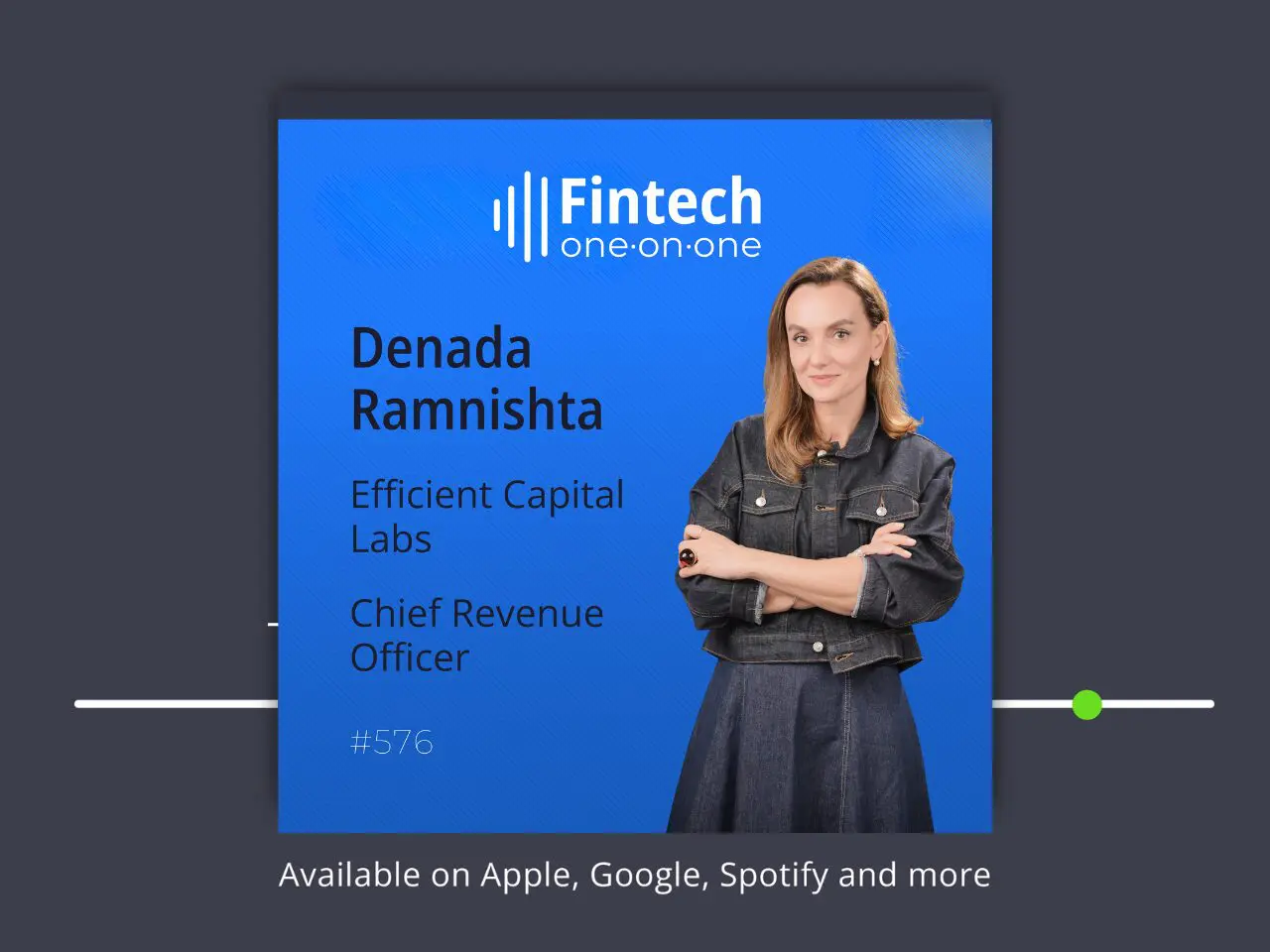
My guest today is Denada Ramnishta, the Chief Revenue Officer at Efficient Capital Labs. I’ve known Denada for over a decade, having first met her during her time at American Express where she was part of the early team building out merchant financing. She’s been a consistent champion for democratizing capital access for small and medium-sized businesses, and now she’s doing that at ECL, which provides non-dilutive funding and cross-border payment infrastructure for AI and SaaS companies.
In this episode, we dig into how ECL approaches revenue-based financing differently from others in the space, their AI-driven underwriting system called Aura, the fascinating origin story behind their cross-border payments product ECL Flow, why VCs are actually their top referral source, and how they’re adapting their underwriting as SaaS pricing models shift from recurring revenue to usage-based models. We also discuss the so-called SaaS apocalypse and what Denada is actually seeing on the ground from the founders she works with every day.
In this podcast you will learn:
- Her journey from American Express to Efficient Capital Labs.
- What her time at Amex taught her about building responsible lending products.
- What ECL does exactly.
- What has been learned from the high profile stumbles in revenue based financing.
- How debt funding has been misunderstood by founders.
- Why VCs are the number one deal source for ECL.
- Their underwriting system called Aura and why it is unique.
- How Aura has allowed them to evolve their underwriting process.
- Why they decided to expand to underwriting companies that operate cross border.
- Why they created ECL Flow and expand into cross border money movement.
- Where they will be expanding this new infrastructure.
- Denada’s thoughts on the SaaS apocalypse.
- As pricing models change for SaaS, how they are adapting their underwriting models.
- How they are able to grow fast with very low charge off rates.
- What is next for ECL.
Read a transcription of our conversation below.
FINTECH ONE-ON-ONE PODCAST NO. 576: Denada Ramnishta
Denada Ramnishta
How a company should think about debt versus equity, each has its place. Debt cannot replace the value, the input, the synergy, the acceleration that equity can. And at the same time, equity cannot be as nimble, cannot be as cost effective, right, as debt can be depending on the use case. So it’s very much use case based. And if I were to say one sentence, I would say, a founder has to really think about equity funding a vision and debt funding the execution.
Peter Renton
This is the Fintech 101 podcast, the show for Fintech enthusiasts looking to better understand the leaders shaping Fintech and banking today. My name is Peter Renton and since 2013, I’ve been conducting in-depth interviews with Fintech founders and banking executives.
My guest today is Denada Ramnishta, the Chief Revenue Officer at Efficient Capital Labs. I’ve known Denada for over a decade and had her on the show before. We first met back in her days at American Express, which we touch on in this interview. She’s been a consistent advocate for democratizing capital for small and medium sized businesses. And now she’s doing that at ECL, which provides non-dilutive funding and cross-border payment infrastructure for AI and SaaS companies.
In this episode, we dig into how ECL approaches revenue-based financing differently from others in the space, their AI-driven underwriting system called Aura, the fascinating origin story behind the cross-border payments product ECL Flow, why VCs are actually their top referral source, and how they’re adapting their underwriting as SaaS pricing models shift from reccurring revenue to usage-based models. We also discuss the so-called SaaS apocalypse and what Denada is actually seeing on the ground from the founders she works with every day. Now let’s get on with the show.
Welcome back to the podcast, Denada.
DR: Well, it’s great to be here with you, Peter.
PR: Great to be with you as well. Looking at my notes, the last time we had you on, you’re on with Brock Blake, our good friend at Lendio. And that was, that was almost four years ago now. So it’s been a little while. Why don’t you just give an update to the audience about some of the things you’ve been doing since then, and maybe just cover a little bit of your background as well.
DR: Yeah, four years. Where did it go? Indeed. I do very well recall that podcast with Brock. Good old times indeed. But here I am, the theme remains consistent as stark advocate, democratizing capital through and through. So that theme remains with me in supporting founders, supporting small and mid-sized businesses in that journey. So you know me from way back when, right? In working to figure out how can technology help support this segment that obviously continuously has been overlooked over time? And we’ve made great strides, but we still have a long way to go.
So since American Express and the Lendio days, I have been spending time working in helping support SaaS businesses to grow. Initially at a family office working as an operator internally with incubated companies. And now excited to share, I’ve joined Efficient Capital Labs, quote unquote, my old crew, friends with whom I’ve worked with before in continuing the journey to support AI and SaaS founders in their opportunity to grow their businesses efficiently and also preserve equity.
So here I am at Efficient Capital Labs. It’s now been almost a year and a half. Time indeed flies by. And it’s been great working here and building a team and really working with this great group of people, which is AI and SaaS founders hungry to change the world.
PR: Okay, well we’re going to get into ECL in a little bit, but before we do that, I want to go back to your days at American Express. That’s when we met, I think it was about a decade ago now, and you were part of the building of the merchant financing at American Express from the very early days. Love to kind of get a sense of what that process taught you about building lending products responsibly.
DR: Yeah, actually Peter, believe it or not, it has been almost 14 years. So quite a long time. And it’s interesting. The core thing that comes to mind of what did that process teach me is the complexity to solve for this group, right? Which is the small and mid-size businesses, the complexity to solve for it and the ability to extend capital in a cost effective but also efficient way, right? Because one core need of small businesses that oftentimes, especially working capital, needs to be accessed relatively quickly. So even for those that maybe a bank relationship is available on the lending side, the timing at which banks respond doesn’t really meet the business needs.
So for me, it was really the big lesson of this is a complex space that definitely deserves attention because that is the backbone of what keeps the economies going, but it is utterly complex. And also the behavior of SMB is quite different from the small to the mid. As a lender in the case of American Express, we had to adjust to that, right? The other thing that’s important is market dynamics. So it isn’t a one and done, it’s always evolving and shifting. So market dynamics greatly affect how small and mid-sized business not only performs, but also how it behaves. So those are core lessons that I’ve taken with me, not just here at ECL, in between as well throughout my career.
PR: Let’s start talking about ECL. first, just for the audience, can you give us a little bit of a description? What do you guys do exactly?
DR: Yes, yes. We are a financial infrastructure provider that supports SaaS and AI companies in their journey to growth. What does that actually mean in simple terms? We are providing the operating system to enable these companies to thrive currently in two ways and continuing to expand over time. Those two ways today are in the AI and SaaS companies’ ability to receive non-dilutive funding to fund their growth. That’s one.
And two, cross-border companies with the vast need to move money across borders. That’s always a hindering process. So that’s another major initiative we recently launched here at Efficient Capital with ECL Flow, where we enable companies to move money cross-border in an efficient way.
Again, we continue to grow and look at other ways that we can support our founders, but right now those are the two core value propositions offered in our plot.
PR: Right. So revenue-based financing, it’s been hot for a little while, but it’s also had some stumbles. I won’t name names, but there’s some pretty high-profile stumbles in the revenue-based financing space. How does ECL approach revenue-based financing differently? And what have those cautionary tales taught the industry, do you think?
DR: Yeah, we’ve paid attention. First and foremost, we’ve paid attention to all of those lessons, right, that the market has shown us. But fundamentally, when efficient capital was formed, it was formed with the idea in mind that we have to fundamentally balance the fin and the tech. So the financial side is paramount as we look at obviously technology being an enabler of the process. So what stands true to our DNA is this idea that we move fast prudently, but we never waiver on our fundamental beliefs around how we look at the risk profile of the companies that we fund and also looking at market factors in that equation.
So, the sum of it all and we’ll get deeper in our conversation of other core differentiators around our technology that helps us underwrite and what the proprietary systems that we’ve built there. But the fundamental difference in approach to ECL from other players is that we’ve balanced well the fin and the tech.
PR: Non dilutive capital, is what you’re talking about here. It’s often misunderstood, I think, by some of the founders and the lending companies. And how do you explain to a founder when debt financing makes sense versus going back to equity investors?
DR: Yeah, I mean, I think you’re being generous when you say misunderstood, to be honest. So yes, in some cases misunderstood, but in other times there’s people who totally shy away from the concept, right? I mean, in the last decade, we’ve had such a hyper emphasis on equity financing, right? Nobody goes and talks about we raised debt with this provider, right? Everybody blasts out an equity raise. So it’s more than that.
It’s actually interesting how for business debt is shunned upon, if you will. It’s seen as sort of, in some ways, even a weakness, especially when you think about cross-border cultural dynamics at play. So it’s more than just misunderstood, right? But I think the tides are shifting. I think companies are looking at debt differently, especially in the last few years as the VC focus has also shifted and concentrated very heavily, right? But ultimately the line that I would say in how a company should think about debt versus equity, each has its place. Debt cannot replace the value, the input, the synergy, the acceleration that equity can. And at the same time, equity cannot be as nimble, cannot be as cost effective, as debt can be depending on the use case. So it’s very much use case based. And if I were to say one sentence, I would say a founder has to really think about equity funding a vision and debt funding the execution, right? That’s the best way. It’s really use case based.
I love to bring up examples of our founders and how they’ve used our facility. Very recent, just yesterday, we’re working with a company at a time they were at 3.2 million in ARR. This is a health tech company. And instead of going for another round of equity, they made the decision to collaborate with us. They’ve had in between, I believe right under a year and a half, they’ve had six tranches with us that they’ve drawn, right? Now, their ARR is right over 5 million and they are getting ready for an equity raise, but they’ve gone from 3.2 to right over 5 by leveraging debt and injecting that in growth.
And now they’re expanding in a new vertical and changing product features, they’re injecting equity financing into the picture. But think about it, before they were at 3.2, now they get to raise at 5 plus. Now it’s equity financing for growth, right? Puts them in a completely different valuation and a very different setup and a different leverage at that negotiating table with VC investors.
PR: So I’ve read that your number one referral source is actually VC firms themselves, which may seem counterintuitive because obviously VCs want to provide equity. What’s driving VCs to send their portfolio companies to you guys?
DR: Yeah, I think this is a very exciting phenomena, but counter to what one may think. VCs and debt financing, non-dilutive financing, ECL specifically, we collaborate both ways, right? As a cohort, that’s our number one deal source. But equally when it’s time, like in the case of this particular company that I mentioned, we in reverse will make introductions to our partners, right? Because again, we fundamentally believe there’s a place for each.
The reason why we see this shift of VCs really becoming mindful on how they support their portcos in the journey of managing their capital stack is because they’re aligned in protecting equity. A current VC is just as interested in not getting diluted as a founder is, right? So these now are much more front and center and in alignment than previously thought, right? Previously thought, also, VCs had this mindset if we continue to support a founder to continue to raise equity. But that’s no longer the thinking. The thinking now has shifted to say, let’s create viability, optimization of the capital stack. And in that alignment, both VCs and the founders are well-attuned.
PR: So I want to talk about your underwriting systems. I think this is something that listeners would find interesting. You call it Aura, right? And A-U-R-A, and it’s your AI-driven underwriting system. What does that do that traditional underwriting can’t do? And what have three plus years of data shown you?
DR: Yeah, this is interesting. We’re so very proud of the proprietary technology that we’ve built over the years. So Aura, first and foremost, stands for agentic underwriting risk analytics, right? So we are using agentic processes to help support the underwriting. They’re all human in the loop processes. So there’s always a human overseeing the process. But what Aura is able to do is pull every single information on a business under one roof, analyze it, and actually spit out a recommendation.
So it isn’t merely a workflow improvement where AI goes and spreads the data and provides the data. It actually is the brains, right, if you will, connecting our policy with all of the data and information and synthesizing it to suggest an outcome. Now we always have human underwriters in the loop to oversee, but our technology now is yielding very much close results to that of a human, but also mitigating human error along the journey. What we’re able to do with Aura that goes further than other technologies that may be available is that we’ve developed Aura to behave and ingest data and information in assist and decisioning on cross-border data.
This is a core differentiator of Efficient Capital Labs because that is difficult to do, right? You have formatting differences from region to region and country to country, financial information, tax information that varies from region to region, yet, in the way that Aura analyzes it is agnostic to all of that, agnostic to language, agnostic to formatting, and is able to pick up all of those variabilities and provide an outcome similar to that if we were just underwriting United States data, right, as an example.
PR: Obviously it’s working with the human underwriters, right? I mean, how, what’s the interface between the human and the automated system?
DR: Yeah, we rely on Aura on multiple functions. As I said, it’s not merely a workflow improvement tool, right? So it’s not just merely spreading the information and providing it. It’s actually correlating data. It’s providing insights that may or may not be picked up by a human as an example. Again, human is the evaluator, but Aura is able to pick up signal data across the information that we pull on a particular business. So it really acts as this assistant, right? A true assistant, a true partner to our underwriters, right?
We only have senior underwriters in the team now, right? It acts as an assistant, but an assistant that isn’t merely creating or reducing the work. It’s actually thinking and pulling data along the side of the underwriter that maybe a human can miss. But the reason why we have the underwriters is that we continue to train the models, right?
We’d never rely solely on it. But over time, what this data has shown us is that if you have the cohort of the number of customers that we serve, we’re picking up signals, right? In terms of performance that aren’t your baseline and standard. Maybe data that before wasn’t part of underwriting. Now it’s becoming clear to us over, you know, having underwritten hundreds and hundreds of files, right that maybe that data is a signal. Aura has allowed us to evolve our underwriting process and make correlations that before didn’t exist not only in the space, but even when we started the journey of ECL.
PR: I want to dig into cross-border for a little bit because this really is something that’s interesting to me that few of the people in the companies in the revenue-based finance space or even few US lenders do this where they are lending cross-border and it’s difficult to underwrite. You talked about Aura being able to help you there, but why focus on this particular part of the spectrum and what’s your edge when it comes to cross-border?
DR: Yeah, we’re so excited to talk about our strong footing in the cross-border play. First and foremost, the customer we serve sees themselves as borderless. So let’s acknowledge that. What AI and SaaS founder doesn’t think across the board? They should, right? Their product isn’t bound by geography. So inherently, AI and SaaS is borderless, right?
And our thesis is we’re meeting our customer where their mindset is. If they see their opportunity borderless, so should be the extension of capital to them. Right? So if they’re doing business in multiple countries, they ought to be able to use that revenue as part of debt financing. We underwrite cross border revenue. Now, how are we able to do that? The fundamentals of ECL were based on that premise, that every single one of our customers potentially could operate cross-border.
So our entire infrastructure was built to ingest data cross-border, to read the information and also analyze it appropriately. It is a very difficult feat, right? Because everything looks different, as I said, not only from region to region, from country to country, right? Different languages, different reporting systems. But we build the company on that basis from the very beginning. So the foundation is such it’s not necessarily being stitched manually or later. So yeah, it is a challenge and it wasn’t an easy feat, but here we are. We launched as such and now Aura has been able to honestly ingest three and a half years since we’ve been in business of that cross border data across.
PR: You touched on ECL flow before and I want to dive into it now, maybe explain what it is and from what I gather it’s nothing to do with lending, it’s more of a payments product. So what’s the logic of expanding into that and did this come from a customer need or how did you kind of, why did you decide to go into this direction?
DR: Yeah, thanks for asking that actually. I love the birth of ECL flow. It’s quite a story, right? So I do recall the very first meeting we had on it. Cost of Das, our founder, had noticed on one particular customer when we were moving the, they were moving the funding, had funded their US entity and they were moving the funding from US to India, right? And because we have customer information and data, we realized that the money movement from US to India had yielded a significant fee, right?
So there’s a major reduction between what we had funded and the conversion into INR into that other bank account, which again, we have access to. And we were puzzled by it, very high cost. We asked that particular friendly customer and they said, my rate is such. And very quickly we identified that oftentimes in these money movement bank transactions, it’s not just the posted rate. There’s underlying rates that apply in that process of money movement. And then we became curious. So Kostov said, okay, we saw this, it just sort of happened by accident. Can we do this on a set of 10 customers? Let’s do this analysis.
And really quickly we realized not only was there a cost pain point, on our customer, because again, these are companies that don’t necessarily have the best leverage to negotiate with banks, right? So not only was cost an issue, but as we drilled down and engage the customers in the conversation, time to settlement was an issue. And then in this particular region, transparency around documentation and compliance was an issue.
So ECL really was genuinely identified on a one use case and as we drill down very quickly saw that this is a pretty big pain point for our customers. So that’s the journey of us building ECL Flow to make sure that we’re meeting that need that money is moving quickly under 24 hours and cost effectively and in a compliant way.
PR: Okay. So does that mean that you’re building on a more complete financial infrastructure stack? I mean, what does that look like in three to five years?
DR: So in good old ECL fashion, we are very much focused at tackling one system, one vertical, one geography at a time. We launched ECL itself, ECL Funding that way, focusing on India-US, Singapore-US cross border, and now we’ve expanded it similar to ECL Flow where step one, we’ve just launched the initiative in solving for US to India money movement, Singapore to India money movement.
But our journey is just beginning on that and we want to continue to layer the optionality for money movement across geography. So again, this is only step one, but yes, we will build infrastructure so every single founder, regardless where they need money moved or suppliers paid, they are leveraging our platform to do so.
PR: I’ve got to ask you about the SaaS apocalypse. I’d love to get your thoughts on this. I mean, it’s been a little bit overblown, I think, and many of the stocks are recovering as we speak. But there’s been a lot of narrative around the AI impact on the SaaS space. What is your perspective on this, given that you’re talking to SaaS founders all the time, and is there any impact on the demand for ECL?
DR: Yeah, indeed. The last couple of months especially have been quite noisy around the SaaS apocalypse, although it did well before then. But what do I believe? Look, fundamentally the SaaS space is changing, but that doesn’t mean that it’s getting obliterated by AI in any way. AI will be part of the equation and companies that don’t adopt, right, obviously will no longer be around, but I do feel, especially the customer we serve that, you know, series A, series B, they’re hungry for innovation. That’s why they’re in there to begin with.
They are adopting AI technology to evolve, I would say, their SaaS businesses, but SaaS is here to stay, right? Will it change? Will it shift? Of course it will. Do I think that there’s pressure on the pricing model as an example to potentially modify as a result of AI? Absolutely. So all of that is at play, but ultimately the technologies themselves will continue to be useful in the market. But again, I also do anticipate all of them to pivot and shift by adopting AI one and adjusting their pricing models and their revenue models accordingly.
PR: That pricing is a really interesting point because, I mean, when you look at how AI companies priced on usage, outcomes, some consumption, if SaaS companies start to do that, that’s a, like, SaaS has typically been, you know, a fixed fee per seat type model. And if they change to that model, I mean, what does that mean for underwriting? It seems like it would complicate things. like, so how are you adapting to that?
DR: Yeah, we’re already in the forefront of that and looking at all of the optionality of how we evolve with our customer. We have been doing it as a function of serving AI companies. So that’s been helpful to us. So we’re not just beginning because people are talking about a shift in pricing model in SaaS. We’ve been doing it since AI came into the picture and AI companies began to pop up as a customer for us.
But yeah, we are looking at cohort financing and acquisition financing. So we’re pivoting and now in parallel, training our models and thinking and shifting building scenarios in addition to the customers that we serve and the cases that we have that aren’t ARR type of businesses. So yeah, we’re changing with the customer, but we’re doing so from a solid footing of having learned and having understood the customer as it was and now keeping a pulse on as it evolves and evolving our processes accordingly.
PR: I read that you guys have been growing pretty strongly over a hundred percent year over year and you do have remarkably low write off rates is what I’ve read. So tell us a little bit about to grow fast with low charge off rates. That’s not an easy thing to do. So tell us about the discipline that you have in your underwriting and where you say no.
DR: Yeah, I think when we say no, we are unapologetic, Fundamentally, as pro founders as we are, in order to fulfill that mission to support founders, we have to be a sustainable business, right? And we remind ourselves all the time, across the organization, not just on the risk side, on the sales side as well. We remind ourselves that we do have a fiduciary responsibility to our customers to remain a sustainable, thriving business in order to continue to do and fulfill our mission.
So when we say no, we are unapologetic as in that is not our wheelhouse. That is not a risk that we’re willing to take. We are flexible, but only within the parameters and the guidelines of our policy that’s been well established and now well proven, as you mentioned with low write-off rates despite a volatile market.
Now, how are we accomplishing our growth? There’s a multi factor, right? We provide competitive rates. We provide flexible terms. And what I really, really pride ourselves in, we provide premier customer service. The way we work with our founders is hand in hand. We are an extension of their teams, most of the cases. We’re not just merely underwriting them and throwing an offer and seeing what happens. We’re really in the trenches to working with our customer for the long haul. So I think that has supported our growth because founders see the value and they continue to come back. As an example, our renewal rate is upwards of 80%. Speaks to that fundamental customer service and working closely with our customer and the value of the product and what they see.
And then the other thing is I would have to not be truthful if I didn’t mention that there is a vacuum in the space, right? We talked about this earlier. You started by saying, you know, we’ve had a few scenarios that clearly in the market haven’t played out. So there is a need in a vacuum in the space and we’re coming in, we’re coming in strong with the thesis of every company who is looking at cross-border deserves the opportunity to access capital cross-border. That’s one. Every company deserves premier customer service and a partner, not a lender, a partner in the journey to growth. And those things have enabled us to do both. One, maintain our write-off rates to what they are today at frankly, similar to banks and also grow fast, but also prudently.
PR: As you look to the rest of this year and maybe into next year, what are you focused on? What’s next for ECL?
DR: Yeah. So frankly, in terms of discipline, our discipline on always looking at what’s next has not changed, right? The core main focus remains, how do we continue to evolve with our customer and that need? And honestly, that’s a fundamental belief we have that will happen forever, right? We don’t say we’ve solved for this now and the customer will behave like this and we’re done. This is our product and that’s it. Right?
So we do have like an institutional belief that there’s always evolving to be done specifically, you know, as customers are shifting from ARR based models to a different pricing model, we’re adjusting our systems and our underwriting processes to meet that demand. Right? So that’s paramount. The other thing of what’s next is our continued geographical expansion. Right? We remain excited to fulfill that mission that regardless of geography and where a company is found or headquartered that we’re able to service them and regardless of where revenue comes from, we’re able to support them in lending.
The same for ECL Flow, as we mentioned, right now we have a focused geographic servicing, right, into that US, India, Singapore, India cross border. And our focus in the short term is to continue to expand the geographies that we make ECL Flow available. So we’re very excited. And again, our book also changes, right? Now our AI customer continues to grow, right? Before we had, by far our biggest portion of our book was SaaS companies. And now we’re seeing this growth in AI companies in our portfolio. So those are our core priorities. Again, continuing to meet the needs of that core ICP, if you will, and then geographical expansion for both products, not only the funding product, also money movement and payments.
PR: Okay, well I’ll have to leave it there, Denada. It’s always great to chat with you. Thank you so much for coming on the show today.
DR: Thank you, Peter. Thank you. It’s always a pleasure speaking with you and really excited to continue to collaborate.
PR: I love the origin story of ECL Flow that Denada just shared. Here’s a textbook case of a fintech company discovering a massive adjacent pain point simply by paying attention, close attention to its own customer data. They noticed one customer losing a chunk of their funding to conversion fees, moving money from the US to India. They got curious, ran the analysis across more customers and uncovered a systemic problem around cost, settlement speed, and compliance transparency. That’s a compelling example of how lending platforms can evolve into broader financial infrastructure by staying genuinely close to the customer.
Anyway, that’s it for today’s show. If you enjoy these episodes, please go ahead and subscribe, tell a friend, or leave a review. And thanks so much for listening.


