
How Figure Is Cutting Mortgage Costs from $12,000 to $1,000, with CEO Michael Tannenbaum
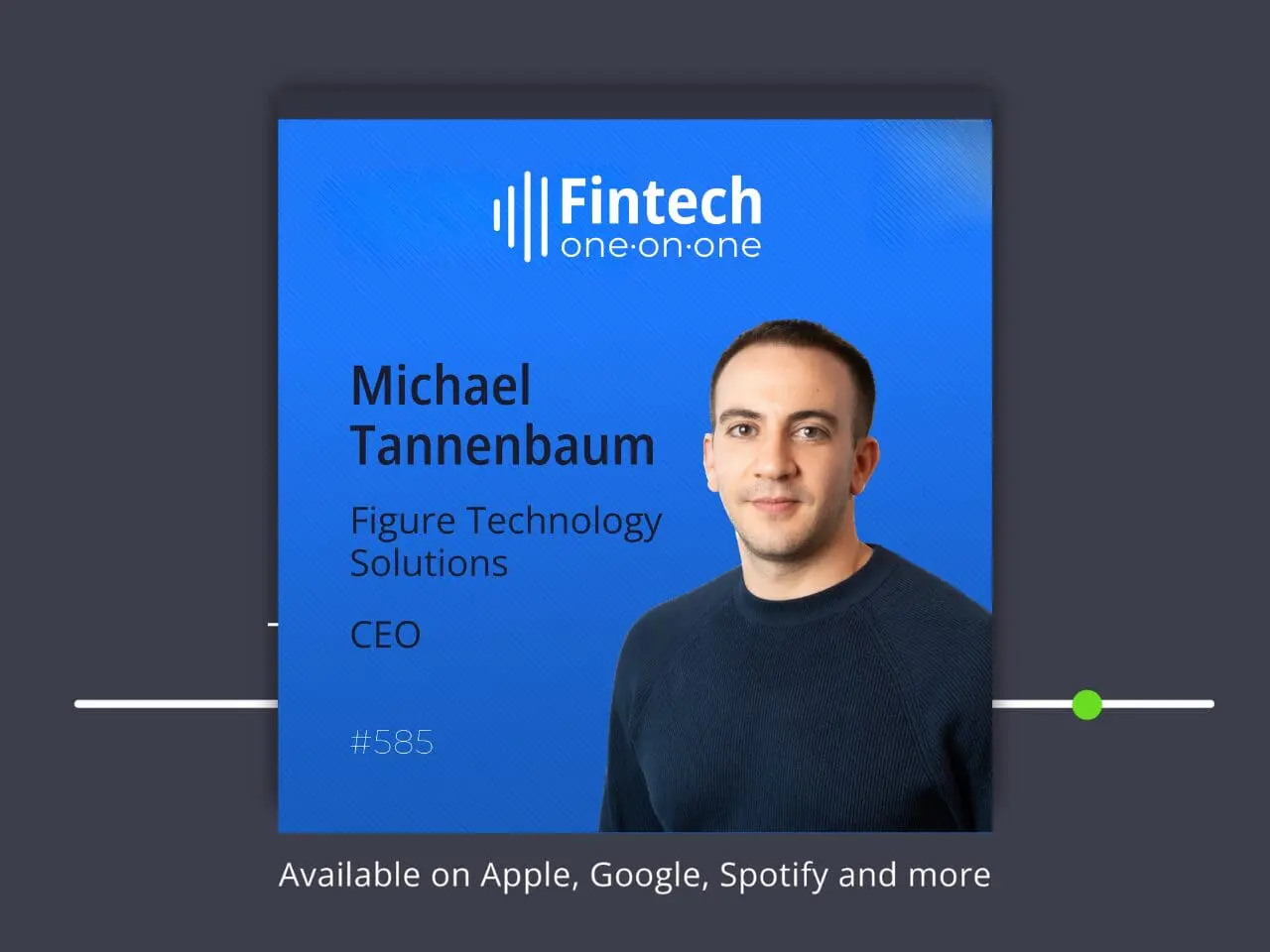
Michael Tannenbaum became CEO of Figure in early 2024, taking over from founder Mike Cagney and leading the company through its September 2025 IPO. In this conversation, we get into the mechanics of how Figure’s blockchain-based platform competes with Fannie Mae and Freddie Mac, what it actually takes to cut mortgage origination costs from $12,000 to $1,000, and where the real opportunities in tokenization lie.
What We Covered
- Taking over as CEO from Mike Cagney and the Big Rocks framework
- How Figure describes itself: building the future of capital markets on blockchain
- The B2B partner network and how it compares to Fannie Mae’s function
- Cutting mortgage origination costs from $12,000 to $1,000 and 45 days to five
- Why Figure competes directly with Fannie Mae and Freddie Mac
- How blockchain eliminates third-party diligence and prevents loan double-pledging
- The Figure Connect marketplace and its rapid growth since June 2024
- Where tokenization adds real value — and where it doesn’t
- YLDS: Figure’s SEC-registered yield-bearing stablecoin and its role in capital markets
- The timing and mechanics of Figure’s September 2025 IPO
- Building a rate-agnostic business across different macro environments
- Three growth areas: consumer mortgages, Democratized Prime, and on-chain equities
Key Takeaways
Figure’s origination platform and its capital market are the same system — you can’t separate them, and that’s the competitive moat. Tokenization only creates liquidity when the underlying assets are standardized and fungible; putting unique assets on a blockchain doesn’t conjure buyers. The recent fraud cases involving double-pledged loans (Tricolor, First Brands, MFS) have turned blockchain’s immutability from a skeptic’s objection into a selling point. And Figure is running at what Michael calls the rule of 150 — 100% year-over-year growth at 50% margins — in one of the most rate-sensitive and entrenched markets on earth.
About Michael Tannenbaum
Michael Tannenbaum is the CEO of Figure, a blockchain-based capital markets company he took public on Nasdaq in September 2025. Before Figure, he was an early executive at both SoFi (Chief Revenue Officer) and Brex (COO), and sat on the Brex board when it was acquired by Capital One. He began his career in investment banking at J.P. Morgan.
Transcript
(00:10.51) Michael Tannenbaum:
We actually directly compete with Fannie and Freddie. We provide pretty much the same function, right? We provide an underwriting technology and approve eligible, and then we provide a capital market. So we are absolutely more of a competitor. And explicitly when someone’s deciding to sell their loan to Figure or use a Figure technology, they are not using Fannie Mae. That said, a lot of the fintechs that work with us don’t really even know about Fannie Mae — we just have made it so easy that they’re in the mortgage business in a way that they wouldn’t be if there was no Figure.
(00:48.078) Peter:
This is the Fintech One-on-One podcast, the show for fintech enthusiasts looking to better understand the leaders shaping fintech and banking today. My name is Peter Renton and since 2013, I’ve been conducting in-depth interviews with fintech founders and banking executives. Today on the show, I’m delighted to welcome Michael Tannenbaum, the CEO of Figure. Now, most people know who Figure is, but they are a blockchain-based capital markets company that went public in September of last year. Before Figure, Michael worked at some big fintech names, first at SoFi, where he rose to be the chief revenue officer, working alongside founder and then CEO, Mike Cagney, as well as Brex, where he was employee number one and eventually became COO there. In our conversation, we talk about how Michael established his own leadership direction after taking over from Cagney, how Figure’s origination and capital markets platform works and why it competes directly with Fannie and Freddie. The mechanics of cutting mortgage costs from $12,000 down to $1,000. Why tokenizing real-world assets is more nuanced than the hype suggests. Figure’s SEC-registered yield-bearing stablecoin, YLDS, and the three growth areas Michael has focused on over the next three years. Now let’s get on with the show.
(02:15.438) Peter:
Welcome to the podcast. My pleasure. I’m glad to finally get you on. I feel like I should have had you on years ago. You’ve had such an interesting career. I know we’ve known each other for quite some time. You took over as CEO from Mike Cagney, who I’ve had on the show three times in the past. He’s obviously one of the big names in fintech. So let’s get started by giving the listeners a little bit of your background. I know you were at SoFi with Mike. You were very early at Brex. Tell us what you’ve done in your career.
(02:16.302) Michael Tannenbaum:
Thanks for having me.
(02:48.472) Michael Tannenbaum:
As you mentioned, I’ve been in the fintech space for a bit now. I started actually in investment banking doing regional bank M&A during the financial crisis, or a little bit after there — so kind of part of that cleanup. I worked at a private equity company in San Francisco and then I found my way to SoFi pretty quickly. I joined there around the 75th employee, so it was relatively small — you could name everybody in the company. And I worked my way up there. I didn’t start reporting to Mike. I started reporting actually significantly far from him, even though it was a small company. And we started working together when I became the head of the mortgage business. And I was kind of rising through the ranks at SoFi — I ultimately became the chief revenue officer. As you noted, I left to join Brex as the first employee. It wasn’t actually called Brex at the time. It was called Veyond, which I had an issue with because you can’t really spell Veyond from hearing it. So it’s like, how do you spell Veyond? In that case, it was V-E-Y-O-N-D, but it could be other ways. And so, especially if you speak French, “veyond” is meat in French. So anyway, then I worked there for about seven years in a variety of titles, but ultimately COO. And then we just sold — I was on the board when we sold the company to Capital One. And as you noted, I took over as CEO in early 2024 of Figure and we went public in late 2025, September. And it’s been a really exciting time and it’s been really fun to be back with Mike. As you noted, he absolutely is one of the big names and personalities in fintech and now in blockchain as well.
(04:37.742) Peter:
Let’s start there. Mike is obviously brilliant. Anyone who’s spoken with him for more than five minutes will know that. And he had, I’m sure, a very big presence within Figure. You come in and take over as CEO. How did you think about establishing yourself and your own direction at Figure after taking over from such a unique person like Mike Cagney?
(05:01.998) Michael Tannenbaum:
It’s a good question. I started with this first principle — both Mike and I share some things, and we obviously don’t share other things. But one of the things we share is this kind of first-principled approach to thinking. And what I told the company when I joined is this company is successful, right? So there’s not a lot that we need to change because the company is working. And so it wasn’t a turnaround or any kind of scenario like that. I think two things helped me. One was, I really understood the problem space coming out of SoFi. When we were at SoFi, we talked together about the opportunity to use blockchain to lower transaction costs and third-party diligence review. We talked about the home equity opportunity and that 80% of the personally owned customers were homeowners. So I had that background and the confidence to understand Figure — I had invested in Figure. And I also focused on something that I had learned well at Brex, which is this concept of Big Rocks. And I think that was an opportunity for Figure because Figure was doing so many things. To your point, Mike is really innovative and he likes to do a lot of things and he likes to start a bunch of different things and see what works. And he’ll be the first to say not everything is going to work — he’ll do a lot of zero-to-one and not so much one-to-100. But the mandate of the job was that we wanted to go public, right? That was very much a part of my role — being the person to bring the company towards IPO. And so I focused us on Big Rocks, right? This idea that everything we do needs to build up to one to five maximum different goals. And that was the focus for me early on — taking all the things we were doing and really focusing us on this future of capital markets on blockchain. I mean, Figure was always focused on that. But I don’t know that we were saying that out loud and that we were laddering up the way that we worked and the projects we did so clearly to that North Star. And so that was a big part of my early time.
(07:07.768) Peter:
So then, you know, you started off in the HELOC space. Maybe we should step back — let’s talk about how you describe Figure today.
(07:17.432) Michael Tannenbaum:
So we are building the future of capital markets on blockchain. As you noted, we started in the home equity space. And in particular, we were one of the first to do consumer loans on blockchain rails. And over time, we built a really broad ecosystem of partners that use our technology to originate — mortgages — to their customer base, in their name, using their balance sheet, but then selling into our capital market. So there’s nothing really else that works like that besides sort of Fannie Mae. And so we have about 300 partners that use this technology to lower cost of origination, increase speed, and get guaranteed liquidity for the loans they want to make. And that today does about $1.3 billion a month. We’ve done $24 billion of this, growing 100% year over year at 50% margin. So we’re roughly rule of 150 in a world that focuses on rule of 40. And then we’ve taken that lead and that capital market that we’ve built in the mortgage space and extended it more broadly into DeFi and opened it up to other asset classes that want to borrow and lend against assets. And essentially for a fintech-oriented audience, we’ve built an almost universal warehouse line that we call Democratized Prime, that is much easier to borrow and lend against than the arduous process of getting a warehouse line with lots of third-party diligence and legal fees. So we’re kind of building this big capital market that is on blockchain rails. And that’s really our goal.
(09:04.782) Peter:
So full disclosure, I actually am a Figure customer. I took out a Figure HELOC a couple of years ago and the rates were really low. And I remember at the time it was a seamless experience. It was easier than taking out an unsecured consumer loan, it felt like to me — the lift from the borrower was really light. Now I am a member of a credit union because I mentioned the loan was sold to them. What I want to do is just understand the system that you’ve built. Can you take us through the process? I know you’re doing more than HELOCs, but let’s just start with HELOCs. This is a really popular product. It’s easy to understand. Take us through the process of origination and the capital markets side — how does it work at Figure?
(09:50.67) Michael Tannenbaum:
Happy to. And before I do, I’d like to comment that I tend to use the term “mortgage” rather than “HELOC” because about 22% of what we do — up from call it 12% year over year — is first lien, meaning not a loan on top of another one, which a lot of times people associate with HELOCs or home equity. And these are true replacements for mortgage where we’re competing directly with Fannie Mae and Freddie Mac. So because of that, I find that a term like HELOC doesn’t totally do justice to what we do. But yeah, so most of what we do is B2B, as I mentioned. It’s the partner network — 300 different banks, credit unions, mortgage companies, fintechs — that use our technology to originate mortgages to their customer base, in their name, using their balance sheet, but then selling into our capital market. So that’s the average loan at Figure today. Figure Connect is that marketplace where people use their own balance sheet. And that’s about 60% of what we do, up from zero as of June 2024 when we launched it. So it’s been a really fast-growing marketplace. But to answer your question, what will happen — to use a bank example — the bank is offering that product to their customers in their name. So if it’s Peter Renton Bank, it’s the Peter Renton Home Equity Express product potentially. And what’s happening is the bank is using our technology, pinging our system to determine eligibility. If the customer is eligible, then the loan will proceed and everything is happening in an automated fashion. There are no underwriters. There are no people in the process. We’re connecting with the bank account of the customer, underwriting the income. We are using an automated appraisal approach — an automated valuation model for the home value. We aren’t using a title insurance process, but instead are automatically determining the amount of equity and what’s owed on the property based on county-level information and other data vendors. So we skip a lot of the back and forth that normally happens in a mortgage process. And as a result, we’re able to bring the costs from industry average of about $12,000 down to $1,000, and from 45 days down to five. And as that loan is then manufactured, the outputs of the loan are actually put immutably on a blockchain. And then what that means is there’s significantly less third-party diligence done on the loan — about 80% less — due to our use of blockchain and the immutability of those data attributes upfront. And then that loan will be sold into the capital markets. We’ll take a fee at the time it’s sold and the loan will either go to a whole loan buyer, to a securitization, to an insurance company, and Figure will be the servicer. So we’ll do the statements and the payment collection process throughout.
(13:09.11) Peter:
Although couldn’t that Peter Renton Bank you talked about — couldn’t they keep it on their balance sheet? Does that happen much?
(13:14.548) Michael Tannenbaum:
It can happen and it would happen with a bank more likely than a non-bank, for obvious reasons. The thing is that mortgages are longer-term assets. So a lot of people, even banks, enjoy the flexibility of being able to take that and put it in securitized form where they might get a more favorable capital treatment, and they still may choose to buy those bonds. But yes — and one of the advantages, and I think this speaks to how different what Figure is doing is — is the fact that a bank could hold it on their balance sheet and then two years later decide to securitize it. And there’s so much liquidity in what we do because we’ve standardized this approach across these 300 partners, and that standardization brings liquidity. And what that means is they have the optionality of changing their mind, because interest rates change, balance sheet needs change, markets change. And so the flexibility of deciding “I want to make and hold this loan today, but then in the future I may want to securitize” is something that, again, only the Fannie Mae market really has. Otherwise, if you think about all fintech, there’s just no liquidity for any of these products. I go back to Brex where I worked for seven years and I led the capital markets there, did the securitizations. We had a well-known competitor, Ramp, who was doing the same thing from a credit perspective and a capital markets perspective, but spending all this time building out their own capital markets chassis, their own underwriting — just as Brex was doing the same, and other providers in the space. Whereas Figure is saying, well, all of this should be unified because these companies aren’t really competing on capital markets and risk. They’re competing around product experience and marketing. And so it’s just the way that the market has evolved, but the mortgage market, because it had government intervention, actually evolved differently. And we’re taking some of that insight, modernizing it by using blockchain technology, and bringing that to the broader fintech ecosystem.
(15:21.006) Peter:
Some of your clients — I imagine some of them are selling these onto Fannie and Freddie, right? Or are they all just going into your marketplace?
(15:27.992) Michael Tannenbaum:
We actually directly compete with Fannie and Freddie. We provide pretty much the same function, right? We provide an underwriting technology and approve eligible, and then we provide a capital market. And explicitly when someone’s deciding to sell their loan to Figure or use a Figure technology, they are not using Fannie Mae. That said, a lot of the fintechs that work with us don’t really even know about Fannie Mae — we just have made it so easy that they’re in the mortgage business in a way that they wouldn’t be if there was no Figure. So I think a good example of that would be Kin Insurance, right? They’re a homeowners insurance company. They do have a relationship with homeowners. They wouldn’t consider themselves a mortgage company or probably be in the mortgage business if it weren’t for Figure. I think another example of that is Houzz, which is a housing and design platform that originates loans at the point of sale — and they wouldn’t do that. They wouldn’t really be a mortgage company. They may have heard of Fannie Mae, but they don’t think about choosing us versus Fannie Mae. Whereas we have customers that are independent mortgage banks that are very explicitly making the choice at the marginal loan whether or not to send it to us or Fannie Mae.
(16:43.694) Peter:
That’s interesting. And then I think I heard the numbers — was it $7,000 down to $1,000, the cost?
(16:50.126) Michael Tannenbaum:
$12,000 down to $1,000.
(16:52.046) Peter:
$12,000 down to $1,000. Now, how much of that is the technology that you’ve built that’s blockchain-based and how much is just your sort of more efficient front end?
(17:02.67) Michael Tannenbaum:
Well, it’s definitely not just a more efficient front end because you can’t change the way loan origination is done without changing the capital market. The main thing that we do is we built a front end that feeds a capital market. And there’s really nothing else that works like that — meaning that when a loan is processed through our software, it is eligible for our capital market. They’re the same thing, and nothing else works that way. And so everybody else is trying to use an origination system and then on the backend figure out where to sell the loan. And that figuring-out process creates all this back and forth between the lender, the borrower, and the ultimate buyer. And we eliminated that and we eliminated the people-based approach and standardized it. And because the capital market itself is on blockchain rails using blockchain principles, which get at that standardization and that immutability, you can’t really separate them. It’s kind of like saying blockchain is sort of like cloud, right? It’s a way of doing things. So when you go to Salesforce and say, how much of it is the features versus how much is the fact that it’s in the cloud? Well, the fact that the features can be updated automatically is related to the fact that the software is in the cloud versus downloading it. But it’s not the cloud, it’s the feature — it’s the whole thing. So that’s kind of the way I would think about it. It’s the technology that’s enabling a way of doing business in capital markets.
(18:37.614) Peter:
You know, I do remember — it was actually at one of our old LendIt events. I think it was 2018 when Mike described this, what you’ve just laid out. He laid it out there. And of course everyone thought this is crazy. No big investor is going to want loans that are sitting on a blockchain. That’s too heavy a lift. It’s too far removed from the way things have always been done. But it sounds like that’s no longer an issue. I imagine the companies that are in your capital markets — there are lots of the traditional names we’d all know, right? They’ve overcome that objection.
(19:12.814) Michael Tannenbaum:
That’s right. We were the first to securitize blockchain assets, the first to get a rated securitization of blockchain assets, the first to get a AAA-rated securitization of blockchain assets. We have over 20 different whole-loan buyers, 20 different securitization buyers. We have a joint venture with Sixth Street, which is a traditional asset manager, which acts as a guarantor, sort of like a lender of last resort, or kind of a permanent buyer in the ecosystem. And I think actually the most recent past — call it six or nine months — has been a watershed moment for blockchain in the capital markets with some of the fraud we’ve seen from Tricolor, First Brands, and then MFS in England. Because this idea that you can double-pledge loans has become part of the zeitgeist and part of the concern in the industry.
(20:08.11) Peter:
Which would be impossible on your…
(20:10.318) Michael Tannenbaum:
…system. And so maybe in 2018, people were thinking “this is so crazy.” Now people might be saying it’s crazy not to do this. Because the idea that you’re just sent a spreadsheet and a wire and you hope that somebody hasn’t also sent that spreadsheet of loans to someone else seems insane.
(20:29.134) Peter:
Right, it does. So let’s move on to some other topics here. Let’s talk about tokenization because everyone’s talking about how all real-world assets will be tokenized — it’s inevitable. You’re obviously showing that you’ve got your corner of that world tokenized and put on blockchain and it’s obviously going really well. But when you hear people say it’s inevitable, all real-world assets will be tokenized — what do you think?
(20:55.244) Michael Tannenbaum:
I generally agree, but I think that there is a path that tokenization will go and it will be where it adds the most value. And tokenization doesn’t necessarily mean liquidity. So I’ll break that down. If you looked at what Figure has done, we have tokenized generally consumer loans that have more in common than not and should have liquidity but don’t. Meaning from the perspective of a debt instrument, consumer loan interest rates are relatively similar in the same asset class — same mortgage — and you have properties that are relatively liquid for the most part, and you have lots of home equity, there’s $35 trillion. And so a loan to someone in, let’s say, suburban Boston in some single-family home with a roughly similar credit and income is very similar to somebody in suburban Dallas with similar characteristics, right? And you should be able to buy and sell loans like that in pools and be able to trade them and move them around because from the perspective of an institutional investor, there’s a lot of liquidity in that. And it doesn’t really matter who originated the loan — as we were kind of talking about with the Brex and Ramp example. And so blockchain can be used to standardize and bring liquidity into that space. And there are lots of examples where this will happen. But there is also — you know, I’ve heard people from my investment banking days who’ve come to me and said, “you know, I’ve got a couple of warehouses in Costa Rica that I’d like to put on the blockchain.” And it’s like, okay, but that doesn’t necessarily mean that there’s liquidity for those warehouses, right? They’re relatively unique and they’re big and they’re tied to real estate in a way that’s much less liquid and much more bespoke. And just because you put those on a blockchain doesn’t mean that there’s all of a sudden liquidity or interest. There’s less capital in tokenized liabilities of stablecoin than there is outside of stablecoin, obviously — most liabilities are not stablecoin, most people have fiat. And therefore, you don’t just create a market by tokenizing something. You need to also think about the principles of liquidity and standardization and also lien perfection, right? Which is a big part of what we were talking about with the double pledging. Figure uses a digital asset registry technology to perfect the lien and ensure a digital padlock on that asset and ensure that nobody else can own it. And those are the types of things that work really well for blockchain. Not all assets — for example, if you think about certain food, like if you’re trying to tokenize potatoes or something like that, that would be a challenge. Even though there are commodity markets that might work for that, because if they’re not digital assets, it’s harder to do that lien perfection or verify them or track them. At least with blockchain technology, right? It could be other technology that works for that — maybe AI, maybe satellite imagery. There are other things you could look at, but in terms of blockchain, it works best with digital assets, which is why equities can work, which is why loans can work.
(24:30.03) Peter:
Well, since you mentioned stablecoin, let’s talk about your YLDS, your yield stablecoin.
(24:35.298) Michael Tannenbaum:
Yeah, we pronounce it YLDS.
(24:38.446) Peter:
So it’s an SEC-registered yield-bearing stablecoin. Who’s it for and how do you explain it to your capital markets community — maybe there are community banks or credit unions that are curious about this. Tell us all about that.
(24:55.458) Michael Tannenbaum:
I’d compare it most similarly to a tokenized money market fund. It’s not a GENIUS Act stablecoin. As you noted, it’s SEC-registered. However, it only invests in GENIUS Act-eligible collateral — so treasuries. And what’s unique about it is that it functions like a stablecoin — it’s peer-to-peer transferable — but it also pays yield because it’s a security. And we see its value in terms of corporate treasury. So it’s a common replacement for on-chain treasury. If you’re already in the blockchain space or you’re already working with stablecoins and you’re looking to earn yield because you have balances outstanding, this is a perfect product. And it also acts as the oil of our capital market. So going back to the example where you’re buying and selling loans or pledging loans, we can actually make that atomic — meaning that you can convey the ownership of loans at the exact same time money is received in stablecoin, sort of like a revolving door clicking in at the same time. And so that’s a really powerful use case for our stablecoin. And in general, increasing amounts of our loans are serviced and transacted with stablecoin, and in particular our YLDS stablecoin.
(26:18.254) Peter:
So I want to talk about your IPO. You raised $787 million in September of last year. Tell us a little bit about that moment, why you decided to pull the trigger then, and what being public has changed about how you and Figure operate.
(26:35.64) Michael Tannenbaum:
As I mentioned earlier in the conversation, it was part of the mandate when I came to Figure. And I had been initially more hesitant and didn’t feel ready. I don’t know if you ever fully feel ready — it’s not something I’ve done before, I haven’t done seven IPOs in my day, so I can’t totally comment on that. But for me, I was, of course, a little nervous and it’s hyped up so much. And so I was thinking, you know, we’ll probably hang out, grow, stay private for a bit. But the regulatory environment started to change when Trump was elected and the SEC clearly was going to be more favorable to blockchain. And at the same time, you also saw a window start to heat up — basically a year ago from today, essentially, early to mid-May. I think eToro went public, which kicked off the sense that not only for crypto, but just for high-growth tech, there was going to be more activity. People use this phrase, “animal spirits in the market,” and you need to have that conducive environment. And at that point, I had gotten some advice from someone I had worked with at J.P. Morgan a while ago who said, “you know, Figure — and you’ve mentioned this kind of softly, Peter — Figure’s not the easiest company to understand. We’re not Procter & Gamble, right? We don’t sell laundry detergent.” So there are markets where people are leaning into stories like Figure and then there are markets that are cooler where frankly, people aren’t. And when you have one of those markets and you have the SEC, it’s incumbent on you as a leader — especially if that’s part of the mandate — you’ve got to hit that window. And timing is everything in this world and in capital markets in particular. And we knew that this was going to be the moment. Mike was definitely in alignment there. Obviously he’s the largest shareholder, so it’s important to get his alignment. I kind of was like, look, this is the time to go. People say you need a lot more time than we gave ourselves. And I think we just were very focused on hitting the market right after Labor Day, which ended up being a perfect window. But the reason I mention that is because if we had waited three weeks, there was a government shutdown and nobody could get to the SEC and that lasted through November. And that just shows you the point, which is you need to be ready and hit that market when it’s ready. If this is something you want to do — because these windows open and shut, we’ve seen the Iraq war, we saw the tariff tantrum — these things really change and you have to be ready to hit the window when they’re open.
(29:20.768) Peter:
It’s a good point. And not only that — because you see interest rates change quite dramatically, that has a sizable impact on the housing market. We’ve seen that when rates went up over 7%. Then you’ve got crypto that comes and goes. How do you build a company that is sort of agnostic to all those changes?
(29:43.31) Michael Tannenbaum:
We’ve done a good job of building a company that survives both rate environments that are higher and lower, and also a company that has survived regulatory environments that have been more and less favorable to blockchain. And as an example, the YLDS stablecoin security that you mentioned was developed under the Biden administration — and many things we’ve done we’ve thrived during a time where blockchain was not only not a focus for the government, but in fact was a hindrance. But we were able to survive and thrive. And from a rate environment perspective, generally lower rate environments are better for the mortgage market and for all of the consumer credit markets. But Figure has also benefited from the fact that when rates are higher, people look to get mortgages on top of an existing lower-rate mortgage. And that’s a portion of the business that we do. So we’ve been successful both when rates were going down as well as when rates are going up. And I think it’s very important that we have a business that can survive through a variety of these markets, because as you noted, things are changing rapidly all the time.
(31:00.534) Peter:
Okay. So last question — you’ve got a lot on your plate right now. I’d love to get a sense of where you want to expand this. Obviously the mortgage market is massive and Fannie and Freddie are massive. So you’ve got some runway there, but what do you think about over, say, the next three years? What are the growth areas for Figure?
(31:22.926) Michael Tannenbaum:
Three primary areas. The first is the consumer loan marketplace that we’re executing into. We’ve done about $24 billion. We do about $1.3 billion a month. That’s a $2 trillion annual origination market, so we’re barely scratching the surface. Also looking at it from a home equity perspective, there’s $35 trillion of home equity and we’re doing about $1.3 billion a month. So this is a massive TAM that we’re executing into, and because we lower the cost so much, we actually see a huge amount of that market as addressable. Then I look at Democratized Prime, which I mentioned is our commercial paper market or universal warehouse line on blockchain and DeFi rails. Ultimately, I think all of the financial assets that you can borrow or lend against will migrate to something like that — to that future of tokenization we talked about. And that’s actually a larger opportunity because all third-party origination that we can ultimately use a combination of AI and blockchain technology to adapt these assets to our capital market, we can bring on and make much more liquid, at least in the short-term borrowing and lending. And so that opportunity extends to other fintechs that bring their assets onto our platform, like Agora, which is an auto lender that we announced a partnership with two months ago. And then the third area is the broader opportunity outside of the debt asset classes. So things like equity and commodities. And Figure has some unique perspectives on those areas. For example, we launched our all-blockchain equity on our platform, the Open On-Chain Public Equity Network, earlier in February. And that’s an opportunity to kind of get to the same principle of Democratized Prime, where there’s a lot of middlemen in equities and in commodities that extract rents but don’t necessarily add anything — and at the same time obfuscate ownership and make it more difficult for bilateral trading. And we see a world — I kind of like to compare what the internet did to content creation as what we’re doing to asset ownership. We are turning over the ownership and the economics to the people that actually own and originate those assets rather than people in the middle using our technology. And so I think that’s the multi-year opportunity for us.
(34:01.134) Peter:
Okay. Well, we’ll have to leave it there, Michael. It’s really fascinating to chat with you today. And I loved the color you provided on Figure — as you say, it’s not easy to understand for a lot of people just looking at it casually. And I think you’ve provided a great deep dive for everybody who’s interested. Best of luck and thanks for coming on the show.
(34:18.328) Michael Tannenbaum:
Thank you for having me.
(34:25.581) Peter:
One number from this conversation really stood out to me: 150. Figure is running at what Michael called the rule of 150, growing 100% year over year at 50% margins in an era where most investors celebrate a rule of 40. That kind of performance in a company that also just went public in a market as rate-sensitive and entrenched as mortgages is not what you would expect. It tells you something real about what happens when you eliminate the friction between origination and capital markets, rather than just making one side of it marginally more efficient. Anyway, that’s it for today’s show. If you enjoy these episodes, please go ahead and subscribe, tell a friend, or leave a review. And thanks so much for listening.


