
Fixing the Broken Appraisal Model in Asset-Backed Lending With Thomas Galbraith, CEO of Barkr
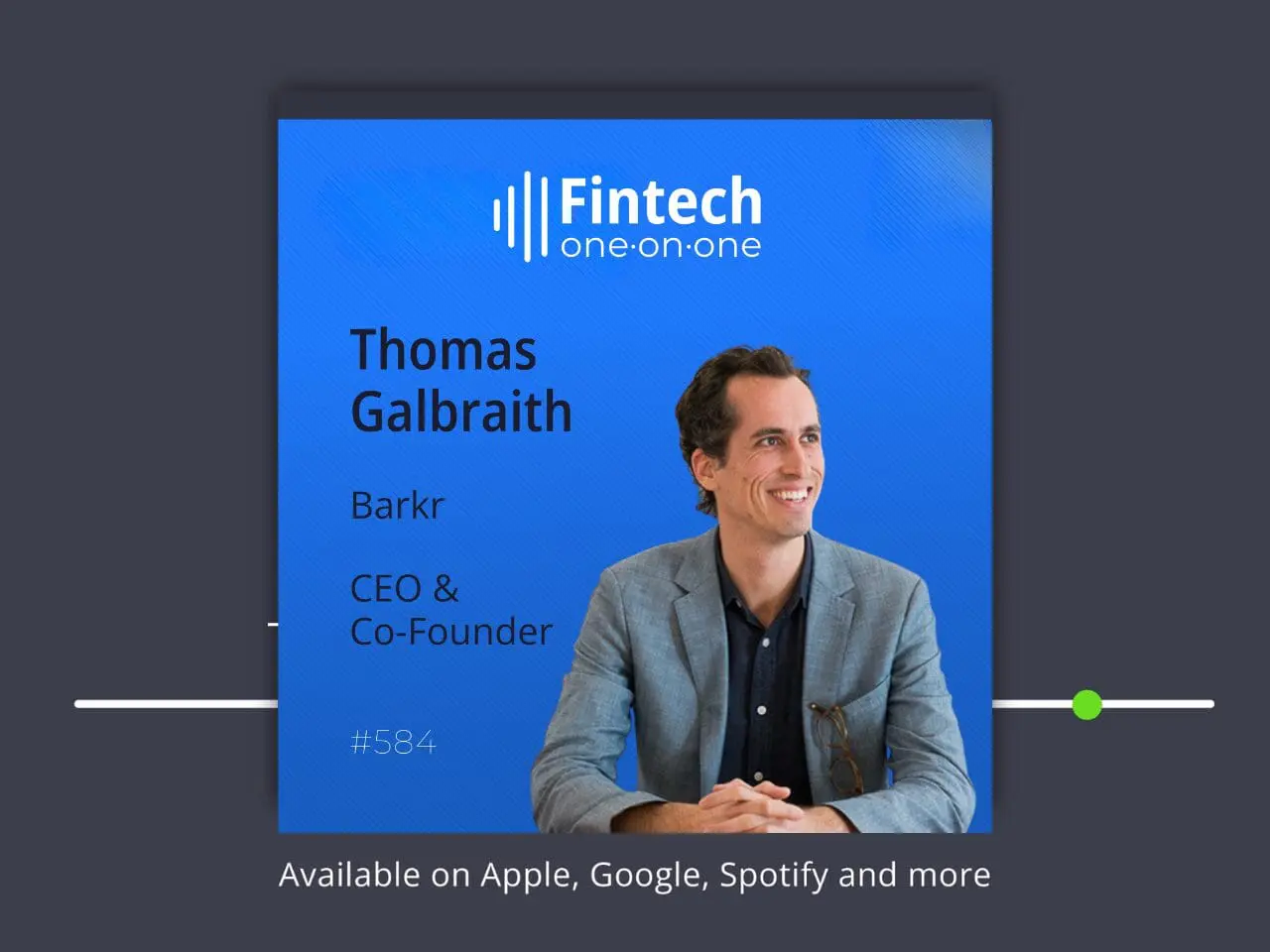
Thomas Galbraith is the CEO and co-founder of Barkr, an AI-driven valuation platform for asset-backed lending. He spent his early career in high net worth insurance at AIG and AXA, where he grew comfortable with the challenge of pricing hard-to-value assets. That thread ran through every role he held until it crystallized into a company built around a simple but structural problem: in asset-backed lending, appraisers give you a price and then spend the rest of their report telling you they’re not responsible for it. Barkr is built to change that.
What We Covered
- Thomas’s background in high net worth insurance at AIG and AXA
- How a common thread across luxury assets led to founding Barkr
- Starting with fine art and private jets before expanding to other asset classes
- The two-part failure in traditional appraisals: accuracy and absence of liability
- How Barkr pairs an AI valuation with a contractual performance warranty
- The progression from Lloyd’s of London to AXA to Munich Re
- $2 billion in covered valuations and what patience actually means in this business
- GPUs as a surprisingly durable and long-lived collateral asset class
- How Barkr finds clients, from pavement pounding to Nvidia referrals
- Monthly mark-to-market on hard assets throughout a loan’s life
- Building a domain-specific LLM with human review in the loop
- Plans to build an in-house insurance vehicle to unlock capacity
Key Takeaways
Traditional appraisal firms hedge their liability by design. Page one is the price; the rest of the report is the disclaimer. Barkr’s contractual warranty flips that model by standing behind the number.
Barkr’s data on GPU durability challenges the conventional narrative. Chips five and seven years old are still generating revenue and still have meaningful resale value, which changes the risk calculus for lenders considering AI infrastructure as collateral.
Augmenting, not replacing, is the right positioning for valuation technology. Barkr actively encourages clients to keep using their existing appraisers and treats third-party appraisals as additional data inputs that improve their own accuracy.
Building a reinsurance relationship takes years. Barkr worked through Lloyd’s, then AXA, before landing Munich Re, and each step required demonstrating proof of concept at the prior level first.
About Thomas Galbraith
Thomas Galbraith is the CEO and co-founder of Barkr. He began his career in high net worth insurance at AIG and AXA before founding Barkr to bring accountability and AI-driven accuracy to asset valuation in the lending market. Barkr has covered approximately $2 billion in valuations across art, private jets, vehicles, and GPUs.
Transcript
Thomas (00:10.286)
So you could ask five different valuation firms to value an asset and you end up with five different prices. In addition to that, none of those valuation firms promises that they’re correct. They actually do the opposite. Like page one is how much the asset is worth and then two through 20 is like, we’re not liable. It’s our opinion. There’s nothing you can do. So those two problems, like the accuracy and the lack of liability, they make it pretty difficult to trust the price of the asset for a lender. So the terms end up not being great because they reflect the fact that the lender doesn’t have confidence in the value of the asset.
Peter (00:46.872)
This is the Fintech One on One podcast, the show for fintech enthusiasts looking to better understand the leaders shaping fintech and banking today. My name is Peter Renton and since 2013, I’ve been conducting in-depth interviews with fintech founders and banking executives. My guest today is Thomas Galbraith, CEO and co-founder of Barkr. That’s B-A-R-K-R, an AI-driven valuation platform for asset-backed lending. Thomas spent his early career in high net worth insurance at AIG and AXA before zeroing in on a problem that cuts across the entire lending market. How do you actually know what collateral is worth, particularly for the more esoteric assets? In our conversation, we talk about why traditional appraisers leave lenders exposed, how Barkr’s contractual warranty changes the risk equation, what it took to bring Munich Re on as a partner, the surprising staying power of GPUs as collateral and why Thomas believes Barkr is building the foundational infrastructure layer for a trillion dollar market. Now let’s get on with the show.
Peter (02:03.288)
Welcome to the podcast, Thomas.
Thomas (02:04.846)
Thank you very much for having me, Peter.
Peter (02:06.796)
My pleasure. Let’s kick it off by giving the listeners a little bit of background about yourself. You have been CEO of several companies when you look at your LinkedIn profile. Let’s talk about the arc of your career before you started Barkr.
Thomas (02:22.254)
Yeah, sure. So I actually started out in high net worth insurance. I was always curious about how risk plays a role in assets that are sort of hard to price, if you will, or luxury type assets. I have a background in that sector. So I worked at AIG, I worked at AXA and helped grow their businesses in high net worth insurance.
Peter (02:44.212)
Interesting. So then what was the thing that was the seed that decided you needed to start this company?
Thomas (02:52.074)
It was really a common thread through every role I’ve had, and that’s predominantly in sort of luxury and tech. Every luxury asset out there is extraordinarily difficult to price, right? So if you’re thinking of selling or if you’re thinking of buying, or even if you’re thinking as we do of borrowing against that asset, how do you really know what the value is? And then I discovered that that’s not just a luxury asset problem, that’s just a broad-based loan collateral problem. Every single type of loan collateral exhibits the same issue. And that’s really when we kind of realized we were onto something. We said that this has pretty broad applications across all asset-backed lending. How can we solve that? And how can we make this something that is no longer a problem and gives our clients who are banks and lenders the comfort they need to be able to incorporate all of these other types of loan collateral?
Peter (03:46.638)
Tell us a little bit about how you decided to position your product when you launched and a little bit about the company itself right now.
Thomas (03:54.286)
Yeah, so when we first started, I kind of leaned on that original sort of luxury asset background and my network there. I knew a number of banks who were lending against things like artworks and that kind of thing. And it’s always good to kind of have a focus when you’re launching a startup to sort of go deep on one thing. And that was the one thing that we went deep on. But then we also asked those same clients what other assets do you have the same problem with? And that way we can open that funnel pretty quickly. So we had a pretty major private bank who was like, honestly, the best thing you could do right now is get into private jets, like start pricing private jets for us. And we’re like, great, okay, cool. We’ll start doing that. So that is literally the next thing we did. So that original sort of kernel of being like, how can I solve this one problem for you? And then how can you help me understand where all your other problems are was a big unlock for us. And it’s what grew the company really pretty quickly over the past 12 months into a number of different other asset classes. So now we’re pricing everything from luxury assets to vehicles, like I mentioned, private jets. And then at the end of last year, we launched GPUs so we can now price Nvidia chips, that kind of thing in the resale sector. And those are all based on feedback from our clients.
Peter (05:14.06)
Maybe we can talk about how you create a valuation. I mean, private jets, kind of get it. There’s sort of a market there, but with art, every artwork is different. So what is the data that goes into your valuation and how do you come out with a number at the end?
Thomas (05:32.142)
So it’s an important question that covers multiple topics. At its core, what we do is value these assets, right? And then we wrap that valuation in effectively a contractual warranty. But how we get there is multi-stepped. We developed our own domain-specific LLM to actually do the pricing. So we have our own AI that does the valuation, but that AI draws on our proprietary data set. And that’s really where things get super interesting. We also have access to data that most people wouldn’t have access to. The reason why it comes down to the benefit that we give to our clients: our product enables our lender network to trust the price of the asset that they’re getting and then transfer the risk. So that means they actually want to purchase our product because it gives them a much higher level of comfort. The reason why I’m explaining that is because they have that higher level of comfort, we can ask for more things. So the average valuation firm or appraiser, they will look at what’s available in the market, right? They’ll say, okay, here’s some resale stats, and then here’s the price that I’m going to predict or that I’m going to offer based on those resale stats. We do that too. We gather large volumes of private data. However, because of the benefit of our product to our lender network, we can also ask our clients to share the data that they are using to do their underwriting on the asset with us. So we can ask for things like the original invoice, we can ask for third-party appraisals, we can ask for really anything they’re doing to do their asset-focused underwriting. And then that becomes incredibly important for us to draw on this private data set. This is something that most valuation firms don’t have access to. So that has a pretty significant impact on our ability to be accurate and to incorporate multiple different data points that otherwise wouldn’t have been available, to the benefit of the lender, because then they purchase our product and their profit margin increases.
Peter (07:39.79)
Tell us about the warranty and why that was the hook that you used to try and get inroads into this market.
Thomas (07:48.376)
It kind of helps to take a step back and explain broadly what our approach is, right? With asset-backed lending, you have two primary risks. You have the borrower, right? And then you have the asset. And people are pretty good at underwriting borrowers. But if you get the asset wrong, if you get the value of the asset wrong, it doesn’t matter how good you are underwriting the borrower, the deal can blow up. I frame it that way because it really helps explain a little bit more about the fundamental problem within asset-backed lending that hasn’t quite been fully solved. So you could ask five different valuation firms to value an asset and you end up with five different prices. In addition to that, none of those valuation firms promises that they’re correct. They actually do the opposite. Like page one is how much the asset is worth. And then two through 20 is like, we’re not liable. It’s our opinion. There’s nothing you can do. So those two problems, like the accuracy and the lack of liability, they make it pretty difficult to trust the price of the asset for a lender. So the terms end up not being great because they reflect the fact that the lender doesn’t have confidence in the value of the asset. So we did a 180 on both of those things. We actually said we’ll use the best possible technology to value the assets, and we will wrap that in a contractual warranty or contractual guarantee. And that one-two punch has been incredibly important to our success. And I think that differentiator is what the market has needed. It’s obviously growing incredibly fast and hasn’t had this layer of infrastructure in place. But with that layer of infrastructure, what we’ve seen is the ability to unlock new asset types as well as improve the margins and improve the structures of existing asset types that people are borrowing against.
Peter (09:37.186)
So I read that Munich Re is your partner there on the warranty side. They’re a massive company and you’re not. So how did you convince a major reinsurer like them to back your valuation on private jets, fine art and what have you? What did the process look like before they were willing to put their name on this product?
Thomas (10:02.126)
It took a while. It wasn’t overnight, I can tell you that. So we’re about three years old, right? And a lot of work went into getting this product to where it is today. There’s really three primary things that our product stands on. One is our ability to accurately price assets. The other one is the contract between us and our lender clients that enables them to recognize the risk transfer. And then the third thing is who are they transferring the risk to? Right? So in this case, Munich Re. Each one of those three pillars took six to 12 months because you’ve got to get it right. So the first iteration of this, we actually did with a small outfit out of Lloyd’s who backed us. It was like $10K per risk. Like it was tiny, but it was enough for us to start sort of having a proof of concept, and the contract wasn’t great. But we then leveraged that into a better contract with AXA once we had been able to demonstrate the market demand out of Lloyd’s with a slightly better contract. And that enabled us to sort of gain a little bit more traction. And then about two years ago, I started conversations with Munich Re, specifically the AI shore team who’ve been absolutely fantastic. And I was like, look, this is where we are. This is what we’re doing. This is how we do it. And this is what we’ve done so far. And they were incredibly hospitable, incredibly welcoming. And they were like, look, let’s do this together. Let’s figure out how we can make this happen and how we can help you grow. Very entrepreneurial team. So it’s one of those things where it’s always easy to sort of look and be like, oh, this is an overnight success. There’s no such thing as an overnight success. It took us a long time of developing each of those pillars and developing insurance relationships and drawing on some historical relationships that I had for us to get to where we are today.
Peter (11:53.934)
So I’m not sure what the number is right now, but I read that you have like $2 billion of valuations you’ve covered since launching with Munich Re. So what have you learned in that time period about your process and maybe where traditional appraisers get things wrong?
Thomas (12:12.386)
What have I learned? I think the biggest thing I’ve learned is patience. You have to have patience. Patience shows up in many ways, right? So number one, we are part of every loan that our clients do, right? So if a lender chooses to do a loan with a borrower, then we’re sitting in the wings waiting to help them. But if that loan doesn’t go through because the lender and the borrower don’t figure it out, then we don’t have a deal, because our contract mirrors their loan term. So we get a lot of inbound, but not all of that inbound converts into deals. I would say we’re running at around 30 to 40% of the inbound that we get converting into an actual deal. So that was a big one, learning that patience a little bit more about how the nuances of how those deals are structured. I think switching over to sort of the broader valuation and appraisal side, one of the things that we also were pretty sure of from the beginning was that we’re not trying to replace the existing appraisal and valuation community. That’s not what we’re here to do. We actually encourage our clients to continue to use them. Like keep going. Like if you’ve already onboarded that vendor, keep using that vendor, don’t take them off. And what we found is that our product serves better as a way to augment the actual loan process as opposed to trying to replace those existing vendors. If anything, we would rather that lender share the other valuations with us so that that obviously improves our accuracy as well. So we’re very much aware of that nuance that we want to make sure that we’re augmenting and supporting as opposed to trying to replace that community.
Peter (13:53.986)
The augmenting then, I’m just curious, are you working with some of the other valuation companies where they don’t have a reinsurer like you? So maybe they provide the valuation and you provide the reinsurance. Is that what you’re saying about augmenting? What do you mean?
Thomas (14:10.254)
So largely what I mean is that we want that sector to survive. We’re not trying to replace them with us. We’re trying to say, how can we provide a product to a lender community that gives them a price that the asset will at least sell for, right? That they can be confident in and that we can backstop. If they want a fair market value, if they want any other sort of specific price that an appraiser may be better placed to give them, then we support them. We’re like, please just go get an appraisal, go continue working with that appraiser. We have had some appraisers work with us or send business to us because they haven’t been able to price assets. And we have had a number of them interested in our product because we obviously can warranty our prices. So there’s definitely a process of each side trying to understand the other and trying to figure out how to work together. But our position is really like we’re not trying to replace that community. We’re trying to help the entire system.
Peter (15:07.998)
So I want to talk about the GPU piece that you mentioned earlier, because how do the GPUs work? Who are you insuring there?
Thomas (15:16.536)
So same product, also backed by Munich Re. We’re providing the valuation on the asset, and then the performance or the accuracy is underwritten. The way we do it is we treat it honestly like any other kind of piece of commercial equipment. We think that the best way to approach these assets is a data-based conclusion. And the data that we have points to GPUs having value and retaining value for much longer than I think a lot of people may believe or be aware of. The data we have seems to support that. We see evidence of GPUs that are five, seven years old that are still plugged in, still revenue generating, and would still sell. Not for what they originally were valued at retail, but they definitely still have a resale value.
Peter (16:09.006)
So then how do you find your clients? Are you working with appraisers? How are you finding people?
Thomas (16:15.49)
Well, first off, it was obviously pavement pounding, as with any good startup, right? Getting out there, talking to people. I’m lucky enough, old enough, to have been around and have connections in the asset-backed lending space within luxury and things like that. So that gave us a good leg up knowing the private banks who were doing lending in those sectors. But we really did the whole spectrum of pavement pounding and client onboarding. We were talking to the private banks, and then the next day, my co-founder Madeline and I, we would hit 47th Street in New York and go and talk to a whole slew of diamond dealers and lenders, just so that we could understand each end of the spectrum. Like, how does lending work at the top end when you’re dealing with banks? How does it work when you’re at the lower end dealing with pawnbrokers and diamond lenders and that kind of thing? And I think that process was really incredibly illuminating because it gave us a lot of insight into how quickly some of these deals move and also how structured they are at the top end. Some of the expectations around, for example, the reinsurer like Munich Re, who is taking on the risk? Are they A-rated? How can I recognize that risk transfer? How quickly can you move? Which is obviously important at the lower end, whereas at the top end these deals take 90 days or longer. So I think that original research and onboarding of clients was tremendously informative for us in how we grew the product. Now we get a bunch of referrals. We’re partnered with Nvidia, who are introducing us to a number of lenders from Apollo and others. We also get referrals from our existing clients. They like our product, they’re like, you should speak to so-and-so, they’re doing something similar in a different space, I think they would like you. So word of mouth has become a pretty big part of how we get referrals. And that’s quite comforting because obviously that means that the product must be resonating and it must be making somewhat of an impact across the community.
Peter (18:21.322)
So just so I’m clear, is the product the warranty itself? Are you also providing capital? What’s the flow?
Thomas (18:29.624)
So it is the valuation backed up by the performance warranty. That’s the product. We don’t do lending ourselves.
Peter (18:36.35)
You’re not lending. So you work with the banks and lenders who are providing the capital. Gotcha.
Thomas (18:39.662)
Exactly. We’ve been asked if we want to stand up our own lender because theoretically if we know what everything’s worth then we could be a pretty successful lender. And our general approach to that is it would be possible but not scalable. Because the sheer volume of capital you would need would be enormous to be able to take on those deals.
Peter (19:05.912)
The big deals.
Thomas (19:08.852)
Whereas by focusing on the valuation component and knowing that every asset-backed lender and bank out there doing these types of deals needs our product, we just felt like it made much more sense to be the foundational layer for asset-backed lending as opposed to being a lender ourselves.
Peter (19:26.19)
So I know you haven’t been in business that long and you have your warranty. Have you had any instance yet where that warranty has had to kick in? What happens when things go wrong?
Thomas (19:37.676)
You hit the nail on the head, Peter. Every bank asks me this question. Are you going to pay? Which I get. It’s one of the big questions around insurance. Our product evolved from its original form. Originally what we did was we focused on asset-backed lending and also marketplaces. We thought there was an opportunity to sort of facilitate a greater uptick in consignments for marketplaces by applying the product across the entire marketplace assets. That’s the only place where we’ve had claims, within the marketplace business, which we shut down pretty quickly. But what we found was that marketplaces didn’t really stick to their end of the deal. They gave us all the bad risk and none of the good risk. So in those cases, we did end up having to pay claims. And in some cases we ended up paying out of pocket because we just wanted to get the claim done and paid for. And I think that was a pretty good learning curve as well for us because when you’re taking on that kind of risk, you really have to be careful about how you take on that risk. And you have to be thoughtful as to what your partner or your client’s incentives are. And that narrowed our scope pretty quickly to understand, okay, we have a powerful tool and people are going to try and abuse it, and let’s not let them.
Peter (20:53.518)
So when you’re underwriting an asset-backed loan, you have the initial origination piece where people are getting a clear valuation on the asset and the loan funds flow through to the borrower. But then there’s a portfolio that is going to need monitoring. So is this something that you also provide? Like are you doing yearly valuations on some of these portfolios? How do you approach the post-loan transaction?
Thomas (21:22.712)
Yeah, so it’s a good question. We do offer something that we call a loan book health check to clients and prospective clients where we can come in and value assets to give them an understanding of what the spot price is at that moment in time for the loan book. And then for existing clients who use our product, we can actually provide them a monthly value on the asset that we are working with them on. And we can do that through the course of the loan. So that’s something that’s unique and that I don’t know is available elsewhere, whereby these hard assets can actually be kind of marked on a monthly basis for a lender. And that introduces a tremendous amount more transparency and comfort for a lender who’s doing these types of loans.
Peter (22:06.21)
So I’m asking this question, I don’t know how much detail you’re going to give me, but I think it’s something that’s been on my mind. You built a domain-specific LLM just for this underwriting process. How did you do that and how do you ensure that you’re only giving it good data?
Thomas (22:22.926)
Yeah, so basically what we built is, like you said, a domain-specific LLM and an agentic AI system. But it’s engineered really to interpret asset valuations as a mathematical reasoning task rather than a text prediction task, which is what most LLMs are doing. The way we make sure that the data is clean and standardized is through a combination of steps. We obviously also use a parsing capability for the data we get in, which is parsed, standardized, and cleaned. But then we have a QA process as well, where a lot of that data is manually reviewed by a QA team. So that’s at the front end, and then all the data goes into the database. But then again on the backend, we also have a human in the loop. So when our LLM spits out a price, that price is then checked and verified by a human as well, and that human goes back and looks at, okay, what was the input? And let’s make sure that the output is not a hallucination or an error that we can identify and correct for ahead of sending it to the client.
Peter (23:34.99)
How big is this market? I mean, I imagine it’s monstrous because there’s lots of private jets everywhere, there’s lots of art everywhere. Do you have a sense of the size of the market you’re going after?
Thomas (23:48.494)
In general, we’re talking about a trillion-dollar sector, somewhere in that range. It depends on which market report you believe. But McKinsey said that hard asset lending is about a trillion dollars somewhere in that range.
Peter (24:01.454)
So that’s a trillion dollars of value of assets, right? Not a trillion dollars of actual revenue?
Thomas (24:06.168)
This is a very good point. So they say it’s about a trillion in loan amount. So what that means is that it’s probably closer to one and a half trillion to two trillion in collateral value amount.
Peter (24:21.472)
What is a typical LTV percentage? Is it like 50, 60%?
Thomas (24:25.774)
Yeah, it varies. It depends on the asset. If you’re looking at a private jet, then you’re getting much, much closer to the actual value. Your LTV or your advance rate will be somewhere in the region of 80 to 90%. Whereas if you’re doing a luxury asset, it could be as low as 30 or 40 or 50% somewhere in that range. GPUs are closer to the private jet end of the scale. It really depends on the asset.
Peter (24:53.996)
You don’t do crypto, do you, by any chance?
Thomas (24:56.322)
We don’t do intangibles, not at this point. And I don’t think we will. It’s hard asset specific.
Peter (25:04.27)
That makes sense. How are you thinking about your company? You’re sticking with the warranty product. It feels like it’s a differentiated product. How are you trying to expand into the broader market much more deeply?
Thomas (25:19.288)
So there’s a few different things that we’re working on, which I think are going to unlock a pretty significant amount of growth for us. As I mentioned earlier, we’ve been on this road of iterating the product to constantly try and improve it. And we’re at the nexus of our next iteration. And the next iteration looks like us developing our own insurance vehicle, if you will. And that insurance vehicle does two things. It allows us to have even more control over our contract, which enables us to write the contract in a way that’s even more improved for our clients. And the second thing it does is it expands our capacity capabilities pretty significantly as well in order to be able to address more of the market. At the moment, we start bumping up against how much capacity we have, to be honest. We have more demand than we have capacity, which is great, but it’s a problem because we need more capacity. So the next phase is to unlock this new insurance entity that we will own that will allow us to onboard a huge amount more capacity and deliver the product to even more of the clients and more of the contracts that they want.
Peter (26:30.446)
Okay, Thomas, we’ll have to leave it there. I’ll tell you, it’s one of the more unique companies that I’ve had on the podcast and it really is interesting. It’s a world that we don’t get exposed to very much in fintech and I’m really glad we were able to get you on and learn more about it. Thanks so much and best of luck to you.
Thomas (26:48.654)
Thank you, Peter.
Peter (26:55.606)
After we stopped recording, Thomas commented that this is still very much an analog industry that fintech has barely touched until now. He did talk about the traditional valuation firms, that you could ask five different firms to value the same asset and walk away with five different prices. That’s a structural failure that’s been baked into asset-backed lending for decades and is ripe for disruption. Barkr didn’t just build a better appraisal tool. They built the thing the whole system has been missing, a price you can actually hold someone to. It sounds obvious when you say it out loud, but nobody had done it before. Anyway, that’s it for today’s show. If you enjoy these episodes, please go ahead and subscribe, tell a friend or leave a review. And thanks so much for listening.


