
Building the Bank-Grade Ledger That Payments Infrastructure Was Missing With Patricia Montesi, CEO of Qolo
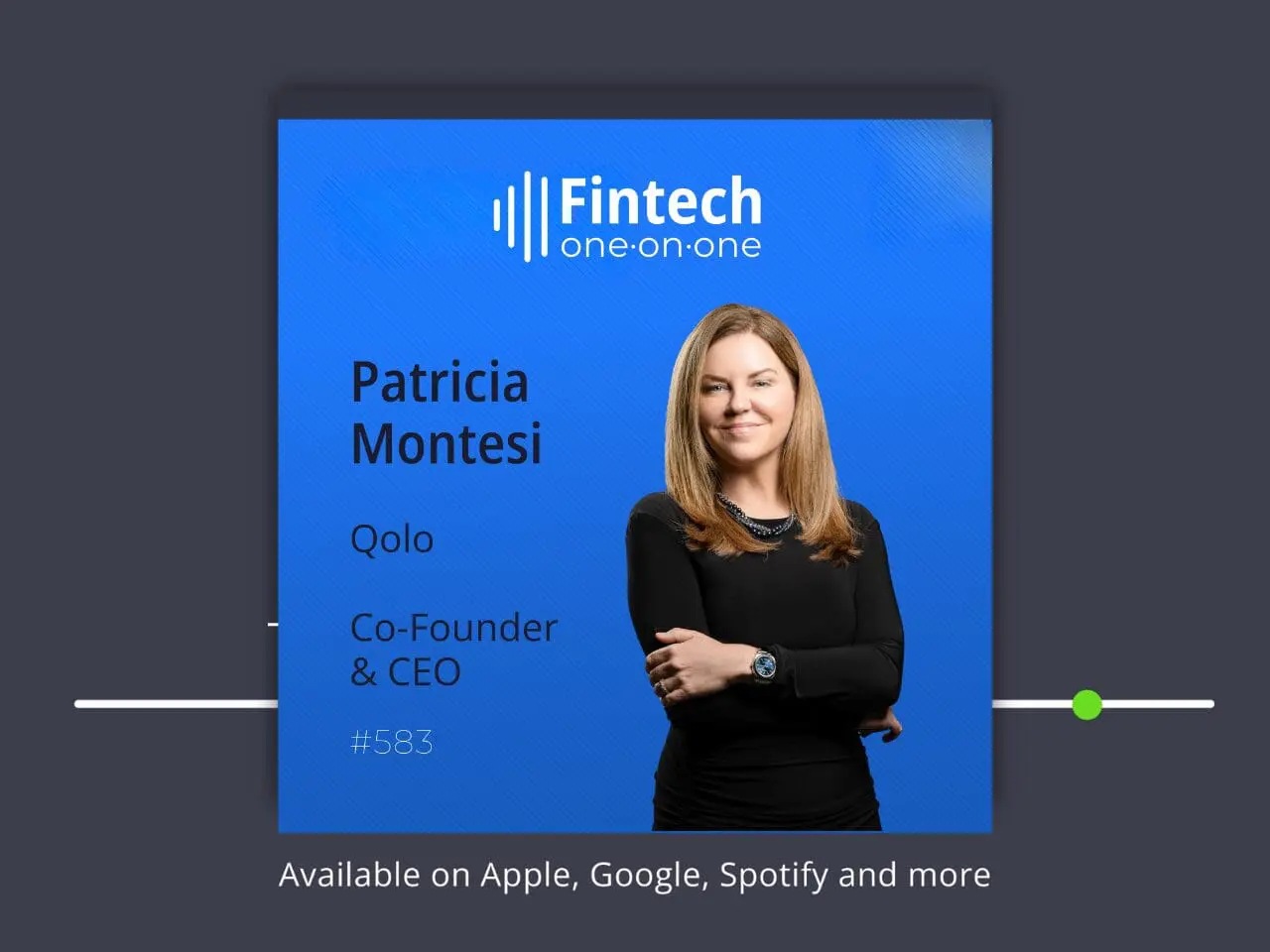
Patricia Montesi didn’t start her career in payments, she started it in car rental. After nine years at Alamo and National Rent-A-Car, she was recruited into fintech with zero industry experience. That outsider perspective became her edge, and she never let go of it. Today she’s the CEO and co-founder of Qolo, a payments infrastructure platform that combines card issuing, money movement, and a bank-grade ledger on a single API-first stack.
What We Covered
- How nine years in car rental shaped Patricia’s outsider approach to payments
- Getting recruited into Wild Card Systems with no payments background, and why that fresh lens became an advantage
- The fragmentation problem at the heart of payments infrastructure and why point products create hidden complexity
- Qolo’s three-product suite: Quantum Ledger, Qascade money movement, and Qinetic card issuing
- Why Qolo isn’t quite a side core, it overlays and integrates with existing bank cores rather than running in parallel
- Rail agnosticism and why Qolo still supports checks in 2026
- The dual go-to-market: commercial banks and B2B fintechs, same platform, different vernacular
- How the Synapse collapse changed the ledger conversation for banks and fintechs alike
- Winning KeyBank in a competitive RFP against much larger players, and launching virtual account management in nine months
- How banks are using Qolo to protect commercial deposits from modern non-bank competitors
- AI inside Qolo: from Glean to Claude, and their internal “Turning Hours into Minutes” program
- 130% year-over-year growth and 142% net revenue retention
Key Takeaways
The moat problem: Patricia set out to build a company where customers stay because of the value delivered, not because switching is too painful. That philosophy shaped every product decision at Qolo.
Ledger first: Most point-product fintechs have basic ledgers that only support one rail. Qolo’s bank-grade dual-entry forward-posting ledger underpins every rail, making reconciliation and real-time money visibility a solved problem rather than a vendor management challenge.
Synapse’s legacy: The debacle forced banks and fintechs alike to ask harder questions about who actually owns the ledger and where money sits at any given moment. Qolo had been making that argument for years before the market was ready to hear it.
Bank as distribution: KeyBank and Huntington aren’t just clients — they’re strategic investors using Qolo to defend their commercial deposit base against modern non-bank alternatives.
About Patricia Montesi
Patricia Montesi is CEO and co-founder of Qolo, a payments infrastructure company she built from the ground up after more than 20 years in the industry. She started her career at Alamo and National Rent-A-Car before being recruited into fintech with zero payments background — an outsider perspective she has held onto ever since. At Qolo, she and her team built the ledger, money movement, and card issuing stack as first-party infrastructure, without relying on third-party processors underneath.
Transcript
Patricia (00:10.222)
When we started Qolo, one of the things that I observed across my 20 years in payments is that the moat for most companies that are payment providers or banking corporate providers is it’s hard to leave us. And by the way, it certainly comes into play from an investor lens as well, because it’s often thought of as a great thing. What we don’t want that to ever be — why we created Qolo — is that the customer experience and the problems that you’re solving: you should want your customers to stay with you and to continue to grow with you because you are providing something of value, not because it’s difficult for them to figure out another solution.
Peter (00:47.63)
This is the Fintech One-on-One Podcast, the show for fintech enthusiasts looking to better understand the leaders shaping fintech and banking today. My name is Peter Renton and since 2013, I’ve been conducting in-depth interviews with fintech founders and banking executives. My guest today is Patricia Montesi, CEO and co-founder of Qolo, a payments infrastructure company that combines card issuing, money movement, and a bank-grade ledger on a single API-first platform.
Patricia’s path to payments is unconventional, to say the least. She spent nine years at the corporate headquarters of Alamo and National Rental Car before being recruited into a payments fintech with zero industry experience. And that outsider perspective shaped everything about how she eventually built Qolo. In our conversation, we talk about why she set out to solve payments fragmentation at the infrastructure layer, how Qolo’s three-product suite works together, their dual go-to-market targeting commercial banks and B2B fintechs, and how winning KeyBank as both a client and strategic investor validated their approach. We also get into how the Synapse debacle changed the conversation around ledgering, how Patricia thinks about AI inside Qolo, and what’s behind the 130% year-over-year growth. I hope you enjoy the show.
Peter (02:19.278)
Welcome to the podcast, Patricia.
Patricia (02:21.42)
Hi Peter, thanks for having me.
Peter (02:22.816)
My pleasure. So let’s kick it off by giving the listeners a little bit of background. I’d love to get the arc of your career. What are some of the highlights before you got to Qolo?
Patricia (02:36.184)
Sure. I actually spent nine years doing car rental. I performed a variety of functions at the corporate headquarters for Alamo National Rent-a-Car — started in finance, moved across to sales and marketing, and had a lot of great experience, a real good training board for springing off and doing lots of other different things. And believe it or not, my next gig was actually a complete switch in terms of industry. I ended up being recruited into a payments fintech company and knew nothing about payments at the time. But I was fortunate that I had seen what a global rental car firm looked like, what it felt like, what it was like to see great and good. So it gave me a very interesting business background.
So when I came into payments, I had a lot to learn about payments itself — how it all works underneath the covers. I remember being walked through the four-party model a few times and said, I finally got it. And then they said, okay, well, now we’re going to reverse it. And I was like, my goodness, now you guys are going to drive me insane.
Our company at the time was called Wild Card Systems. They were actually looking for business folks who could run client-facing roles that were not from payments. They wanted a fresh set of eyes and ears to say, this is not how it always has to work. And I came in with that perspective. My perspective was: show me how it works today. And then I could bump that up against a whole different view of experience and say, well, why? I could question everything.
And I think that at the end of the day, that actually helped us over time in my career in payments. Once I was comfortable in payments, I hung on to that attitude. I didn’t want to become another one of those people that said, well, that’s the way we’ve always done it. So it actually led me to start my own company in payments and take all of the lessons that I learned over the years and pour them into Qolo.
Peter (04:38.446)
Right, so what was the core insight that you saw that really prompted that decision? Can you sort of break it down for us?
Patricia (04:45.294)
So what we saw was that there were a couple of missing pieces and a focus on the next rail or the more modern payment rail. There was a lot of disruption in what I like to call the point-product world. I can do lending better, so I’m going to go out and be a lender and disrupt the banks because they’re old and legacy. Or I can do push to card, and so we had a single solution for that. Or I can do ACH better than legacy.
Our view of the world was: that’s all fine and great, it’s progress, but without this underlying ledger — this underpinning ledger that connects all of those rails together — it really gets folks into a tricky situation. Because if you want the most modern platform, you end up going and stitching together point products in an ecosystem. And it can be done, it has been done for years and years. But our view of the world was that overcomplicates everything. It shifts the burden over to the business to figure out how to unify your service, your system and your reconciliation, and understand where all my money is.
So the way we set about it was: number one out of the gate, we wanted a simplified system that was not just modern, but also had the bank-grade ledger underpinning all of the rails. In essence, we’re rail agnostic — we can move money over any rail. The power of building that underpinning ledger is that you can then see where your money moves. It’s all about origin and destination and transferring in between. That was our whole entire vision: you don’t need to go out and build all this stuff yourself or code around the inefficiencies of your legacy providers. If you get it on one platform, then you can focus on your customers, your sales, your marketing, et cetera.
Peter (06:29.406)
That’s a fairly ambitious way to start a fintech, because building that core ledgering system is the most complicated piece. And that was where we had all those challenges a couple of years ago with the whole Synapse debacle, which was really all about bad ledgering for the most part. I don’t want to dwell on that. Why don’t you talk about the product suite today? How do you describe Qolo today?
Patricia (06:54.124)
Yeah, so today we talk about Qolo under three areas. Again, we combine card payments — both modern and traditional — money movement, and ledger on a single modern API-first platform. The way we’ve productized Qolo is that we have what’s called Quantum Ledger. The second part is Cascade money movement. The notion is: how do I move and transfer money with ease and with transparency? That’s what the money movement piece of our platform does for our customers. And then we also have Kinetic card issuing.
On the card issuing side, again, all of this is at the infrastructure layer. We didn’t do it using other parties underneath us for the core processing — all of it is direct, first-party Qolo work. And I think those three things combined are what gives, whether you’re a commercial bank or a fintech, another way to put together the system of payments in an embedded fashion, where they’re not out searching all the time for the next modern rail or the next modern way of sending money, or non-fiat money, or stablecoin, et cetera. So we look at our platform as comprehensive money movement, payments, and bank-grade everything underneath it all.
Peter (08:05.134)
Would you describe it as a side core for a bank? That’s become a kind of popular term these days — where you’re not actually ripping out the bank’s core, but you’re kind of interacting with it on the side.
Patricia (08:16.93)
We often get mistaken for that, because everyone wants to solve the “do I not rip and replace for a bank” problem. The bank’s ripping and replacing of course is a multi-year, multi-million dollar journey that’s extraordinarily disruptive. So the side core does offer and solve some of those problems, but we’re different in that we overlay the existing legacy systems and we’re also integrated into their core. The side core is almost an entire separate stack — it has separate compliance built in, separate risk appetites, et cetera. It is literally running in parallel.
Ours is within. It’s over the core, it’s within the core. It’s truly not a separate system that has to convince the bank or make the bank have changes to their compliance and risk departments.
Peter (09:09.482)
So you are interacting with the bank’s existing core, and you obviously have integrations with all of the big three, and I presume some of the newer core systems as well?
Patricia (09:22.742)
We have integrations with all the cores our current banks are using. Whether it’s one of the big three or not, we’re agnostic to it. It’s not a big deal for us.
Peter (09:34.926)
There are lots of payments rails these days — beyond the card rails we have real-time payments, traditional ACH, RTP. Did you decide from the get-go that you would handle every rail, or was that in response to market demand?
Patricia (09:56.288)
For sure, this was our original vision — always around offering as many ways to pay in and as many ways to pay out as possible. And that includes traditional and even check, which — believe it or not, we’ve been talking about the disappearance of check for years and it still hasn’t happened. I’m a fintech person and we support checks, right? It always sounds odd when it comes out of your mouth.
When we built the design and the thesis, it was around trying to solve for the most complex use cases. To your earlier point, it was a very ambitious thought. And there was a lot of foundational work around that, because what we thought was that people were — the market wanted to use as many ways in and out as they possibly could. But what they were having to do, or were forced to do, is go out and build a multi-fragmented vendor solution in order to do that.
So for sure we wanted to have as many ways to pay in and out as possible, and we wanted all of them to be at the infrastructure level because we didn’t want to rely on another third party. The beauty of designing it that way upfront is that we are agnostic to whatever rails there are. If the next new one comes along, it’s just like adding another outer layer to our platform — no internal plumbing has to be redone, no recoding. Today we support traditional check, ACH, wire, RTP, and push and pull from card. For us, it’s just another rail.
Peter (11:27.214)
And so are banks your core segment, or who else are you selling to?
Patricia (11:35.17)
We sell to fintechs and banks both. We love having this sort of vertical solution and go-to-market, even though quite frankly, the underlying platform we use to service banks versus fintechs is not different at all. They might use different vernacular — banks call it virtual account management and fintechs call it a virtual ledger. Lots of different nomenclature out there.
But we have two GTM focuses. One is commercial banks. The other is more on the B2B fintech side. Our platform does support consumer programs, but from a refined GTM perspective, we didn’t think that was the best place for us to focus. We think a lot of the winners have already been anointed, and there’s a lot of risk associated with that — regulatory risk, everything else.
So on the fintech side, it’s really around corporate payables, AP automation, commercial credit, expense management. Those are the areas we focus on. And then on the bank side, think of them in the same way — we’re basically enabling the banks to sell into commercial accounts and fintechs themselves. Small or medium-sized businesses using the same technology. And frankly, we consider them almost a distribution channel in many ways. These banks have all of their payments advisors out on the street selling virtual account management, and it’s what we power.
We like the fact that they’re fairly different motions, but we like to keep our finger on the pulse of fintech always. Our fintechs are just as important to us as our banks, and we can do both with the same platform. So why not?
Peter (13:14.284)
Okay. So in the conversations with the banks, the ledgering piece, virtual account management — with the whole Synapse debacle where ledgering was so front and center — were those conversations with banks different for you because you have that ledgering product?
Patricia (13:32.0)
I think for sure that prior to that event, when people talked about ledger and we said ours is bank-grade, dual-entry, forward-posting, everyone would say, well, we have a ledger too. And each single-product line — card issuers, for instance — do have ledgers. They’re just very basic ledgers that support card, right?
So I think that event really shone a light on banks and fintechs working together and raised the question: who has the system of record, who has the ledger, who owns it, where’s the money at any given point in time? It’s not just banks — investors, fintechs, everyone paused and said, wait a minute. We work with fintechs. Whose ledger are we using? Are we using theirs or ours? What do you mean it’s only a basic ledger?
It raised a lot of the right questions that frankly everyone should have been looking at in the past. And it’s a simple word. People think it’s a debit and a credit and that’s your ledger. There’s so much more than that — you really have to peel back the layers of exactly what your providers have to understand if they truly have a bank-grade real-time ledger.
Peter (14:52.268)
I want to talk about user experience because that’s a huge piece of any offering, particularly around money movement — people want seamless, fast, few clicks. When you’re pitching your products, I’d love to get a sense of the underlying infrastructure you’ve built. How does that provide a seamless user experience?
Patricia (15:19.928)
Yeah, I will say Peter, when we started Qolo, one of the things I observed across my 20 years in payments is that the moat for most companies that are payment providers or banking corporate providers is it’s hard to leave us.
Peter (15:36.918)
Inertia is a very powerful force.
Patricia (15:39.182)
And by the way, it certainly comes into play from an investor lens as well, because it’s often thought of as a great thing. What we don’t want that to ever be — why we created Qolo — is that the customer experience and the problems that you’re solving: you should want your customers to stay with you and to continue to grow with you because you are providing something of value, not because it’s difficult for them to figure out another solution. That was the philosophy we started with.
And I think it takes a certain level of experience in payments and banking to look at our platform and understand the true difference and why the experience becomes easier. We have modern, API-first fintechs who appreciate how we’ve designed our API. So do banks. But what they really appreciate, once they start to understand the power of how they can leverage Quantum Ledger — we take the heavy lifting out for them. All the stuff they used to have to do when they had five vendors doing the same thing that Qolo can do, it just cleans up their whole world.
And to grow with them even more — they come to us and say, what about stablecoins, or what about this or that? And they find out really quickly that it’s a fairly straightforward exercise, as long as the use case makes sense for it. The work and the heavy lifting isn’t there like it is in the roadmaps of all the legacy players, because they might say they’re going to do it, but it’s going to take them a long time and they’re going to have to duct-tape the old system to the new system. And that’s where things fall apart — in all of those gaps.
Peter (17:13.134)
I want to talk about some examples I have read. KeyBank and Huntington Bank — they’re both clients as well as investors, which means they really must believe in what you guys are doing. Maybe start with KeyBank. Tell us how that came about and what you’ve done for them.
Patricia (17:35.928)
Sure. We were invited late to the party on an RFP for virtual account management. Through some connections we have in the market, I was introduced to KeyBank and started talking to them about the Qolo platform — the ledger and everything. And they’re like, wait, hold on. This is exactly what we’re looking for.
I love the KeyBank team. They really punch well above their weight when it comes to being innovative and on top of fintech. They’ve been investing in fintechs for decades and working with fintechs for decades. So they were a great first bank customer for us to have. We won the RFP up against some huge players — huge names you would know, even other startups. And we were able to launch the virtual account management system within nine months. Shortly after that, we were on the cusp of launching all their commercial card business as well.
Then they wanted to strategically invest in us, because they consider us strategic to their future for commercial payments and modernization. The same is true for Huntington — very similar set of products. They consider us central to their future, and it was a natural follow-on that they wanted to invest in the business and make sure we were linked at an even more elevated level.
Peter (18:57.794)
And how are they using the virtual account management piece? I read it’s processed billions in transactions since it was launched. Tell us about their demand for virtual account management — what are they actually using it for?
Patricia (19:13.816)
The entire thesis for KeyBank and a lot of banks like it is: how do I protect my commercial base of business? How do I protect my deposits? There are modern products that exist at non-banks that are taking away from their share of deposits from their commercial clients. And if you’re a bank like KeyBank and you’re not able to offer competitive, modern products to your commercial accounts, they’re going to move to a bigger bank that has them, or they’re going to move to a non-bank.
Think about all the AP automation products and expense management products that are out there today. Deposits are really and truly leaving the bank and going somewhere else because the product and the mechanism makes that corporate treasurer’s life a lot easier. What KeyBank recognized is: we have to offer that and be competitive, otherwise we’re losing not just customers but deposits.
So how do you retain customers with a modern offering? How do you drive growth and keep deposits in your ecosystem? If you’re offering a virtual way to open accounts — very flexible and modern, easy to set up, flexible down to the sub-ledger level — that makes a corporate treasurer’s life a lot simpler. And then all of a sudden you also have a modern card product for supplier payments, expense management. It helps them keep deposits in the ecosystem, because they’ll tell you they’re losing deposits and share to more modern solutions.
Peter (20:48.75)
Let’s talk about the card products, because that’s a massive category in and of itself. Do you have a product suite similar to some of the big fintech names in modern card issuing?
Patricia (21:06.208)
Card issuing is super important to us — we kind of grew up card-first. Most of our clients, if not all, have a card product, whether it’s virtual or physical or both. We do debit, prepaid, credit, tokenized, non-tokenized. So we do support all of the things in the card world in a very modern way.
What’s been attractive to our fintech clients is that once you start using the card product, you realize — with this ledger underpinning everything — there’s so many other things I can do. I just hosted a client in Fort Lauderdale and we were talking to them about ledgering and money movement. They had some aha moments around it. They take money in for their clients — corporates wiring in money for an expense management program or a commercial banking product. How can I do that more effectively? Well, we can help them with that. They’re able to understand: it isn’t just card issuing. I can move money in and out in a much better way than I can with any other supplier.
Peter (22:09.646)
I want to talk about competition for just a second. You’re going up against some big-name fintech companies, legacy providers, and core banking providers who probably think they’re in the mix as well. What is it that sets Qolo apart and allows you to win deals against much larger incumbents?
Patricia (22:34.114)
From the commercial bank lens, first and foremost: can I avoid ripping and replacing my core? A lot of the big legacy players came out and introduced their modern cores. I think that fell a little flat, frankly. This is not an easy thing to do. I have tremendous respect for all the legacy players — I just think that when you have something built and try to bolt stuff on, it always becomes a bit of “the house that Jack built.” Building from the ground up makes a big difference.
In the competitive landscape on the bank side, we come up against legacy players either with their legacy core and/or a promise of a modernization layer. We’re also up against newer entrants that position themselves as a layer on the outside or a sidecar. How do you sort out who does what?
I was sitting at one of the top-50 banks in the U.S. and someone said: if you ask everybody in this room what virtual account management means, you’re going to get a different answer from everyone. So there’s a lot of education involved — talking about where exactly do you stop and start, from treasury management to core and beyond. You look at a couple of competitors and you think, well, they do what you do. And then you dig deeper and say, well, no — they do this part and we do this part. So it really is about connecting dots and educating not just prospects, but existing customers as well.
Peter (24:33.272)
We haven’t mentioned AI yet, and I notice you don’t mention it on your home page at all. I presume that’s not an accident. I feel like I can’t have an interview anymore without touching on this. Are you using AI inside your products? Is there an AI intelligence layer you’re working on? How are you thinking about it?
Patricia (24:57.57)
Our website always lags behind — that’s the last thing you update. But yeah. We take a very forward approach to AI and have embraced several AI products. Some of them are as basic as implementing Glean so that everyone’s day-to-day work can become easier across all of the multiple providers that we have — take your CRM and be able to more effectively mesh that with data sitting in your product app, et cetera. We’ve embraced it early on, and obviously on the coding side it’s huge. If you don’t do it, everybody else is going to do it, so you have to keep up.
We just launched Claude. We’ve been using AI within our engineering team for a while, and now we’re doing it more broadly. In payments, it’s always been very difficult to scale up without scaling people and hard expenses. The golden opportunity is in that area. How do I win 20 clients and not have to hire the same number of people? That’s a huge advantage — we’re looking there first. It’s not to say that people aren’t important, it’s just to say: we look at our team and say, help us understand how we can grow without adding people at the same pace.
We have a little program inside Qolo called Turning Hours into Minutes. Everyone gets to showcase what they did with AI that made their job better, faster, and or made an experience for a customer that much more exciting. It’s really important that we stay modern and stay live on this.
Peter (27:14.37)
Can you give me a sense of the scale you guys are at today?
Patricia (27:17.23)
We have 25-plus clients live on our platform. We process — you mentioned the number — over $60 billion in transactions through our VAM solution. That equates to about 130% year-over-year growth. Year-over-year growth is a huge metric for us. Net revenue retention is another one. We came in at 142% net revenue retention. Very important for us because it’s not just about our clients — it’s about our clients’ land-and-expand type of business. Our early customers are renewing and expanding and growing. That hopefully gives you some sense of where we are.
Peter (27:54.894)
So what’s next for you guys? What are you most excited about as you look ahead to the next 12 to 18 months?
Patricia (28:01.278)
A couple of things. Number one, we are staying on top of AI and making sure we remain competitive and use AI to help us everywhere — not just from an automation and efficiency perspective, but potentially in certain products as well.
And we’re really thrilled with the trajectory we’re on in the banking channel. Virtual account management is a very hot topic. There’s a lot of momentum in the bank channel, and I think the carry-on from the ledger conversations and the Synapse conversations is really propelling a lot of this to where it is today. We want to continue to take advantage of that momentum.
I’ll also say — until we brought on certain people in our marketing department, we were quoted as being the best kept secret in payments, by Ken Gabbardy at KeyBank. And I was like, that’s not a badge of honor at all. We recognized it. What we were taking on was ambitious, and it was sort of pre-people-understanding what value a ledger even provides. So all the things that were happening in the market at the same time we weren’t marketing ourselves. And now all of a sudden we’re in a nice place where it’s all coming together. The market understands the importance of having that bank-grade ledger. We’ve brought in marketing talent that can actually convey that message. And the social proof we’ve gotten from banks and clients themselves has really helped propel our momentum even further.
Peter (29:49.016)
Well, believe it there, Patricia. It was really great to hear your story. Thanks so much for coming on the show and best of luck.
Patricia (29:54.584)
Thanks Peter, pleasure.
Peter (30:01.934)
Something that stayed with me is how Patricia got into payments in the first place. Wild Card Systems didn’t hire her despite having no payments experience. They hired her because of it. They wanted someone who would ask why, not just accept how things had always been done. And Patricia held on to that mindset through 20 years in the industry and all the way into founding Qolo. Most fintechs hire for domain expertise. The more interesting question Patricia’s story raises is how much of that expertise eventually becomes a ceiling.
Anyway, that’s it for today’s show. If you enjoy these episodes, please go ahead and subscribe, tell a friend, or leave a review. And thanks so much for listening.


