
Acquiring Banks and Creating an Underwriting Moat in Mexico With René Saúl, CEO of Kapital
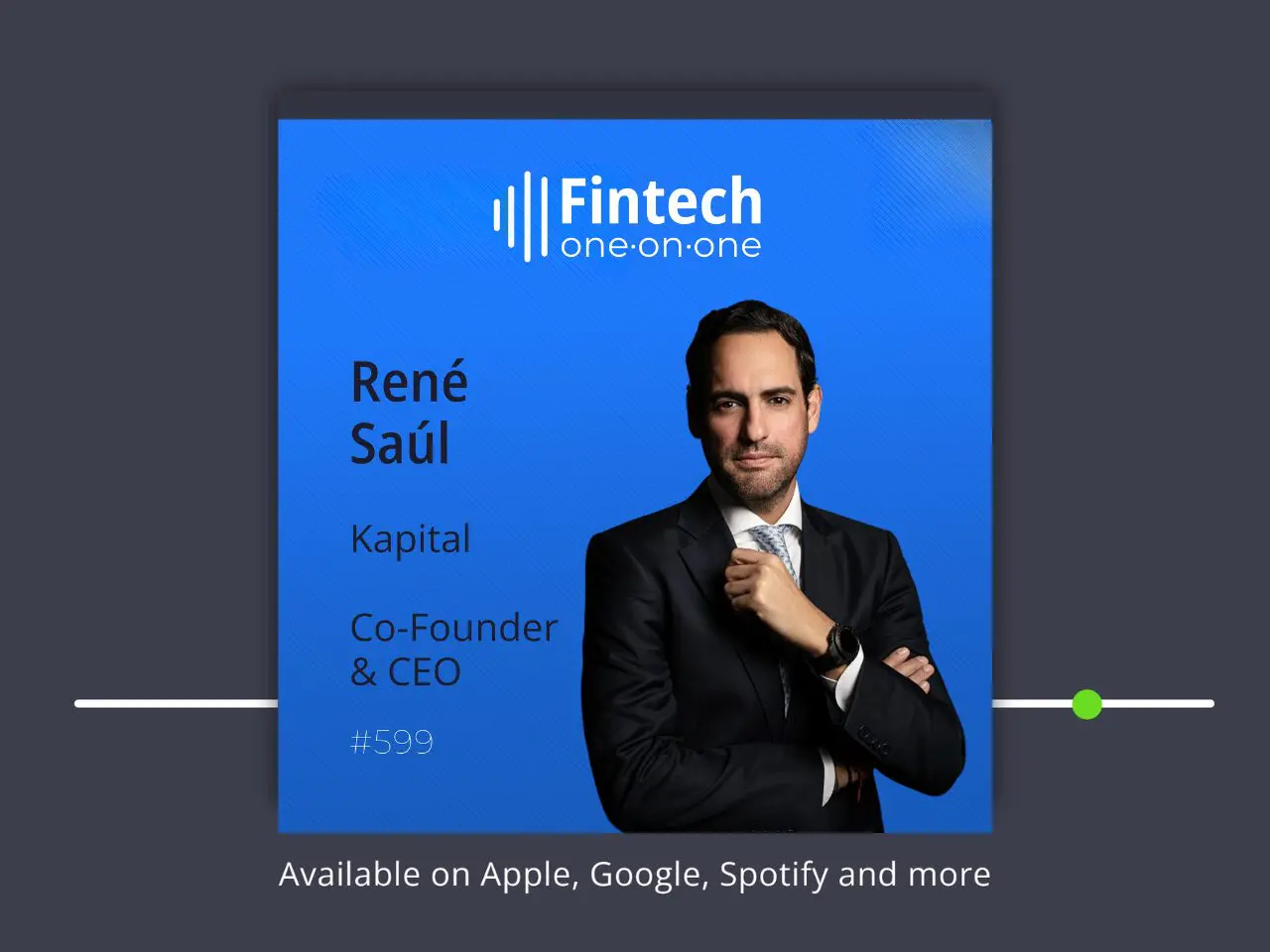
René Saúl spent seven years running an offline agricultural lending business in Mexico before selling it and pouring the proceeds into Kapital, a bet that the future of B2B fintech in Latin America belonged to companies willing to become regulated banks. Today Kapital is the largest B2B fintech in the region, and René is the only founder in the space who has bought not one but two banks, one of the deals agreed to on a napkin.
What We Covered
- Why the future of fintech is regulated, and why that was a contrarian call in 2021
- René’s seven years running an offline agricultural lending business in Mexico
- The founding thesis behind Kapital’s one-stop B2B banking ecosystem
- How Mexico’s electronic invoicing system became Kapital’s underwriting moat
- The “red car theory” of spotting opportunities before they arrive
- Buying Banco Autofin on a napkin, and growing its deposits from $150 million to $400 million in three months
- Acquiring the banking, brokerage and payments assets of Grupo Financiero Intercam
- Building instant, 24/7 cross-border payment rails on top of SWIFT
- Closing the small business financing gap with AI-native underwriting
- Why Mexico is becoming a cornerstone of America’s AI manufacturing boom
- The limits of banking an economy that still runs largely on cash
- Kapital’s growth numbers and its path to a dual listing in New York and Mexico
Key Takeaways
- Mexico’s electronic invoicing mandate hands Kapital more than 50,000 data points per customer, a seven-year head start on underwriting that competitors using third-party providers cannot easily close.
- For large enterprises and cash-strapped SMBs alike, a banking license, not a slicker app, is what earns the trust needed to hold their money and their cash flow.
- Opportunities have to be hunted, not waited for. Kapital tracked potential bank acquisitions for years so it could move in days when the Autofin deal appeared.
- Staying liquid and profitable before either acquisition is what let Kapital move fast when the opportunity came, rather than scrambling to raise capital under pressure.
About René Saúl
René Saúl is the co-founder and CEO of Kapital, which he built after selling an offline agricultural lending business that financed berry and avocado exporters in Mexico and Peru. Under his leadership, Kapital has grown into a licensed financial group serving more than 300,000 customers across Latin America, with more than $5.3 billion in assets and two bank acquisitions behind it.
Cleaned Transcript
Rene (00:10)
Our thesis back in the day is the future of FinTech is regulated. We were the first ones saying that we needed to become a bank back in 2021. They told us that we were crazy. And now everybody in fintech wants to buy a bank, because if they don’t buy it, they’re eventually gonna die. And the reason is very simple, especially on the B2B side. The only thing that gives confidence for a big enterprise to work with, or in Latin America especially, or a small medium-sized business that has a lot of pain with their cash flows, is a regulated entity. So we needed to always be tracking entities that were going to provide us with these type of licenses. And then you have the challenge to build on top of these old core systems your technology. And that’s exactly what we were prepared for.
Peter (00:59)
This is the FinTech One on One Podcast, the show for FinTech enthusiasts looking to better understand the leaders shaping fintech and banking today. My name is Peter Renton, and since 2013, I’ve been conducting in-depth interviews with fintech founders and banking executives. Today on the show, I’m delighted to welcome Rene Saul, the CEO and co-founder of Kapital. That’s Kapital with a K. Before starting Kapital in 2020, Rene spent seven years running an offline agricultural lending business in Mexico, financing the growers who export berries and avocados to the US, a company he eventually sold and then poured the proceeds into building Kapital. Today, Kapital is arguably the largest B2B fintech in Latin America. In our conversation, we dig into how Mexico’s electronic invoicing system became the data moat behind Kapital’s underwriting, why Rene decided back in 2021 that the future of fintech is regulated, and how we ended up acquiring not one, but two banks, one of the deals literally agreed to on a napkin. We also cover cross-border payments, why Mexico was becoming a cornerstone of America’s AI manufacturing boom, the limits of banking an economy that still runs on cash, and Kapital’s path to a dual listing in New York and Mexico. Now let’s get on with the show.
Peter (02:28)
Welcome to the podcast, Rene.
Rene (02:30)
Hey Peter, thanks for having us. I appreciate it.
Peter (02:33)
My pleasure. Good to see you. And let’s get started by giving the listeners a little bit of background about yourself. Tell us before Kapital, some of the high points of your career.
Rene (02:45)
Well, before co-founding Kapital, I used to operate an offline lending business, basically based on agricultural loans, mainly in products like berries, avocados that exported to the US. We found that niche. We did it correctly for around seven years. We got to expand it all the way to Peru. And it was really good because you see how a small business works, their needs, we were an SMB, even though we had a significant loan book. But this is the curious thing. All the things that our customers had pains, all the things the pains we have, obviously speaking on the financial sector that we are in, is the way we have done in Kapital the opposite. Because we remember of those things that used to be really strong pains and we want to always remember them so we can offer the best product that it is. Obviously speaking on the B2B side. So it’s good that you asked where we come from. You can never forget what were you doing, all the knowledge that you have and where you come from.
Peter (03:54)
Okay, so then let’s talk about the founding story of Kapital. Kind of, can you just tell us a little bit about the idea and the founding of Kapital?
Rene (04:03)
Well, let me real quick for the guys that don’t know what Kapital is. Kapital is a modernizing business banking ecosystem by bringing in, in one stop shop, FX, lending, payments, treasury, investment, every cross border financial service that there is around. And it’s basically AI native. Because we base the solution on the electronic invoicing that is around Latin America, and that’s where we collect the data to make a smoother operation for our customers and we know our customers more. Kapital gives small and medium businesses greater visibility of their finances, also in that same place, so they can access our liquidity. We are, I do believe, the largest B2B fintech in Latin America, which is a huge honor. But it’s also harder, right? Because the higher you are, it gets more interesting. But that’s a little bit about Kapital, and the needs that we were of our customers fighting to provide them. We have more than three hundred thousand customers globally. It represents more than five point three billion in assets. And that’s a little bit of us.
Peter (05:17)
So then did you get the idea when you’re running that offline agricultural lender? Did you get the idea for Kapital then? I mean, what was the genesis of the company?
Rene (05:26)
Going back to your first question, in 2019, I didn’t want to continue the agriculture alone because I do believe that it was going to change. The financial world was going to change. And I wanted to be ready, because if not, the company was going to eventually die. It was not like lending. Everything was manual. And there was a fintech wave coming in that we needed to jump and be part of it, and jump with our knowledge. Because we come from exactly that world, which has been a successful advantage that we have always had. Every single thing that has happened to us, that’s the way we build a product. And I wanted to offer these types of solutions now with technology, data, and in the same place. Because you have to understand that the main problem SMBs have in Latin America mainly is they don’t have visibility of their finances. And that’s why they cannot access the liquidity that we can provide. So our thesis was that we need to create that native AI platform. Back in the day we called it data, that provides those two things to our customers, but mainly customers of the supply chains of the big enterprises. And that was the first part of the equation that we were solving. Why? Because our solution was going to become so powerful that eventually you’re gonna end up working with enterprise. We bank thousands of enterprises, the biggest companies in the world, they bank with us for rails and our payment solutions. But you have to start with the supply chain. And that’s what I saw based on the first business that I did. They were mainly supply chain companies. And nobody is tackling these type of services, right? And that’s a good thing. You have to find a really big problem and with a simple solution. And you have to focus on that niche. And I saw that. We came from it. We come from it. And that’s where we needed to focus and that’s where we started building.
Peter (07:19)
Did you sort of initially focus on those agricultural companies, or did you immediately expand beyond them?
Rene (07:26)
Of course we had those customers that we used to know, but we became industry agnostic. SMBs’ pain and supply chain pains, let’s call it that way, are the same everywhere. It doesn’t matter if you’re in construction, in infrastructure, in communications, in AI, whatever manufacturing, whatever, it’s the same pain. You don’t have visibility and you cannot access liquidity, especially in Latin America. I do believe that if they get to those both things, Latin America, especially Mexico, will be superpower economies.
Peter (08:01)
You touched on it already. And I want to, one of the things when I was first sort of started paying attention to this market, I was amazed at sort of the e-invoicing, the CFDI records, where basically every invoice is registered on a national digital ledger. And that’s just a data treasure, I’m sure that, for someone like you, how has that kind of helped with your underwriting and onboarding of your customers?
Rene (08:32)
That’s my moat. You got exactly where, back in 2019, we have to understand electronic invoicing, the CFDI world. And we invested, we sold our previous company by the way, I didn’t mention it. So we had a good exit. And that’s where I invested all my money in creating a solution that is so powerful, so easy, and with profound knowledge of our customers based on electronic invoicing. So we invested all that because we only get the tax ID of our customers. We start all the data and we go to more than 50,000 data points that electronic invoicing has. So we collect that data, simplify it, and put it on for our underwriting. And it has become so powerful that we even know more of our customers than themselves. So that is a huge moat that can allow us to know exactly what our customers are going to need and when they’re going to need it. And that’s the competitive advantage we have. We have an advantage of seven years from the guys that are starting to use electronic invoicing or they hire a third party to provide them with these services. Everything we did is in-house. We created our solution to have a strong underwriting of our customers. And by having a strong underwriting, you can then onboard them faster and then open the account faster and know exactly what to offer.
Peter (09:52)
One of the things that I think is unique, one of the many things that’s unique about Kapital, is you haven’t just bought one bank, you’ve bought two. I don’t know any other fintech that actually has acquired two banks. So take us through the two banks that you’ve acquired over the last few years.
Rene (10:08)
Our thesis back in the day is the future of FinTech is regulated. We were the first ones saying that we needed to become a bank back in 2021. They told us that we were crazy. And now everybody, FinTech, wants to buy a bank, because if they don’t buy it, they’re eventually gonna die. And the reason is very simple, especially on the B2B side. The only thing that gives confidence for a big enterprise to work with, or in Latin America especially, or a small, medium-sized business that has a lot of pain with their cash flows, is a regulated entity. So we needed to always be tracking entities that were going to provide us with these type of licenses. And then you have the challenge to build on top of these old core systems your technology. And that’s exactly what we were prepared for. We always stick to our thesis, so when the opportunity came, you have to be ready for it. And that’s why I call the red card theory. Are you familiar with it? No. So let’s say I’m gonna ask you how many red cars you saw today going to the podcast? You don’t know, right?
Peter (11:15)
I don’t know.
Rene (11:16)
But if I tell you right now that I’m gonna give you one hundred dollars per red car that you’re gonna see, what are you gonna do?
Peter (11:22)
You’ll see them everywhere, yes.
Rene (11:24)
You’re gonna be looking everywhere, right? Yeah, exactly. That’s where the opportunities are. You don’t have to be waiting for them, you have to be looking for them. And we were ready for the first one, the bank that we bought. They invited us to participate in the sale of this bank, and we actually lost. Our bid lost. It was the second highest. But I always told my team, that was in 2023, that we’re gonna go for it. And we kept asking every single month, how was the process going with the acquirers, right? And we saw that things were moving. And then in August, on my birthday, actually that is gonna be in a couple of weeks, two days after my birthday, the former owner of the bank, who we had a good relationship with, called me and said, “Hey, are you still open?” I was like, “Yeah, let’s talk.” And I remember he was in Houston. I was like, “I want to fly and see you.” He was like, “Perfect, I’ll see you in my office.” And he came to see me at my office and we were ready. And we signed the deal actually in a napkin. I have it here. And that’s awesome. Then we started immediately working and operating, because we had to do a smooth operation, send the money right away and start operating. And within the first month, three months, historic deposit base, this is the thing, you’re never going to be ready if you’re waiting for the opportunity to come, but you have to go for it. And that’s what we did. So in the first three months that we took control of the bank, the historic deposits of that bank were 150 million USD. We took them all the way to 400 in the next three months. I’ll tell you now our numbers, and you’re gonna see our growth. So we weren’t ready, but now we’re ready. I remember the day I took control of a bank, I have a fiduciary duty with my depositors, with my customers, and you have to be with high standards. And we just went for it. So you seize the opportunity at the moment that it presents to you, but you have to be looking for them, Peter. You never have to be waiting for them. We started growing, we did a tremendous job. We always thought that, and previously, of my experience, my co-founder, when I invited Fernando two years after I started the company, Fernando was the head of the biggest credit rating agency of Mexico, and he got a profound knowledge of the financial world and I needed help on that side. And I decided to invite him and he decided to join. So we always have this philosophy that we have to maintain high growth but with efficiency. And allowing us to do that, we were liquid when the opportunity was presented to us. We were already profitable. We were vindicated as profitable. And then in twenty twenty five, we bought the assets of another bank and their brokerage firm that had some trouble with their license, and we saw it as an opportunity to also attack a new source of revenue, which was cross-border payments. They were the number one cross-border payment provider in the country. They had 20% of the market share. But it was a bank, I was like, we have to put our technology on top, build our rails, have a strong compliance for these types of businesses, which provides you with electronic invoicing. We were ready. Electronic invoicing gives you all the visibility you need in compliance, financial statements, income statements of the company, who are their vendors, who are their customers. So you know, and you have a really strong onboarding and a really strong opinion on compliance right away. And we built on top of those legacy banks, on both banks, our API based technology. We were ready. So you have to always, always be looking for these opportunities. And the curious thing, it happened two years after, in the same day, which was around my birthday last year. We did two acquisitions, one in August of twenty twenty three and ours of twenty twenty five. So that’s the story behind those two acquisitions, big acquisitions that we have made. We are right now a head count of employees of thirty five hundred and we operate in four countries.
Peter (15:33)
Wow. Are a lot of your customers involved in cross border trade, or is that a big component of your business now? You’ve just got the largest bank that was doing it. So with that, have you modernized the system that the bank was using, or how are you moving money between countries?
Rene (15:48)
Let me answer your first question, and that’s by working with these big enterprises. I knew them. Remember that I used to be doing international factoring for my customers on the agricultural loan. What we did is we collected from these big enterprises and we factored them. And usually these are Costco who buys the berries, Driscoll’s, and all these big US companies. And we did factoring. So I knew how to work with them. And I know how to tackle first to win the big enterprise. You have to do two things. First, and the most important one, is your product, right? You have to have the good capacity to operate with these complicated treasuries. Strong tech, and you need to know their supply chain better than they do. And that’s what we did. Because if you satisfy the supply chain, the big enterprise is going to be happy, and either way around, right? So that’s what’s always been like that. Now going back to your question, how we built our, and how we are really good at payments, it’s API native. Our Swift is API connected with the correspondent banking in every country and everywhere we are, which allowed us to move faster and in the regulated world. You send a payment to a traditional bank in Mexico or in the United States, an international payment, usually takes T+1, well that’s one day or even two days. We can do it instantly. And not even in usual hours, which is four PM when they stop operating. You can do a transaction right now, five, six PM, even twelve PM, and it will arrive immediately. And that’s how I always say you compete with service and you compete with product. And we have a really good product. And that’s why we decided to power what we have bought and make an even stronger solution with regulatory certainty. And that’s what the big enterprises are looking for.
Peter (17:40)
Sticking to that for a little bit, what technology are you using to allow it to be instant? Because Swift is not instant. My understanding is that most of the time it has to go through a holding period. What are you using? Are you using Swift to do this instantly, twenty four seven?
Rene (17:59)
Yeah, we use Swift, we use API with our correspondent bankings around the world, like I was telling you. They connected API based with Swift and we use those rails to send the money.
Peter (18:12)
Then I want to talk about small business lending for a minute, and I want to talk about AI. In the US there’s a big financing gap where companies that want financing can’t get it. How are you closing the gap there? Are you able to underwrite companies that other lenders cannot? And how are you sort of bringing AI to bear on this problem?
Rene (18:35)
I think it’s a real opportunity for markets such as Mexico to move quickly, particularly with a financial activity increasingly digital and borderless on AI. But the leapfrog and the narrative is only meaningful when emerging technology can deploy this type of infrastructure, right? We are a sophisticated developer and user of AI because of one thing, electronic invoicing. Electronic invoices give us an amount of data that we can process, build models around it, and our predictions are better. That’s how AI basically works, right? You have to always predict better. That’s what Claude and the LLMs and ChatGPT can do. They basically know what are the next words you’re gonna say. And that’s how they continue building better their models. That’s why they keep improving, because they have more data. That’s exactly what we’re doing, but with the financial world we have so much data on our databases. We have their customers, we have their invoices, we have their cycles every month, their performance, their balance sheet, every single aspect of the company, we know it. And that’s on the product side, on the product side for AI. So that has allowed us to build a flywheel effect that helps us on growth and also to understand and perform better with our customers, right? And on the geopolitical side, Mexico, right now, if you can see the graphs of the economy of Mexico, especially Mexico, because it’s the number one trade partner of the US, all the AI companies establishing manufacturing, colleges are establishing in Mexico, providing with their chips, simple logistics. And I do believe that this is a huge opportunity for the country. We actually bank several of them, if not the majority. We have become their bank partner, because of course we understand where they came from and the needs that they have. And Mexico is in a unique position to have this AI boom that is happening in the US, in the infrastructure, to provide them with this infrastructure and logistics so they can deliver faster. And that’s where I see the opportunities are on AI, because it’s not only on the product side, basically AI for users like you and me, it’s to simplify stuff. But also you have to understand what comes around. And we have to satisfy both, we’re ready for this capacity. And we’re always tracking this type of economic activity. Mexico’s economic activity, trading economic activity two years ago, number one was automotive. Now, with the tariffs and all that stuff, with a decrease of 40%, right now that changed to manufacturing. The manufacturing levels are now even higher than what was the automotive industry. And not only that, I mean, you have to understand how Mexico became, I will say, a price cornerstone of America’s AI boom. Because, like I was saying, US imports of hardware, of design where the destiny is data centers, have surged in Mexico.
Peter (21:47)
So then what about the informal economy in Mexico? Obviously there’s still a really big cash based economy there. You don’t really deal with the tiny one person companies that are doing cash based transactions. Is that sort of not part of your target market? Or if so, how are you dealing with it?
Rene (22:06)
I would love that every single micro SMB or SMB will be formal, but in Mexico the informal economy is very big. Everything’s cash. That has cons, I will say, because you cannot access the liquidity of the regulated entities. I cannot bank them if they don’t have a tax ID, if they’re not an incorporated entity. And then they cannot access their liquidity, nor the technology to help them be organized better. And that’s something I believe that’s an effort that you have to do with the government, aligned with you, so they keep formalizing this type of economy. On our side, that’s nothing that we’re targeting. I think that’s more for consumer companies that want to tackle these micro entrepreneurs that are consumers and their economies are fully cash, or that aren’t a regulated entity.
Peter (22:59)
Yeah, last month we saw Nubank get authorization to operate as a bank in Mexico. I mean, obviously they’re a consumer focused bank. What’s your view? Is this a good thing for Mexico? What’s your view of companies like Nubank and the like coming to Mexico?
Rene (23:18)
Well, what Nubank did on the consumer side, we are doing on the B2B side, right? So for me it’s good. Even though we don’t compete directly, they are more into the consumer, which basically they are in a huge fight against Mercado Libre, which is also jumping and growing significantly fast in Mexico on the consumer with their fintech side. Companies like Nu, for me, are one of the best fintechs that exist. And what they did on their onboarding with the consumer was their advantage. And entering markets like Mexico tells you how big our economy is, how big the opportunity is. I’m gonna give you two small data points. You see the revenues of Revolut, they operate in more than 50 countries, and then you see the revenues of Nubank, which are actually a little bit higher than Revolut, I think, and Nubank only operates in three countries. That’s how big our economy is. So I see it as a good thing, and it always makes you better, even though they don’t compete with you. You have to always see what they’re doing.
Peter (24:27)
Okay, so you closed a Series C, or it was announced anyway, October of last year, and you called it a pre-IPO round, and you were actually targeting a New York Stock Exchange listing and a listing in Mexico within three years. Is that still on the table? How are you kind of gonna get there?
Rene (24:49)
Our priority right now is still focused on our growth and always on profitability and institutionality, for keep being a credible financial institution. Our growth has been proved in that way. We have surpassed every expectation. And I do believe that an IPO for a Mexican or Latin American fintech will be great, because it will allow us to unlock the liquidity for other startups. So that’s something very, very important that we keep track of. And that we’re gonna, of course, keep aiming for. We need to be ready. We’re there. Some of our numbers are really great. For example, our net profit in the first half exceeded approximately more than 50 million US, while our loan portfolio grew around 250% year over year. The deposit base also increased significantly, to around 240%. From 1.72 billion to 3.5 billion. That’s 61,000 billion pesos. Yes, 3.5 billion. So you can see our growth has been humongous. Because we are always solving a huge problem. And doing that, we have always maintained an efficiency. That’s why our ROE is around 32%.
Peter (26:09)
Any plans to actually launch here in the US? Nubank are famously now getting a US banking license and they’re going to be relaunching here shortly. What are your plans for the US market?
Rene (26:21)
I mean, we have all the data of all the companies that work with us, and they send payments to the US, and all that stuff. And the US is critically important, because as a source of, I will say, demand, capital, strategic partnership, talent and technology, it will allow us to have a very unique solution connecting our entities in the US with Mexico to deliver faster products. And also helping our customers that are sending money in the US to deliver faster. So for us, it’s, you know, the answer. So let’s say, let’s be ready when it comes.
Peter (27:03)
Okay, well we’ll have to leave it there, Rene. What you’ve done has been quite impressive. Great to chat with you and learn more about Kapital, and best of luck to you.
Rene (27:14)
Well Peter, I appreciate your time. I hope I see you again, and thanks for the opportunity of telling a little bit about what we have done.
Peter (27:26)
One thing I’ve always been envious of about Mexico is its electronic invoicing system. Every invoice in Mexico gets registered with the tax authority, so Rene just takes a tax ID and instantly pulls more than 50,000 data points on a business, its customers, its vendors, its cash cycles, its real revenue. He said Kapital knows its customers better than they know themselves, and I believe him. We have nothing like that in the US, and Europe is only just starting. We spend enormous effort reconstructing a small business’s financial picture from bank feeds and bookkeeping software. In Mexico, the government hands it to you. If you know how to process it, that is a genuine structural advantage, and it helps explain why companies like Kapital are doing so well. Anyway, that’s it for today’s show. If you enjoy these episodes, please go ahead and subscribe, tell a friend, or leave a review. And thanks so much for listening.


