
How Edge Focus is Bringing Quant Trading Precision to Consumer Lending, With CEO Elliott Lorenz
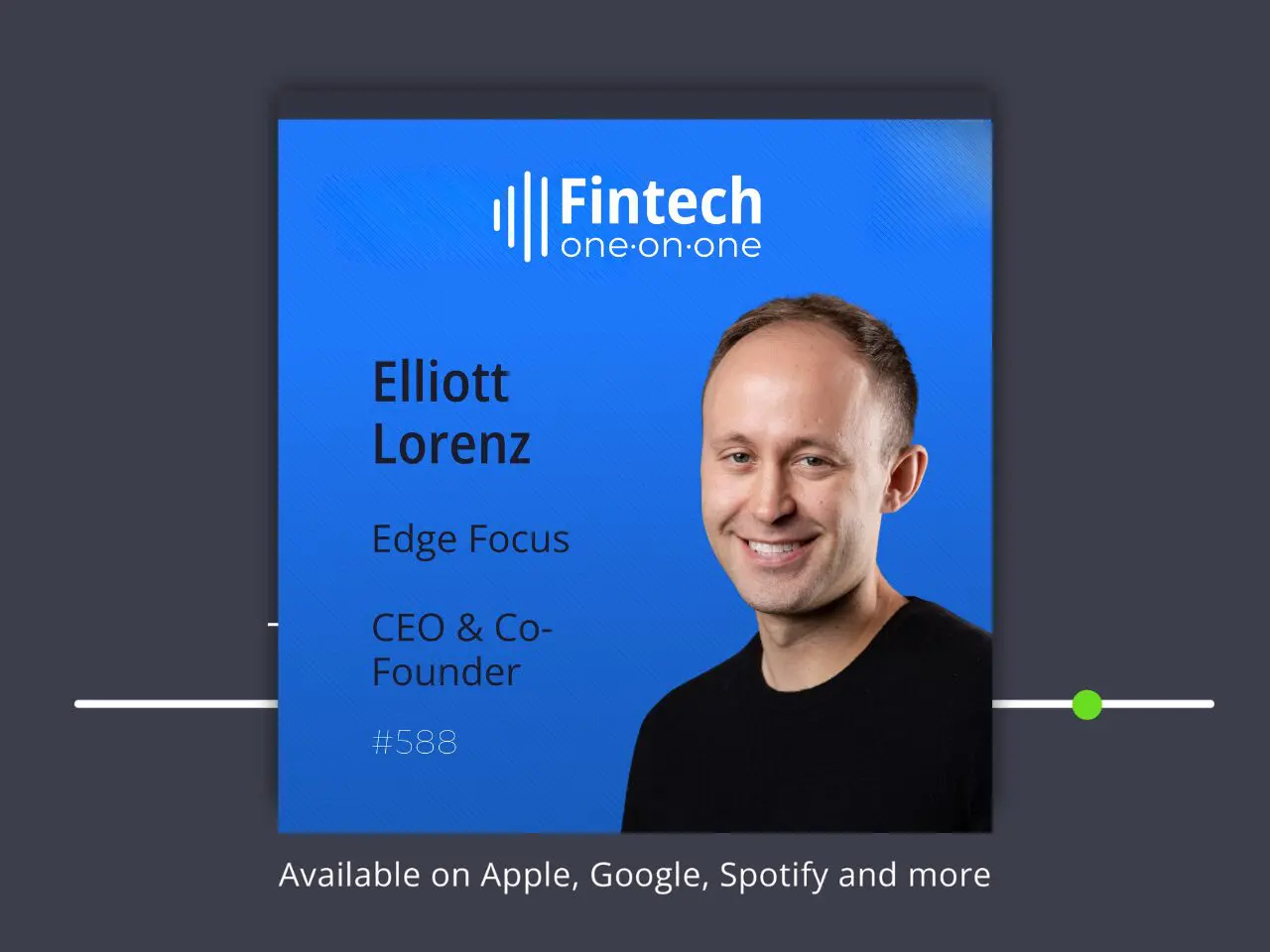
Elliott Lorenz took an unusual path into consumer lending, moving from applied mathematics and high-frequency trading into the business of pricing credit risk. Today he is the CEO and co-founder of Edge Focus, a technology-enabled private credit firm that sits between consumer lending platforms and the institutional investors who want to deploy capital into the asset class. In this episode, Elliott explains how the firm’s credit engine works, why speed is its biggest edge, and how he reads the recent wave of criticism aimed at private credit.
What We Covered
- From engineering and applied math to high-frequency trading
- What Michael Lewis’s Flash Boys got right and wrong about HFT
- Spotting an edge in LendingClub’s public loan data
- Turning a data-science hobby into Edge Focus
- The Origin credit engine and how it makes decisions
- Expanding a lender’s credit box with an orthogonal view of credit
- Modeling with a single month of payment history
- Updating a credit model within a day
- The Lens portfolio analytics tool
- Where alpha comes from beyond the underwriting model
- Fraud and asset liability mismatch in private credit
- Building the EDGEX ABS shelf and partnering with Fortress
- Proving ML models are free from bias
- Where consumer lending goes over the next few years
Key Takeaways
- Edge Focus competes less on having a single better model and more on combining technology, capital, and platform relationships in one package, which Elliott calls the firm’s “big unlock.”
- The firm can incorporate even a single month of payment history into its models and push an update within a day, letting it react to macro shifts faster than firms that wait 12 to 24 months for data.
- Most of the recent private credit criticism falls into two buckets, fraud and asset liability mismatch, and Elliott sees the fraud cases as largely idiosyncratic and the redemption problems as a function of investors misjudging illiquid assets.
- Because Edge Focus invests its own capital alongside partners rather than acting as a pure technology vendor, its incentives are tied directly to loan performance.
About Elliott Lorenz
Elliott Lorenz is the CEO and co-founder of Edge Focus, a technology-enabled private credit firm focused on consumer lending. He trained as an engineer and applied mathematician, earned a master’s in finance from Princeton, and spent several years in high-frequency trading before bringing those modeling techniques into consumer credit in 2013.
Transcript
Elliott (00:10): If you go to the platform and say, hey, here’s a bunch of capital, yeah, they’ll sell you loans, but how do I know it’s any good? If we can bring together the relationships that we have on the private credit side, as well as our technology that we know is really good, with private credit partners who understand how good we are at underwriting, that’s where the magic happens.
Peter (00:28): This is the Fintech One-on-One Podcast, the show for fintech enthusiasts looking to better understand the leaders shaping fintech and banking today. My name is Peter Renton, and since 2013, I’ve been conducting in-depth interviews with fintech founders and banking executives. Today on the show, I’m delighted to welcome Elliott Lorenz, the CEO and co-founder of Edge Focus, a technology-enabled private credit firm operating at the intersection of consumer lending platforms and institutional investors. Elliott started out as an engineer and applied mathematician. He pivoted to quantitative finance with a master’s from Princeton and then spent several years in high-frequency trading before bringing those modeling skills into consumer lending. In our conversation, we talk about how Edge Focus’s Origin credit engine works and the role it plays in expanding lenders’ credit boxes, how their models can incorporate recent payment history to adapt quickly to changing conditions, how they’ve built their own ABS shelf and approach capital markets through partnerships with major firms like Fortress, the current state of private credit and how to think about the widespread criticism of the space in the last few months, and where Elliott sees the consumer lending landscape heading over the next few years. Now let’s get on with the show.
Peter (02:01): Welcome to the podcast, Elliott. All right. So let’s kick it off by giving the listeners a little bit of background. Give us some of the high points of what you’ve done educationally and in your career to date.
Elliott (02:15): Sure. So I went to school for engineering and applied math. And I think like a lot of other folks at that point in time, didn’t totally know what I wanted to do. So I thought I was gonna be going into medicine. And about my junior year, I was fortunate to go to an introductory session for a master in finance program. And I realized you could combine business and finance and math in ways that I really didn’t even understand much about at the time. And I thought that was definitely what I wanted to do with my life. So I made a quick pivot from engineering and all that to eventually quantitative finance. And I was fortunate I already kind of had a background from my engineering days, so the transition was pretty seamless. So I went to a master in finance program at Princeton and did that for a couple of years and then quickly went into the high-frequency trading world shortly thereafter. And so I had a really exciting, fun run in the HFT world from twenty eleven to around twenty sixteen. I was, again, really fortunate to join at what I would call a pretty high peak in the industry. A lot of things were going really well at the time. It was still pretty early days. Got to learn an awful lot about really exciting technology on both the software and the hardware side, things that ultimately allowed me to bring a lot of that to the consumer lending space.
Peter (03:34): Right, and it was right around the time, I remember Michael Lewis’s Flash Boys, right? I read that book, I thought it was just amazing how it was talking about gaining like milliseconds, laying fiber from Chicago to New York and what have you. And that was a fascinating book. So that was written during that time you were working in the industry, right?
Elliott (03:52): I believe it was somewhere around twenty fourteen-ish. And it’s really interesting because reading a book like that and being in the industry, you realize how opaque a lot of what you’re doing is to outsiders, even to someone like Michael Lewis. And it was kind of at that point in time you realize that everything you read about in the news is not necessarily how things are in reality.
Peter (04:11): Right. So let’s talk about the move to consumer credit, right? ‘Cause I think you and I actually got into fintech in pretty much the same way. Tell us a little bit about how you came across this and what you did.
Elliott (04:25): First of all, I’m really thankful for LendingClub for publishing a lot of that early data. I know they were certainly responsible for, you know, myself, our firm, ultimately some other firms as well, ultimately getting into the consumer lending space. So my co-founders and I were pretty early to LendingClub. Ultimately, again, like other several other folks, looking at the data and looking at it from a very data science and engineering background, trying to see, is there a way to map a lot of the characteristics on each individual loan to an outcome? And at the time, LendingClub provided around 150 different attributes. And so you’re able to use what we learned in the HFT world and ultimately take those techniques and map them to what we thought would ultimately be high-performing loans. And so we did that from 2013 to 2016. And over that time we had, you know, really excellent returns. On an unlevered basis, it was, you know, in excess of fifteen percent, and realized number one, we think we have a really nice edge doing this, certainly versus at least what the platforms were doing at the time. But number two, and I think this is really important, it was really difficult to access the asset class at the time, to go into LendingClub and to ultimately curate a portfolio and buy the loans. And you certainly know this, Peter, you had to have a lot of motivation. You had to be reasonably technically savvy. And then ultimately, unless you had a lot of motivation, you probably weren’t going to do it. So we thought that combining the expertise that we were building along with better access, we could ultimately create a better product.
Peter (05:57): It sounds like you did it as a hobby to start off with. Tell us a little bit about the founding of Edge Focus and what was the impetus to go from hobby into entrepreneurship?
Elliott (06:09): It was a combination of a few things. I think number one, when we started doing it back in around twenty thirteen, we didn’t know how good we would ultimately be at it. And in consumer lending, it takes a while to get the results and the data to ultimately realize that. I think over time what we saw was that the results that we had in LendingClub, which would very easily display this, were pretty exceptional. We were consistently ninety-ninth percentile with regard to returns. So that was, I think, the really big driver. I think the other big driver, from my perspective, in my prior career in HFT, we saw kind of year after year becoming more challenging and more challenging all the time. Consistent investments in software, in hardware, decreasing profit margins per trade, and ultimately I wanted to be in an industry where it was really positive-sum in terms of we could provide more loans to more people in a better way and ultimately grow things in a way that the HFT business wasn’t doing at that time.
Peter (07:07): Fast forward to today, maybe just give us a little bit of sort of an evolution of Edge Focus and how do you describe it today?
Elliott (07:16): Yeah, I describe Edge Focus today as a technology-enabled private credit firm that really sits at the intersection between consumer lending platforms and private credit firms who want to deploy capital. And we see the credit engine that we’ve built as the center of that. And what that essentially means is taking the technology and licensing it to platforms to ultimately give better underwriting outcomes, and then managing capital on behalf of private credit partners to ultimately get better outcomes for them as well than they would otherwise.
Peter (07:46): Okay. And so then is this all consumer credit? I mean, you don’t go outside of that core area?
Elliott (07:53): If there’s a consumer on the other side, we can underwrite the loan. Because at the end of the day, what we’re doing is we’re modeling consumer behavior. Traditionally we’ve done this in unsecured consumer loans. We also do this in auto loans as well. And we’re expanding into other areas as we speak.
Peter (08:09): Maybe we can talk a little bit about your platform, I think called Origin, right? Maybe you could explain a little bit about what that is and how your platform works.
Elliott (08:21): Yeah, so Origin is the name of our credit engine. And so what that essentially means is, you know, we have algorithms sitting in the cloud with connectivity to consumer lending platforms. And ultimately, a partner is going to send us information about a loan application. And that can contain a wide variety of attributes. That can contain things that the applicant has entered into a form. It can contain credit bureau information. Ultimately, we can obtain other information from potentially some other sources, like alternative data sources. And ultimately, we take in all that information and return back some kind of decision. It’s usually approve or decline, an expected risk tier, potentially an interest rate, a term. It really depends on the platform and how their infrastructure is set up. But we are making the decision about whether or not we want to underwrite a loan.
Peter (09:16): Let’s just take a fintech lending platform. So I know you have worked with a number of them. When you’re going to the platform themselves, you can expand their credit box, right? Because your credit engine is able to approve loans that their in-house engine doesn’t. But I mean, is that the main use case, expanding the credit box? How are the platforms actually using you?
Elliott (09:39): I think that’s a good way of putting it, Peter. Expanding the credit box. Another way of looking at it is, you know, having an orthogonal view of credit. At the end of the day, what we’re trying to do is provide another capital source as well as a view into more folks so we can ultimately underwrite. And just because we have a different set of inputs, different data, different modeling approach, potentially different partners from a capital standpoint, we can ultimately find and expand the credit box of the underlying partner.
Peter (10:07): In my research I was reading that your models are backed by over a hundred billion data points. Is that the data of every loan you’ve ever ingested? What data points are we talking about exactly?
Elliott (10:20): At this point, it’s actually probably significantly more than that. And that data comes from a few different sources. It comes from credit bureaus as well as the consumer lending platforms themselves. And that data comes either at the time of application, in terms of folks who have credit attributes that we’re getting from bureaus, from platforms, or it’s performance data that we’ve gotten either, again, from platforms or bureaus. And ultimately we use all of that information to develop our models.
Peter (10:48): If you look back at consumer credit over the last few years, I mean, it hasn’t been a typical credit environment for, you could even say, since before COVID. So now that’s going back six and a half years now. How do you tweak your models when things are unusual? And, you know, we had a time during COVID where initially everyone thought, oh my God, consumer credit is dead, no one’s gonna pay their loans, to, oh my God, this is the greatest time ever to lend. I’m just curious about how you kind of adjust your models for the macro environment that we’re living in.
Elliott (11:22): It’s a really challenging problem and it’s one where our team really excels. In particular, when you have a very constant environment and data that you’re looking at that’s naturally going to be backward-looking in nature, we’re going to generally have extremely good predictions. However, as you noted, things can happen macroeconomically where things are going to ultimately change. And the profile of a borrower may change who’s coming to you. The ultimate profile of that borrower in the aggregate is going to change. The needs of that borrower is going to change. And so I think your question is really, how are we changing that over time? And it’s a few things. It’s mainly adjusting the inputs to your model in such a way where how much do you include recent data versus data going back in the past, and understanding what data is really important right now versus what data is really important all the time. And again, it’s understanding which data to use in the model. Do you use more recent data? Do you use older data? And how do you take really recent data and ultimately take that and put it into a model? Most traditional modeling approaches don’t work really well for including really recent data. A lot of folks in the asset class say, hey, I need to see at least 12, 18, 24 months worth of data before I include it. We don’t do that. We can take even a single month of payment history and include that within our modeling approach. And that’s what really gives us a nice edge.
Peter (12:44): How quickly can you update your model? Like, I’m just thinking about what you actually did back in twenty twenty and twenty twenty one. I mean, how quickly can you pivot?
Elliott (12:53): Within the day. Yeah, I think it’s one of the awesome benefits of running a really small firm, is you can make those changes really quickly. And there’s been times where we’ve had to do that. And it could ultimately be really effective both from a modeling standpoint as well as from a risk standpoint.
Peter (13:09): So when you say recent data, like you mean like literally the day before you update your model? How, what are you doing when it’s new data?
Elliott (13:18): So when new data comes in on a program and we get a single data point, in terms of there was a single point in time when somebody could have or didn’t, you know, or not made their payments, we can use that information. And again, it’s really important to understand how to weight that information versus everything else you have. Of course, it’s not going to be as predictive as if you had that entire time series, but we don’t have the luxury of time, we’re making really quick changes. And so understanding how to use even that single payment within your entire time series of data is really important.
Peter (13:52): So we’ve all been talking about underwriting at the point of origination, but you also have, I believe, portfolio analytics tools. I think it’s called Lens, is that correct? Tell us a little bit about what you’re doing, how you’re helping lenders with their existing loan book.
Elliott (14:10): Traditionally, we’ve not commercialized Lens. It’s something that we use internally. However, it’s open to all of our capital partners and we often use it when talking to them about their portfolios. I think the thing that makes Lens really unique versus other solutions in the market is the ability to slice and dice our data in multiple different ways without having to write a ton of code. And so a lot of the infrastructure in the back end has already been written. And we can take a look at our portfolio and slice it up in almost any direction. Whether that’s by platform, by interest rate, by vintage, looking at our predictions versus what actually happened, looking across securitizations and borrowing bases, understanding ultimately how different triggers could be hit, or concentration limits, how close we get to those. Having all that in a single spot is really important from an asset management standpoint.
Peter (15:05): So the Lens product really is for the investor side of the credit side of your market, not the lending platform.
Elliott (15:11): That’s right. It’s about taking a look at the portfolio, understanding where it’s currently at, where we think it’s going, especially as compared to our original predictions, and ultimately how it will evolve in the future.
Peter (15:23): I am curious about, just imagine that they hired all of your best data scientists and brought them in-house. There’d be no way that you could get any alpha on that, right? The fact that you come in and you can find these pockets of mispricing, shall we say, is that sort of the reason that you are able to have a successful business, because they’re not doing a job as well as maybe you would have done it? Or is there something structural in the way they offer consumer credit that makes, no matter how good they are, you’ll always be able to get a return for your investors?
Elliott (15:58): It’s a really good question, Peter. It’s one that we get kind of different flavors of all the time. If someone else has the exact same model as us, would we be able to get the same alpha at an individual loan level? Probably not. But there’s so many different ways to get alpha in this asset class. It can be in terms of how you structure a deal, how you price a deal, how you ultimately get downside protection versus upside on a particular deal, how you’re sourcing financing, what’s your cost of debt capital? There’s a lot of different ways that ultimately we can get better results for investors. And we’ve spoken a lot today about underwriting specifically, but we do more than just that. And ultimately that’s what I think makes us a really attractive partner to private credit firms.
Peter (16:42): So let’s step back and talk about the private credit space for a little while. I did an article on this not that long ago, which I’ll link to in the show notes. But I’d like to get it on the record here from your perspective. The private credit market is obviously massive. It’s been through some challenges this year. Some of the headlines have not been good. Where do you think the criticism of the private credit firms is warranted and where are they completely getting things wrong?
Elliott (17:08): So most of the criticism from what I’ve seen has come in two major areas. One is with regard to fraud, as well as asset liability mismatch. In the area of fraud, I think the questions that investors are asking themselves are, is this idiosyncratic or is it a harbinger of things to come? What we’ve seen, at least in my view, with Tricolor and First Brands and things like that, is it appears to be pretty idiosyncratic. And certainly firms like ours and the partners we work with spend a large amount of time, from a due diligence standpoint, making sure that we’re looking at every which way a deal could potentially go wrong. I think the reality is you can’t look at absolutely everything, and there’s always going to be some risk to these deals. But at least as far as we see it right now, these appear to be relatively idiosyncratic things. On the flip side of that, asset liability mismatch. There have been a lot of things in the news recently about some more public funds limiting redemptions. And in my view, that really comes down to investors understanding what they’re investing in. Most of these private credit assets, by their very nature, are pretty illiquid. In the case of our asset class, these are generally speaking three- to five-year consumer installment loans without a very active secondary market. If investors want liquidity, generally that’s going to come at a pretty significant liquidity premium. And so as a result, it’s very hard when an investor puts in a redemption request in one of these vehicles to actually meet it at the valuation that they may have in place. Now there’s been a lot of talk as well about valuations. And I know you had an episode, I believe, on that not too long ago, talking about how does a firm actually stand behind their valuations. And that’s something that we spend, you know, a lot of time thinking about internally as well, making sure that we’re marking to market our portfolio in such a way that is as accurate as possible, with the understanding that there’s so many different inputs that ultimately go into these valuations.
Peter (19:05): Okay, so I want to talk about some of the recent deals you’ve done with Fortress, which is obviously a massive, massive firm. And you’re not a massive firm, but tell us a little bit about how that came about, what you were doing with Fortress. I think I’ve read deals that you’re including, like SoFi, Prosper, Happy Money, that you’ve done with them. Tell us a little bit about that relationship.
Elliott (19:30): So private credit firms often look to work with us for a variety of reasons, one of which is our access to data that’s really varied across lots of originators as well as a lot of bureau data. They also look to us because of the modeling approach that we have in place, and we really understand the intricacies of the asset class as well as the access we have and the relationships with lots of consumer lending firms. So firms like Fortress are awesome partners for us from the standpoint of, they have a lot of really smart capital. They’re really sharp, good investors. They understand the asset class really well, but they may not have the specific insights that we have from a granular loan-level consumer lending standpoint. And that’s the edge that we can really bring. Because we’ve built a firm specifically around this asset class and underwriting at the individual level, we can bring insights that ultimately would be impossible or challenging for them to have, at least without building up a large amount of resources from a data perspective and a modeling perspective over quite a long period of time.
Peter (20:38): I want to talk about securitization because I’ve read that you’ve closed four EDGEX, I think is the ticker, whatever you call it, that you’re using here. You’ve built your own ABS shelf. So tell us a little bit about how you’re approaching that part of the market and what you’re doing in terms of like deal size, you know, frequency and the structure of these deals.
Elliott (21:03): From a deal size perspective, we’ve had deals range from low tens of millions to 200 million dollars. We expect to be doing larger deals into the future. From a frequency perspective, we’ve tried to be reasonably regular with these deals. I know we have a goal internally of putting them out even more regularly, at least on the order of once per quarter. Ultimately, the goal of us doing these deals is to access investors that we may have worked with in the past, that we may not have worked with in the past, and who have different costs of capital and different risk requirements. And when we work with a large private credit firm, typically they’re going to take on the more risky part of the capital stack, the equity portion. When we go do an EDGEX deal, for example, we can attract senior financing and mezzanine financing and equity financing. And we can bring together a large variety of investors who are ultimately looking for something that might be different within the same deal.
Peter (22:01): Has the appetite changed at all? I mean, a lot of the private credit has been on the small business side, it feels like. The challenges in the private credit space, not as much on the consumer side that I’ve read. Is the appetite as strong as ever?
Elliott (22:13): We’re seeing really strong appetite right now. I think there’s a couple things that are making it harder at the moment in terms of short-term rates, and actually even in terms of long-term rates have really rallied over the past few weeks and are definitely increasing base rates. Spreads are a little wider than they’ve been recently, which ultimately can make deals harder to price. But this is typical ebbs and flows of the ABS market. We still think now is actually quite a good time. Typically when you see those kinds of fluctuations, you can have similar fluctuations as well in the consumer actual asset space. And so we may be able to get higher yields on those assets to offset the higher base rates or higher spreads.
Peter (22:56): Okay, so I want to touch on bias for a second because it’s something that I’m personally quite interested in, and the federal government may not be all that interested in it right now, but how do you make sure your models are not just replicating historical bias that disadvantaged certain groups of borrowers? How do you prove that your models don’t have bias?
Elliott (23:21): So in most of the lending programs that we participate in, there’s an originating bank on the other side. And the originating bank ultimately is the one who’s responsible for making sure that we are in compliance. And so we have to do things that comply with fair lending laws, FCRA compliance, and so forth. And we have to do studies to ultimately show them that we don’t have this bias within our modeling approach. We’ve had our models validated by lots of firms that show not just the efficacy of the model, but that they are free from bias. But nonetheless, what it means is we do have to ultimately, when doing a new program, show someone, a regulator, someone at the bank, that what we’re doing is indeed free from bias. And it’s ultimately impossible across every single dimension to do this. But what you’re trying to do is eliminate it to the largest degree possible, to a degree to which the regulator is ultimately satisfied.
Peter (24:17): Okay, so let’s talk about the sort of the competitive market space you operate in. You know, Pagaya is a publicly traded company. I’m sure you follow them fairly closely. They seem to be operating in a similar space. Maybe you can talk about what it is that you’re doing that is different to what Pagaya is doing.
Elliott (24:40): Yeah, Peter, I think to that point, without getting into what anyone else is doing, the thing that’s really been a big unlock for us at Edge Focus is bringing both technology as well as capital to relationships. Back in the early days of the firm, we tended to lead with one or the other, just capital or just technology in different spots. And the big unlock for us is going to folks and platforms in particular and bringing both. For example, if you go to a platform and say, hey, I’d love to license you our technology, they may say, great, how do I know it’s any good? If you go to a platform and say, hey, here’s a bunch of capital, yeah, they’ll sell you loans, but how do I know it’s any good? If we can bring together the relationships that we have on the private credit side, as well as our technology that we know is really good, with private credit partners who understand how good we are at underwriting, that’s where the magic happens. And that’s where we’ve been able to be so successful over the last few years.
Peter (25:34): So then are you really just focused on the fintech lenders? I mean, there’s obviously lots of banks now that have got into the personal loan, and some of the fintech lenders are banks now. So do you work with banks that were not recently fintech companies? What’s the market that you’re really focusing on? And do you work with more of the traditional players?
Elliott (25:57): The vast majority of our partners today on that side of the business are fintech firms. And that’s just because the very nature of it is they have some sort of online processing that makes using Origin much more seamless. That being said, it doesn’t mean it has to be that way. Anyone who’s going to underwrite now isn’t going to take a piece of paper and go through and check boxes and ultimately not put anything into some kind of a database. And so there are ways that we can work with almost anybody in this space. Some are going to be easier than others. We’ve started off with mostly fintech partners, but there’s no reason we can’t work with even legacy folks who aren’t as technology forward.
Peter (26:37): Okay. So then I’m curious about, you know, where you are on the sort of the road to profitability. I mean, maybe you can share some metrics publicly about the scale that you guys are at. Give us some sense of where you guys are on your journey.
Elliott (26:53): So last year we were involved in the origination of over $2 billion worth of consumer loans. And this year we’re hoping to roughly double that. Certainly revenue and profitability are very important to us as a firm. Growing in a sustainable way is of utmost importance to us. I think the thing about consumer lending is it’s very easy to lend out money and it’s very hard to get it back. And that’s something that, you know, we’ve learned time and time again. And so not chasing growth, but rather going after profitability of the firm is important, because at the end of the day, our profitability is going to be linked to our ability to have really good outcomes. And so we strive for the very best loan performance we can get. And I think one of the hard things about this industry is there’s so many different dimensions over which to measure that. There’s so many different risk grades and platforms and channels and ways to ultimately measure performance. And a consumer loan that’s midway through its life cycle, even estimating the performance of those loans is not always the most simple task. And so trying to show people the profitability, or rather the great performance that we have, will ultimately drive profitability of the business.
Peter (28:08): So then what’s your sense when you look at the sort of the consumer lending landscape, particularly on the fintech side of things? Are we still a growing industry? Is it a thriving industry? Do you feel like there’s new fintech lenders coming through all the time? It’s still amazing to me that people still start different ways of, you know, approaching the market. So what’s your sense of the overall market?
Elliott (28:30): We continue to see new and interesting lenders all the time. And that can mean either having an edge from a marketing standpoint, offering some sort of a unique product. Those are generally, I’d say, the two main areas where we tend to see innovation. We love seeing innovation amongst both of them. I mean, from our standpoint as a firm who seeks to be horizontally integrated across lots of platforms, we love working with platforms who can find new and unique borrowers that provide a lot of edge to us. And then in terms of different products, traditionally we’ve seen a lot of very standard, again, three- and five-year installment loans across the space for a very long time. We’re starting to see more and more different products all the time. I think it remains to be seen how effective those will ultimately be. But I think going back to the original three- and five-year installment loan that, you know, LendingClub and Prosper really kind of pioneered back in the day, is still a really good solution to debt consolidation and a lot of the problems that everyday Americans face that we’re trying to solve.
Peter (29:35): So last question then, what would be a successful next three to five years for Edge Focus?
Elliott (29:41): Performance from a loan standpoint is always number one. And that’s going through whether there’s a cycle in the next three to five years. There will certainly be some kind of cycle, whether it’s a small one or a large one. That’s at the top. Beyond that, we want to be more regular issuers of our ABS shelf. And we ultimately want to bring on more platforms from a technology licensing standpoint. We’ve been really fortunate to bring on some great high-profile partners there. And there’s a lot more folks in the universe who can benefit from our technology.
Peter (30:13): Elliott, we’ll have to leave it there. Great to get you on the show. Thanks so much and best of luck to you.
Elliott (30:19): Pleasure, Peter. Thanks so much.
Peter (30:28): Speed is not something we typically associate with building new credit models. Most firms in consumer lending say they need at least 12, 18, or even 24 months of data before they’ll incorporate it into a model. Edge Focus can work with a single month of payment history and turn around an update within a day. That kind of adaptability is genuinely rare and explains a lot about how they navigated the credit swings around COVID, when everyone else was still waiting to gather enough data to feel comfortable making a move. In a business where being even a few months early or late can be the difference between strong returns and real losses, that speed is a meaningful edge. Anyway, that’s it for today’s show. If you enjoy these episodes, please go ahead and subscribe, tell a friend, or leave a review. And thanks so much for listening.


