
Amir Wain, CEO of i2c, on Turning Payment Declines into Trust-Building Moments
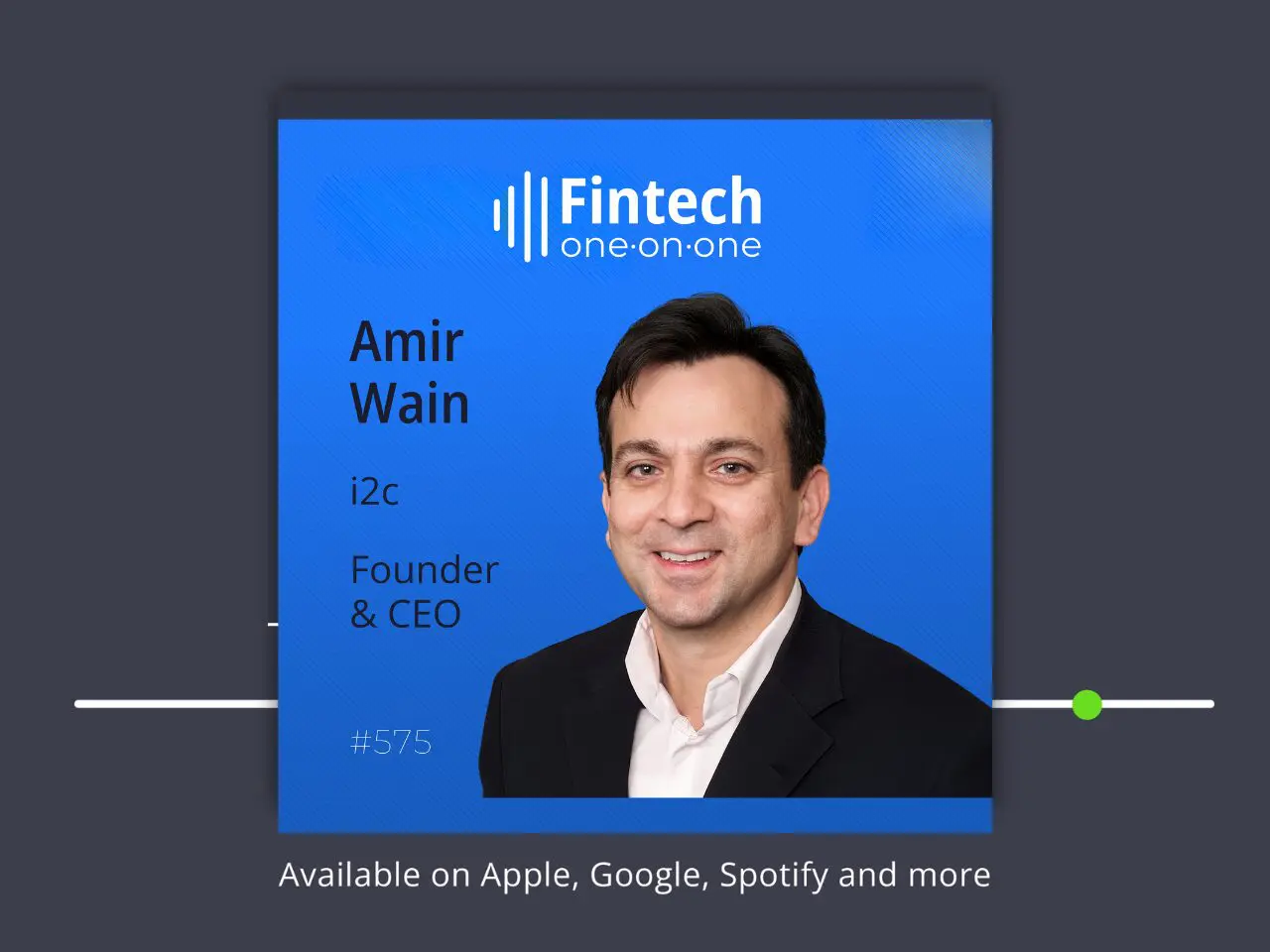
Payment declines happen millions of times a day, but how a financial institution handles that moment of failure can define the entire customer relationship. My guest on this episode is Amir Wain, the Founder and CEO of i2c, a global payments and banking infrastructure company he has been building for more than 25 years. Amir is a serial entrepreneur who made a foundational architectural bet early on: that a single, customer-centric, composable platform built for all products and all geographies would ultimately win over the industry’s prevailing approach of stitching acquisitions together.
That bet has paid off. Today, i2c powers card and banking programs across 200-plus countries for financial institutions, fintechs, and governments alike. In our conversation, we dig into how modern unified payments infrastructure enables real-time contextual decisioning, why the moment of a payment decline is actually an opportunity to build customer trust, how i2c thinks about balancing fraud prevention with false positives, and what the rise of agentic AI means for the authorization process, and for keeping the human customer at the center of it all.
In this podcast, you will learn:
- The evolution in Amir’s thinking that led to the founding of i2c.
- When he realized that architecture will determine the destiny of the business.
- How i2c has evolved over the last 25 years.
- How contextual decisioning in the authorization process has become a differentiator for i2c.
- Where traditional infrastructure falls short in authorization decisions today.
- What fraud signals are the most important when balancing friction and user experience?
- How the industry can balance personalization and data privacy.
- The three segments of the market that i2c is focused on.
- How they are thinking about moving beyond payments.
- How they are planning for the world of autonomous AI agents making transactions.
- How far away we are from agentic commerce having significant scale.
- What keeps Amir excited today about the future.
Read a transcription of our conversation below.
FINTECH ONE-ON-ONE PODCAST NO. 575: Amir Wain
Amir Wain
We realized that architecture will determine the destiny of the business. And so our architectural approach was that we are not going to be a product centric platform, but rather a customer centric. You can think of it as a cliche, but the idea was there may be new products coming tomorrow that we don’t know today. How do we put some Lego pieces, some building blocks together, that can be composed in different ways to solve different use cases? And that was the underlying principle of i2c platform architecture.
Peter Renton
This is the Fintech One-on-One podcast, the show for Fintech enthusiasts looking to better understand the leaders shaping Fintech and banking today. My name is Peter Renton and since 2013, I’ve been conducting in-depth interviews with Fintech founders and banking executives.
Today we are talking payments infrastructure with Amir Wain, the CEO and founder of i2c. Now, payment declines happen millions of times a day, but how are financial institution handles that moment of failure can define the entire customer relationship. Amir has spent more than 25 years building the infrastructure that sits behind those decisions.
In this episode, we dig into how modern unified payments platforms are enabling real-time contextual decisioning, moving beyond the simple approve/decline binary to something far more nuanced. We also explore how agentic AI is about to upend the authorization process entirely and why Amir believes the key to getting that right is never losing sight of the human behind the agent. Now let’s get on with the show.
Welcome to the podcast, Amir.
AW: Thank you, Peter. Good to be here with you.
PR: Great to be here with you. So I like to get this thing started by giving the listeners some background. Now you’ve been doing this a long time, so 25 plus years, but I still would like to go back. You know, this is not your first rodeo. So tell us a little bit about what you sort of set out to do in your career, what you’ve done before i2c.
AW: Sure, so I would classify myself as a serial entrepreneur. I started my first company right out of college, and this is back in 1987. And we started out with bespoke software development. And that was in vogue those days, and software engineering was in high demand. So the way things worked out, we did do a lot of financial systems, you know, developed an understanding of how financial systems work. But soon the business was very successful. What I realized was that was really not leveraging IP. Every job was a new job. You were paid for your time, although you paid very well, you weren’t really leveraging IP.
So we decided to pivot and become a product company. And these are the days when ATMs had green screens and the financial institutions had no control on turning those ATM interactions into something more interesting. So we built a graphical user interface and improved the customer experience on an ATM. Eastern Europe was opening up at that time, so it was an opportunity for us to get in and establish some credentials and customer base.
So from there on, same thing, you always question what you’re doing, how do you improve on it and so on. One of the things which has been very important to me from day one is making sure that we are committed to our customers and we do the best job we can do for them. The problems with the licensed software model is typically it’s installed on client premises and you are dealing with so many other variables, hardware, environmental, et cetera, ongoing maintenance of the network databases that determine the end satisfaction or output of the system.
So not being able to control that and then again, having to start the revenue every year from like say there’s zero while you have the maintenance revenue, the new revenue is zero. So we started thinking about pivoting from that business model.
And that’s where we started thinking about building a SaaS platform, which is i2c today. But when you start, you say, okay, well, I’m gonna do this. Why am I gonna be different? Why would my customers wanna, prospective customers wanna deal with me and so on? And it was clear to me by looking at what the industry players were doing, where they were doing acquisitions, they were stitching various pieces together to solve business problem for financial institutions. As an example, mean, credit card, it’s a different platform. Debit card, different platform. Core banking, different platform. Mobile app, different platform.
Not only that, if you are a global company, you had a different platform that you had acquired to make sure you’re compliant with that region’s compliance needs. What was happening was that these companies who were gaining scale, were basically growing and meeting customer needs by buying and acquiring platforms, but very siloed approach. It was extremely clear to us that we couldn’t do that. We had to come up with a better approach to compete and succeed.
We realized that architecture will determine the destiny of the business. And so our architectural approach was that we are not going to be a product centric platform, but rather a customer centric. You can think of it as a cliche, but the idea was there may be new products coming tomorrow that we don’t know today. How do we put some Lego pieces, some building blocks together that can be composed in different ways to solve different use cases? And that was the underlying principle of i2c platform architecture. Second thing, we’ve always had global ambitions. We never wanted to be a regional player. And we didn’t want to rewrite the code or offer different interfaces to the system in different regions. How do you build a platform which is product agnostic, geography agnostic, and you can build and support it? So it took much longer because as you build that level of abstraction into your platform, it is a much tougher task.
So while it took us a little longer to get to market, the platform’s architecture has been paying dividends since then. And while we have modernized some of the languages that we use and AI technology that we use, the core architecture of one global platform servicing all product needs across all geographies in a highly available and scalable environment is still holding true.
PR: Right
AW: Big decision, difficult decision, took a lot longer upfront, but has served high TSC extremely well.
PR: Back in 2000, that’s a lifetime ago in this industry. Mind you, a lot of banks are still using code that was written before that day. regardless, it actually was smart of you not to focus on a product-centric approach because the products have come and gone. mean, you couldn’t even imagine mobile banking back then. That was unimaginable. I mean, there was no such thing as a smartphone. that’s really interesting to me that you’ve kind of, you had that original vision. So…we want to fast forward obviously through today fairly quickly. Can you tell us what were some of the big milestones you’ve hit and how the company’s evolved over the last 25 plus years?
AW: I think the initial platform launch took a little longer, making sure that you go to market when you’re ready was important. So getting our first customers, gaining scale, let’s say from a revenue perspective, just getting to first $10 million, I think is a goal that every startup should have. Then getting from 10 to 100 is the next, and then how do you get to half a billion and a billion and so on. So the financial goals were always there and we’ve been successfully navigating those.
Being a global organization, it’s very different to be, let’s say, a North America centric organization. All your support processes, your implementation, client engagement, all of these processes are then basically done through that lens of one geography and nine to five and so on, building a 24×7 organization adds another dimension of complexity in terms of time zones, terms of having no downtime in the organization, just running year round. How do you say what’s the green time for maintenance that I perform on the system? Because Australia’s daytime and US daytime on a Sunday are very different.
So dealing with some of that was another thing that we had to build through on top of the platform. So I’m saying besides the technical architecture and the global nature of the platform, putting a service delivery organization that wraps that platform and delivers in a reliable and customer friendly manner was another milestone that we kind of had to go through and navigate it.
PR: I want to dive right into some of the specific pieces. I want to cover payments and particularly the authorization and decisioning process. So I want to start with context aware or contextual decisioning. Can you explain what that is when it comes to the authorization process and payments approval? And how is it becoming a differentiator for i2c?
AW: Sure, sure, sure. So this goes back to the core architecture that APIs, many platforms offer APIs to pull information, but how do you bring in the context and engage it in your decisioning process is really interesting. So first of all, to build a platform which is not product centric, we don’t think of credit limits, prepaid deposits, we think of entitlements.
So you could be entitled to a line of credit, an entry to the game park, discounted 20 % at Macy’s, let’s say, all of these are basically your entitlement. And then you can set a lot of authorization rules where these entitlements are subject to certain conditions. It could be geo location, which is a signal coming in, the weather conditions. Let’s say you want to do a promotion in a particular market and it’s been snowing, could you get the data feed from the weather center and integrate that into your decisioning?
You could also take input from several other systems and the rules for authorization are flexible based on the building pieces that we have. So you can input more than just transaction amount, merchant location. The typical data elements that come in through a Visa/MasterCard transaction or another financial transaction is one piece. We have many other pieces. Another aspect which is very important is in fraud. So we have built our own fraud engine that’s also providing context-aware scoring of the transaction, which allows us to improve our authorization. So I would say in categories, fraud management, promotions, relevant offers. These are all things which are differentiating based on contextual input into the system.
PR: Now let’s sort of basically take a step back and let’s talk about the authorization process in general. You know, it’s happening millions of times a day all over the world. What’s happening in that authorization decision, the milliseconds that it takes to do that authorization decision? And where do you find the traditional infrastructure falling short today?
AW: There was a lot of focus in making payments invisible. There was a lot of talk about, you know, no one goes out to make payments or make them as invisible as possible. And I think that’s good. It should be a service. Transactions should get authorized. But then when you have moments of failures, how do you handle and respond in that time is extremely important. So I would say 99.9 % of the transactions business as usual, it’s working, that’s fine. That small percentage is a moment of trust that you can really build trust and a relationship with your customer.
And I’ve had firsthand experience. This is several years ago, international flight landed, went to the airport, provided my card and the card was declined. I guess, you know, more traditional fraud systems, saw me doing a transaction further away from what I normally do. I forgot to call my bank and say, hey, here’s a travel advisory. I’ll be going to Lithuania. And they blocked my transaction. Now I’m at the airport. It’s nighttime in the US at the hotel. It’s not a comfortable feeling. And that’s me who runs a payment business.
So think about a normal consumer. And they may be at a pharmacy needing medicine. The payments are very important for our life. So making sure they’re reliable and if they fail, how do you educate or inform the customer about what’s happening, what the next steps are, are all opportunities for financial institutions to build on that relationship, to build trust, to build lasting relationships. And that’s where the platform capabilities are extremely important because if you think about it, Peter, today, the messaging, the way messaging works is banks, data teams will run data, they will give it to production and say, okay, and then it kind of goes out. There’s delay between communication besides just a text alert that you use your card or your card was declined, right? So increasing that communication to a level where you’re able to really share more information, provide guidance, et cetera, needs to happen through the platform at scale and those are also very important capabilities.
PR: Okay, so let’s dive a little bit deeper into fraud here because you just talked about that. The challenge with fraud is that you need to stop fraudsters and you want to approve people like yourself that had a legitimate transaction that was just unusual. What signals are the most important when you’re balancing those two things?
AW: So here’s the thing about fraud, right? I can stop 100 % of the fraud. I can decline every transaction. There’ll be no fraud. So the way we measure it, we call it friction, right? So you have to be able to set the friction for various demographics and various parts of your customer base. But let’s say in general, our fraud team and our fraud architecture is at 0.5 % friction. That means that out of 200 transactions, we can only decline one and we still have to catch 40 % of the fraud. And that one meaning false positive, that it wasn’t actually a fraud and you declined it, right?
So the real art is how do you reduce the friction? How do you take it to minimal possible and increase the capture rate? There will be a balance and different institutions have to set that based on subsegments, micro segments of their customer bases. So depending on the relationship, but having that level of ability, the financial institutions want it. It’s not that they don’t understand this, but their legacy infrastructure does not allow them to get down to that level.
So signals that we use, obviously I talked to you about my experience of being out of my normal geography. That’s very coarse signal. Yes, people travel. I have to be able to see more than whether it’s coming from 3,000 miles away from my last transaction, et cetera. So the signaling and the granularity of the messaging has really, really improved. And we are capturing literally thousands of what we call features about an account, about a customer, about originating merchant, and putting all of them together to compute a composite score, which can then be used to set the friction that I talked about. it’s a score, but how do you interpret that score is where the friction comes in.
And a lot of work is being done by Visa MasterCard, American Express in generating a scorecard because they get to see a much larger set of transactions at their end. So they send us some, you can subscribe to that score and that score can be an additional signal or input into our decision. The difference is Visa, MasterCard, Amex, they do not have all the card holder or the customer information. They see billions of transactions, but we know the entities more intimately. And being able to marry the two allows you to deliver better results.
PR: Right. But then what about like, think consumers these days, they want their bank to understand the context of what’s happening, but they also want to have data privacy and they don’t want to feel like they’re being surveilled. How does the industry actually get that sort of right, that balance?
AW: There are a lot of regulations around data privacy and consumer rights and financial institutions have to be compliant with them. you can certainly, whenever you do a promotion or consumers have the ability to opt out of certain communications, but when it’s related to servicing your account and being able to prevent fraud, cetera, you having that account with the consumer have the right to engage with them. Now, data policies are, you know, I think more and more responsible institutions are acting very responsibly. Their compliance has become stronger about me, especially in Europe. I can ask for all my data to be deleted, et cetera. And then there are similar regulatory obligations around privacy in the US also. So I think regulators are continuously evolving the regulations to keep up.
An area which is becoming a little bit vague for people as they don’t fully understand is the AI. As I ask questions, is the chatbot really building a profile on me? How much am I sharing? That’s still a little opaque. While they have some policies and some settings, I don’t think it’s as broadly understood. And it’s an area where you will see more regulation. Right now, there is a lot of self-governance and policies of good ethics that companies are publishing and trying to be the leader in that. But I expect more and more to happen. Look, it’ll be almost impossible for all consumers. You and I understand, love this industry, it’s different, but a retired school teacher or someone else, there has to be regulation in place to provide protection to all those people who don’t necessarily fully get it.
PR: I do want to dive into AI and payments in a little bit, but before I do, who are you actually focused on when it comes to offering all of your suite of products? Is it mainly banks? Do you have fintechs? mean, what’s the mix?
AW: We have three segments. So we have financial institutions which include global financial institutions, including credit unions. Then second is fintechs. And we have some of the most well-known fintechs in the world, including crypto.com being our customers. And then the third space or segment that we service, which is not as well known as government payments.
Government payments are slightly different animal, based on the demographic that you’re serving, the purpose and how you interact with some of the government systems. So there is, you need some special skills to service that industry. So we are extremely proud that we today have consumers in 200 plus territories where people are using products that are running off the I2C platform. So all geographies pretty much. We have all products being serviced and new products are being created. And thirdly, the three different segments. FinTechs want APIs. A lot of financial institutions, especially on the smaller side, they want the full user experience. They want branded mobile apps. They want everything given to them. And government requires another level of service.
It shows not just the platform, but the second component of the service delivery that I talked about is also very robust and built with the same concept of how do we build something once that we can service multiple use cases.
PR: But you’re still focusing mainly on payments, right? You’re not really competing directly with the core banking platforms as far as…you’re not providing a core banking solution,
AW: You’re getting into our, I would say, go-to-market roadmap because the product has been kind of, the platform is there. So our GTM, we started out more with the prepaid cards, which offered number of different use cases, gift, rebate, reloadable, et cetera. And they weren’t serviced as well because there was variability. So that’s where we got a lot of traction. Then we’ve been doing debit. We’ve been doing credit. Credit for last five years, we’ve been very focused in our GTM efforts on credit because we saw that as an opportunity where market was not very well served.
And over the last year now, we’ve been focusing on what we are calling the operating system for a financial institution. So you work with i2c, you get single platform that can do deposits, lending, cards, payments, anything that you do in a financial institution, rather than having to run 20 different systems, you could literally sign on to the i2c One platform and just select, I offer CDs, I offer card loans, I offer this and have those services provisioned to you. Think about the simplicity around having one customer. I don’t have to now go to five different systems to report, did this guy do $10,000 worth of activity in this month or not? Because it’s one customer entity, one transaction profile, everything is centered around one customer.
So going back to that architecture, and Peter, as we do this, some Lego pieces are missing in the platform. So we say, okay, well, if we’re going to really service this use case well, or one of our customer may say, well, I also need this integration with this check printing machine. Okay, well, we’re going to build that Lego piece and then throw it in the mix.
So there’s always new Lego pieces or building blocks that we are adding. Last year, we spent 1.5 million man hours in our engineering organization. And I think if you really think about the number of hours on a single platform, that’s more than FIS or Fiserv would spend on any one platform. That’s my guess. mean, overall, they spend more hours but across 20, 30 different platforms. So we spend every single hour on a single platform.
PR: I do want to get into AI. mean, sometime soon, AI agents are going to be… I they’re already doing it at a very, very small scale, but AI agents are going to begin initiating transactions on behalf of consumers. So how does your decisioning engine need to evolve when the entity making the payment isn’t a human but an AI agent that’s acting autonomously? We’ve been trying for a long time to keep those guys out, the bots out. Now we’ve got to let them in. How are you kind of dealing with
AW: Absolutely. Great point. And look, I think, you know, the focus has shifted from digital parity, like let’s just get the best mobile app in this to now really intelligence. Call it agentic commerce or like infrastructure needs to have intelligence. And we also need to realize at the end of the day, agent is servicing a customer. So I have to make sure I don’t lose focus on my customer.
I know my customer is now not making some of the choices. My customer may be using an agent to perform certain tasks, but my CX audit and my CX focus cannot just stay on the agent. I have to include the customer in the loop. And then obviously, how does your infrastructure support all the capabilities that an agent needs, provides traceability, is secure, all of those basics need to be in place. And so what we’ve done is we’ve special API clusters, which are more ready to take on additional data elements that would come in in terms of preferences, permissions, et cetera, through an agent. And there are multiple standards.
Visa has published a standard, MasterCard has published a standard, Google has published a standard. I see all of these standards will come together like, EMV Co an, independent organization for commerce to grow. So people are doing their effort right now. We are staying up with all of them. And our goal is to be able to support all of them. And we are hoping that everything is going to converge towards one universal standard. And it will become BAU.
I think what will be important is rather than just being technically ready for that agent and how do you do the security and fraud detection, that’s a fairly technical discussion we can get into. The point I would make is do not lose sight of the person behind the agent who’s authorizing the agent, right? And I’ve seen some people in discussions already just being so like, would your agent do this and this? And we say, we can certainly do that, but let’s just make sure that we keep the customer in the loop. At the end of the day, the agent is servicing and serving the customer.
PR: So how far away are we, do you think, from having significant scale where agents are conducting transactions on behalf of consumers?
AW: You know, if you think about what Amazon did with those buttons that they ship to people, if you wanted a detergent, you had that in your kitchen and you press it and they would ship the detergent to you. So that kind of agentic commerce 15, 20 years ago, one button only ordered one thing and so on. So very primitive. So what I’m saying is like common tasks where I just need some basic stuff being done will probably become mainstream in less than a couple of years, right? But that’s just tipping our toes. There’s lot more to it. You would definitely see what I think of as personal assistance.
All of us can improve our productivity by having a very intelligent personal assistant that knows us. And payment or agentic payment is going to be one piece of that personal assistant. I don’t think of a payment agent as like us, you know, independent thing that I’m going to use very much. But if I have a personal assistant that has the payment agent built in, I see a lot of value. I don’t want to go out and buy toothpaste and worry about all of those things. But when it comes to maybe shopping for something that is of interest to me, the whole shopping experience is important. So it’s not like commerce is just going to be all agents.
A lot of people, mean, I’m not one of them, but if someone wants to buy a purse, a handbag, they’re gonna buy shoes, they’re gonna spend a lot of time looking at them and they don’t just want an agent to order anything with this being sold. So I think some of those things aren’t going away, but we are definitely going to become more productive. If I’m wanting to buy something technical, I don’t understand the specs. It’ll be very helpful to have an agent that can cut through all that and tell me based on this, this is what’s good for you and I can buy it for you. I see it as a piece of a bigger sort of solution, which is my personal assistant.
PR: That makes sense to me. Okay, so then last question. I you’ve been doing this now for several decades. What keeps you excited today and particularly in the context of what i2c is building for the future?
AW: I think there’s so much happening. There’s so much changing with AI that it’s hard to keep up. We had the internet come in and I remember the early days, email was fascinating and then websites started popping up and then Steve Jobs launched the Apple phone with smartphone and the apps and we’ve got a lot of other capabilities.
AI is building on top of all of that. It’s leveraging every single thing that we’ve done. it’s literally mind boggling at times to kind of think about how all this is going to work out and what much larger implications than i2c or any other business it would have on humanity and various societies. It’s an exciting time. I’m someone who likes to think about, you know, things at a bigger picture, larger movement.
So I am certainly super, super excited about what the future holds. I’m also an optimist and a realist. I mean, I do want to see the scary parts, but I want to see the good in this technology. I am bullish on AI. I think tons and tons of things that it will do in terms of healthcare, in terms of quality of life, in terms of productivity. People keep talking about jobs going away and certainly jobs will go away.
I think we also need to realize all the efficiency AI is going to bring, the cost of living is going to go down too. And I may not need the same amount of money also.
PR: We do live in exciting times and I feel like there’s, as you say, there’s more happening in fintech today than ever before. And it’s only going to get more interesting, I have a sense. So, Amir, thank you very much for coming on the show today. It was really great to chat with you.
AW: Peter lovely talking to you.
PR: As everyone rushes to build agentic commerce infrastructure, Amir is cautioned about the CX focus that cannot just stay on the agent, that we have to include the customer in the loop. He’s a somewhat contrarian, I think, but important point. The industry conversation right now is almost entirely about the technical standards, Visa’s, Mastercard’s, Google’s, and how to handle security and fraud for autonomous transactions.
Amir is making a softer, but arguably more important point. The agent is a means to an end, and the end is still a human being. That’s just the kind of insight that ages well and distinguishes a thoughtful operator from someone just chasing the latest trend.
Anyway, that’s it for today’s show. If you enjoy these episodes, please go ahead and subscribe, tell a friend, or leave a review. And thanks so much for listening.


