
Why Fintech 2.0 Means One Platform for Every Aspect of Your Money With Omer Ismail, CEO of OnePay
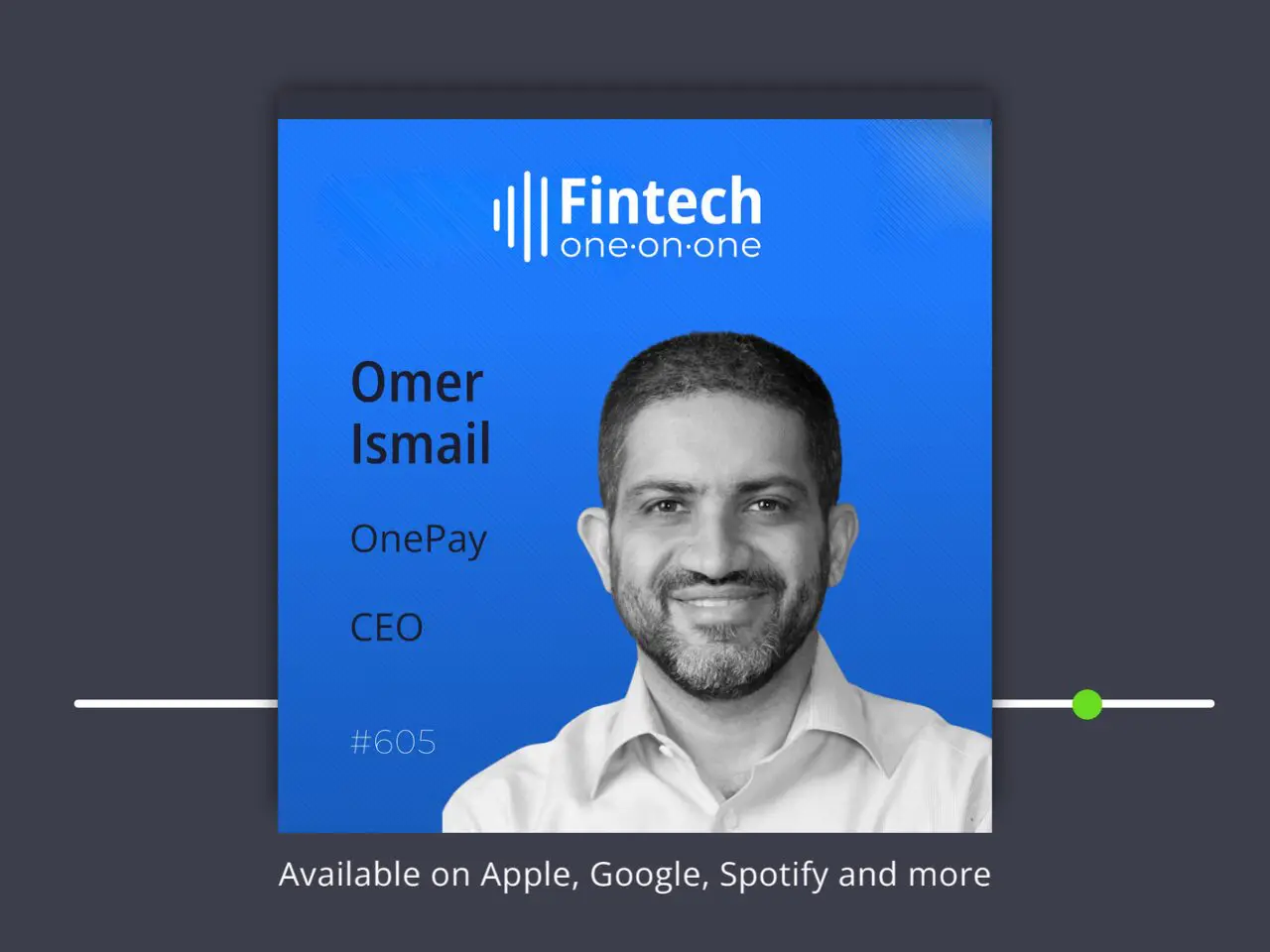
Omer Ismail is the CEO of OnePay, the consumer fintech majority owned by Walmart and backed by Ribbit Capital, which now serves more than 7.5 million customers. He was last on the show in 2017, when he was running Marcus at Goldman Sachs. A lot has changed since then: we talk about why he left Goldman to start again from scratch, how OnePay turns Walmart shoppers and associates into banking customers, and why he thinks the next chapter of fintech belongs to platforms that can manage a customer’s whole financial life.
What We Covered
- The 2019 dinner that started OnePay
- Why Omer left Goldman Sachs
- Three lessons from Marcus
- The rabbit in the New York office and what it says about culture
- Fintech 1.0 versus fintech 2.0
- The front door products: digital banking and credit
- How OnePay acquires customers inside Walmart
- Why more than 80% of banking spend happens outside Walmart
- Hiring a first CMO and taking the playbook to UKG, Workday and ADP
- Apple Pay and the checkout
- Why OnePay has no plans for a bank charter
- Penny, the AI financial assistant
- The new teen banking product
Key Takeaways
- Distribution and structure are the two things Marcus did not have. Omer says customer access is “incredibly hard and incredibly expensive.” OnePay gets customers through Walmart at effectively zero acquisition cost, but it sits outside Walmart’s four walls, so it can hire, incentivize and move like a startup.
- Fintech 2.0 is about single platforms, not single products. Fintech 1.0 companies each did one thing. Omer argues customers do not want to manage 15, 20 or 30 financial relationships, so OnePay acquires through high TAM, high engagement products (digital banking and credit) and then offers the next best product.
- A Walmart customer is not a Walmart-only customer. Only around 17% to 18% of OnePay banking card spend happens at Walmart. The goal is to be the primary financial relationship and top of wallet everywhere, which is why the company has hired its first CMO and is now acquiring through HR platforms and direct channels.
- AI changes personal financial management only when it can act. Mint stopped at insights. Omer’s case is that a platform with both the customer’s data and the products can complete the action for the customer, and that the winner will be whoever customers trust to do that.
About Omer Ismail
Omer Ismail is the CEO of OnePay, a role he took on in 2021 when the joint venture between Walmart and Ribbit Capital was being formed. Before that he had a long career at Goldman Sachs, where he ran the consumer business that included Marcus. He moved to the US at 18 and has spoken about how that shaped his interest in helping people build healthy financial habits early.
Cleaned Transcript
Omer (00:10):
I think one of the things that is changing with AI is that it is going from insights to actually go to action. And the data has improved. And then for platforms like ours that actually have more data on their customers, the more data we have on our customers, the more we can help them actually, you know, go again from insights to action.
So we are investing in a financial assistant called Penny. There always used to be this example of you have extra money sitting in your checking account and it would tell you that and it would say, you know what, you could be earning higher APY. But in our case, we can not just give the customer that insight, we also are offering the savings account with a high APY and can actually do the action for that customer.
Peter (01:01):
This is the Fintech One-on-One Podcast, the show for fintech enthusiasts looking to better understand the leaders shaping fintech and banking today. My name is Peter Renton, and since 2013, I’ve been conducting in-depth interviews with fintech founders and banking executives. Today on the show, I am delighted to welcome back Omer Ismail, the CEO of OnePay. Omer was last on the show back in 2017 when he was running Marcus, the consumer business at Goldman Sachs.
In 2021, he left to lead OnePay, the fintech majority owned by Walmart and backed by Ribbit Capital, which now serves more than 7.5 million customers. In our conversation, we talk about the 2019 dinner that sparked the idea for OnePay, why he walked away from Goldman and the lessons from Marcus he brought with him. We discuss his vision of fintech 2.0, where a single platform manages every aspect of the customer’s money, and how OnePay acquires customers at Walmart and beyond. We also get into the bank charter question, their AI financial assistant Penny, and their brand new teen banking product. Now let’s get on with the show.
Welcome back to the podcast, Omer.
Omer (02:21):
It’s good to be here, Peter. Thank you.
Peter (02:23):
Good to have you. And, you know, I was looking back at my history. You were episode number 102, and I’m now in the 600s. You were more than 500 episodes ago. It was back in May of 2017 when I first had you on the show. So it has been a while, that is for sure. But great to get you back. As you know, I’ve been bugging you once a year for the last five years to get you on the show. So thank you for saying yes, and I’m excited to do this interview.
Omer (02:49):
It’s great to be here. You’ve been busy doing 500 episodes, and you’re nothing if you’re not persistent. So I’m glad to be here.
Peter (02:58):
All righty. So let’s get started by just taking us back. I was listening to the interview you did with Rex and talking about the 2019 dinner, which I was unaware of until I listened to that show, that really started the OnePay story. I don’t believe you were at that dinner, but can you tell us a little bit about the origins of OnePay?
Omer (03:19):
Happy to. So the dinner was organized by someone, Peter, that you and your audience know well, Sarah Friar, currently CFO of OpenAI, but previously CFO at Block. She is on Walmart’s board, obviously has deep experience and expertise in fintech. She organized a dinner between the then CEO of Walmart, Doug McMillon. He’s since retired.
And Micky Malka, again, someone that I’m sure you and your audience know well. Founder and managing partner at Ribbit Capital. And really the idea behind, you know, Sarah getting Doug and Micky together. And then Doug, by the way, very quickly brought in John Furner, who was running Walmart US at the time and is now CEO of Walmart since Doug’s retirement. But really the idea behind the dinner was, you know, Sarah from her board seat at Walmart realizing and appreciating that Walmart had incredible assets and distribution to create an open loop fintech platform that would give access to the tens of millions, the hundreds of millions of customers that shop at Walmart. But it had to be done outside of the four walls of Walmart, just given the very many priorities that Walmart has and its core business, obviously retail, healthcare and the like.
And also the idea that the platform needed to be open looped. So she introduces Micky to Doug McMillon, who then brings in John Furner, and that’s really the origin story of OnePay.
Peter (04:53):
So you came on board obviously pretty early, and when I talked to you last obviously you were at Goldman running Marcus, and what was it that made you want to walk away from that to start this from scratch, basically?
Omer (05:09):
So when Micky first called me, Peter, and he was kind of in the early stages of putting this joint venture together with Walmart. Honestly, what I said to him was, Micky, I have a ton of respect for you. You’ve been an amazing investor. I believe in this opportunity. I think what you’re trying to assemble together here is very compelling. But to his credit, we started peeling the layers of the onion in terms of, you know, both how compelling the opportunity could be. 200 million weekly shoppers, million and a half employees at Walmart, 90% of the US lives within 10 miles of Walmart, roughly $500 billion of payment flow.
When you think about Walmart’s GMV and the payroll that Walmart US runs. So an incredible, incredible ecosystem that you could leverage to create an open loop, independent fintech platform serving tens of millions of customers. But on the other hand, the ability to do it in a structure that would allow us to operate and grow the business and build the business outside of the four walls of Walmart. And why that was so important is, you know, when you have an independent entity, you can hire the right team, build the right culture, incentivize people the right way, not get stuck in or hampered by the prioritization of a large corporate. So if you think about, you know, kind of the two by two, we were in the right two by two quadrant, both the incredible assets that come with an ecosystem like Walmart and the ability to move with the speed and independence of a startup. And, you know, I was incredibly proud of the business that we built at Goldman. Obviously, at the time that I left, it had scaled pretty considerably. You and I spent a lot of time on this, but I felt like this was a once in a lifetime opportunity to create a category defining consumer fintech that could help tens of millions of customers, you know, with their money. And so I left for the opportunity.
Peter (07:09):
So then going back to Goldman before we move on, just obviously Marcus didn’t have the outcome that was expected and was intended. But you know, when you left, you know, you could argue it went downhill after you left. But I’m curious about the lessons that you learned at Marcus that you’re bringing to OnePay.
Omer (07:31):
I think one is just customer access and distribution is incredibly hard and incredibly expensive. And you know, we did not have it in the context of the Marcus business when we started at Goldman. And the fact again, by virtue of the benefits of a large corporate like Walmart that serves tens of millions, hundreds of millions of customers, we have the ability here to acquire customers at zero customer, effectively zero customer acquisition cost. The second is, you know, structure is incredibly important. You know, if you come to our office, Peter, in New York, and we’d love to have you next time you’re visiting the city. As soon as you walk into our office in New York City, the first thing that greets you is a giant rabbit. And, you know, it really is a symbol of our culture. You may be familiar with the fable of kind of the wolf and the rabbit. The wolf is chasing the rabbit. The rabbit gets away. The wolf goes back home. The wolf’s family says, Well, how did you let the rabbit get away? And the wolf says, You know, I was running for my dinner. The rabbit was running for its life. When you are an independent startup, every single day you are fighting for your existence. You have to out-execute competition and serve customers and acquire customers and retain customers every single day. You know, the famous quote of like only the paranoid survive. Like the structure of having a startup where you build the right team, you build the right culture, everyone is rowing in the same direction.
You know, the priorities of the company are, you know, not the priorities of your corporate investor, are incredibly important. And then the third thing I’d say is, you know, the involvement of a world class investor like Ribbit Capital and Micky Malka. You know, they, as you again, are very familiar with Ribbit’s portfolio. I know you’ve spent time with them. You’ve spent time with a lot of their portfolio companies.
You know, they have 150 portfolio companies globally. They have been investors in some of the leading fintechs. If you think about Nubank, you think about Revolut, you think about Affirm, you think about Robinhood, you think about PhonePe. So just their expertise in terms of recruiting the right team, striking the right partnerships. Lead Bank is one of our partners. You know, that is a Ribbit investment. We just launched a partnership with Upgrade, and I know you know Renaud well, another one of Micky’s and Ribbit’s investments. So the combination of being able to acquire customers at zero customer acquisition cost, having the right structure, the right incentives in place, being able to run like a rabbit, and then having the benefit of this world class investor that has, you know, seen what works, what doesn’t work, and having them fully invested is really, you know, a little bit of the secret sauce of what’s allowed us to continue to execute over the course of the last five years.
Peter (10:35):
So I mean, obviously having a really low or close to zero acquisition cost is a huge advantage over some of your rivals. But what I’m curious about, you entered a space that had a lot of mature fintech companies already with scale, many of them public. How did you think about creating something that was differentiated from what was out there?
Omer (10:56):
Let me talk a little bit about, Peter, just the OnePay strategy, what we’re trying to do, and then also compare it to how I think about it in the context of the market. So OnePay today, and our strategy is creating a one-stop shop for consumers to manage every aspect of their money. There are a couple of key front door products that customers come to us first.
We rely obviously on acquiring customers in the Walmart ecosystem, but we equally acquire customers outside of the Walmart ecosystem. The key front door products that customers come to us first is digital banking, the ability to get access to a debit card or a builder card to build your credit, the ability to open a savings account. We pay customers early.
We focus a lot on giving customers value in terms of having a no-fee account, giving them rewards on the spend that they’re doing from their banking card, whether it’s a debit card or a builder card. That’s kind of product category one. And then the second key front door product where we acquire customers is access to credit, getting a buy now pay later loan, or getting access to a credit card. When we acquire these customers, either through the Walmart ecosystem or outside, once a customer becomes a OnePay customer, we try to, obviously there’s a job to be done. The first product that they signed up for when they became a OnePay customer, but then we want to help that customer manage his or her family’s money holistically. So over time, you know, depending on who you are and what we know about you, we’ll offer you kind of the next best product. Again, you don’t have to sign up, but many of our customers, you know, millions of our customers end up signing for product two, product three, and kind of go from there. If you think about kind of fintech 1.0, and you’ve been covering this for a very long time, if you think about the early days of Credit Karma as an example, one of the earliest companies in fintech, customer acquisition was incredibly low. And two, most of the fintech 1.0 companies, or I would say pretty much all of the fintech 1.0 companies were single product companies.
You want a digital bank, go here. You want to buy crypto, go here. You want to trade, you know, buy stocks, go here. What I believe is about kind of the chapter of fintech 2.0, and it’s only getting accelerated with AI, I’m sure we’ll spend a bunch of time on this, is customers don’t want to manage 15, 20, 30 different financial services relationships. And customer acquisition has gotten incredibly hard and expensive as a fintech platform. And so I believe, we believe that fintech 2.0 is about creating single platforms to help customers manage every aspect of their money. Again, we acquire customers across one or two of our key front door products. But once they become a OnePay customer, we want to holistically manage their money. The other thing I’d say about these key front door products, because I think this is a really important point, is if you think about what the addressable market is and what the engagement is, products like the ability to get access to a digital banking account or get access to credit, or build your credit, fall in the category of high TAM, high engagement. Everyone uses them, everyone needs them, everyone uses them all the time. What Google would call the toothbrush test. And again, I believe that, you know, the fact that we have access to this incredible ecosystem to acquire customers at zero CAC and to do it across products that have very high TAM and very high engagement allow us to be one of the platforms that will continue to serve customers holistically across their financial life.
Peter (14:55):
Okay, so I want to talk a little bit about the customer acquisition piece because I went and visited my local Walmart in preparation for this interview. I wanted to see how much OnePay there was a presence inside the store. And, you know, when I checked out, I saw a little OnePay thing, I could check out with OnePay, with my OnePay app if I wanted to. And then at customer service, there were some posters advertising the OnePay debit card and credit. What is sort of the playbook for the Walmart customer shopping in store or online?
Omer (15:30):
So, Peter, the journey for acquiring a OnePay customer at Walmart and candidly even outside Walmart is heavily curated to who you are and what we know about you. So let’s take the example of a new associate, which is what Walmart calls its employees. Let’s say, Peter, you’re starting working at Walmart and you happen to be in My Walmart, which is Walmart’s kind of HR system, and you’re setting up your benefits.
One of the things you’d be doing when you’re starting work at Walmart and setting up your benefits would be figuring out where you want to get paid. OnePay banking, our banking offering, will show up at that moment when you’re setting up your benefits in Walmart. It takes 20 seconds, all of the data is pre-filled, two clicks. It is the fastest digital banking account opening, period. Because again, we are making it incredibly easy for the customer to sign up for OnePay banking in that moment, the right product at the right time. I don’t know if you visited in your local Walmart the electronics section in store, but if you did, it would make sense. Millions of customers are showing up, tens of millions of customers are showing up to Walmart every single day. They’re buying a television, they might be buying a phone, they might be, you know, buying a large electronic purchase.
OnePay Later, which is our installment loan product and a buy now pay later product, that is the job to be done for the customer at that moment if he or she chooses to spread out their payments if they’re buying a TV versus paying for it all up front. And we make it incredibly easy for the customer to sign up for OnePay Later at that moment. Again, that is the first OnePay product that he or she will sign up for. Once they become a OnePay customer, you’ll download our app.
And you know, over time we can figure out other financial products that we can offer you to help you across your entire financial life. So depending on who you are, depending on where you show up, they’re heavily curated journeys for you to sign up for OnePay. To give you a sense, we obviously have been, you know, operational for four years. And in the four years that we started, today we serve over seven and a half million customers, roughly, you know, 50 billion in payments. And again, these are customers that are using us in and out of Walmart. So even if you’re a customer that signed up for OnePay at Walmart, as an example, you know, one of the things that we notice for our banking customers is, you know, you get either a debit card or a credit builder card as part of our banking offering. Roughly 17, 18% of the spend is happening at Walmart.
But by definition, what that means is if you look at our banking customer spend, 80 plus percent is happening outside of Walmart. So again, when we acquire a customer at Walmart, we want our customers to use us everywhere, in and out of Walmart. And that’s very core to the strategy.
Peter (18:36):
That means that they’re really looking at this as their all purpose credit card or debit card, right? Is that really the goal then once you get them signed up? Every fintech has this goal, but like is that sort of explicit? Do you walk them through this journey to try and get the OnePay card top of wallet?
Omer (18:53):
Very much so. Very much so. And again, you know, what we notice in our data, and you gave some examples, is that’s exactly what our customers are using us for. And we want to be their primary financial relationship or their top of wallet card. And so we see customers using us for DoorDash. We see customers using us for gas. And of course they use us at Walmart. And we spend a lot of time on making sure that of course we have a strong value prop for customers to use us at Walmart and that’s where they’re, you know, in many cases finding us first, but then we also have a strong value prop for them to use us everywhere that they’re spending.
Peter (19:30):
So it’s been interesting to me watching your journey and receiving your emails once a year, declining to come on my podcast. You really, and like the OnePay brand has not really been out there that much. Now, the fact that we’re recording this means you’re willing to do more. I was reading that you just hired your first CMO. So what does that mean? Are you trying to bring the OnePay brand out more, not just in the general marketplace, but within fintech as well?
Omer (20:00):
So, you know, over the course of the last four years, you know, from when we first became operational, you know, getting this plane in air, you know, again, we’ve gone from zero customers to seven and a half million customers. We’ve gone from, you know, zero in payment flow to 50 billion in annualized payment flow, debit spend, credit spend, and we still see massive amounts of growth ahead. But we felt like now is the right time for us to, while we’ve done a good job kind of bottom of funnel and mid funnel, to start to tell our story to our customers for a couple of different reasons. One, for customers that are acquiring us, that we are acquiring off of the Walmart ecosystem and the Walmart channel, as I mentioned, we want them to use us everywhere. And so for them to learn more about OnePay is incredibly important in order for us to fulfill that mission. The second reason why hiring Jess Williams, our first CMO, who was at Shopify previously and helped build Shopify’s brand, is incredibly important is, you know, in addition to continue to penetrate the Walmart channels, and we still see a lot of growth ahead, we are also now acquiring customers through a couple of different channels. And we view all of these as kind of self-reinforcing. One channel where we’re acquiring customers is we are repeating the same exact playbook that we have used with Walmart’s associate base and employee base to integrate our products in HR ecosystems like UKG and Workday and ADP. So millions, tens of millions of customers go to those platforms to set up their benefits. And we can repeat the same exact playbook of getting customers to sign up for OnePay banking and set up their payroll and get paid early if we find them at the right moment with the right journey and the right set of integrations. And then the other channel that we will continue, and you’ll see us do more and more of this, is acquiring customers directly, which again, every consumer fintech does. You know, financial services has always been and will continue to always be about trust. Customers are trusting you with their money, they’re trusting you with their data. We see our customers who trust us, once they’ve signed up for the first OnePay product and we’ve earned their trust, they sign up for product two, product three, product four. And so one of the things that is a real strategic imperative of ours and we want to focus on is continuing to build our brand and continue to build our trust with our customers, both in terms of acquiring new customers as well as once we’ve acquired them, how can we continue to own more and more of their wallet share across their financial life?
Peter (22:48):
Okay, so I want to talk about checkout just for a minute because you know, Walmart famously didn’t accept Apple Pay for a long, long time and now it’s rolling out. I don’t know what the timetable is, but that is happening. How do you view the checkout as an opportunity not just to get volume through the OnePay debit or credit card, but as sort of a way to more engage with both potential customers and existing customers?
Omer (23:16):
So Peter, I don’t want to speak for Walmart in terms of how they think about acceptance, but what I will say is OnePay has had a long partnership with Apple Pay. Our debit card, part of our banking product, you know, was integrated with Apple Pay and millions of our customers used it. And one of the things that we are going to be doing is making sure that all of our cards, our builder card, our cash rewards card, can all get loaded inside of Apple Pay.
You know, when customers use Apple Pay, either at Walmart or outside of Walmart, we want to make sure that the OnePay issued cards are top of wallet. And so we’re incredibly excited about our partnership with Apple Pay and continue to deepen our engagement with Apple Pay.
Peter (24:03):
So you can barely go a week these days without another fintech company announcing that they are acquiring a bank charter. It has become quite the gold rush in fintech. Haven’t heard any whispers from you guys about that. Is it a matter of when or if for OnePay to get a bank charter?
Omer (24:24):
So we do not have any plans to apply for a bank charter. Let me tell you a little bit about just our strategy of how we are executing on the various products that we have. For OnePay banking, we have partnered with Coastal Community Bank and Lead Bank. And Coastal Community, we’ve had a partnership for over four years. Lead Bank, we’ve now had a partnership for a couple of years, and we work very closely with them to offer banking products and banking services to our customers.
As it relates to our credit products, we have partnered with different providers in order to continue to offer our customers a full range of credit products. In the case of installment loans and buy now pay later, we’ve partnered with Klarna. In the case of credit card, we’ve partnered with Synchrony. In the case of personal loans, we have partnered with Upgrade. As you know from fintech, depending on who the customer is, different products might make different sense depending on who they are, where they are in their financial journey.
We feel really good about our partnership strategy as it relates to continuing to offer our customers a full range of financial services and products and do not have any plans to apply for a charter.
Peter (25:35):
Okay, so let’s talk about AI and I want to talk about the personal financial assistant, which I think is an area that is rich in promise, but there isn’t really anything out there yet that’s gained traction. And you seem to be in a good position to provide something like this. I believe you’ve got like a money companion or something. I mean, what can it do today and what is your vision for an AI companion?
Omer (26:04):
So, Peter, a little bit of fintech history that you know, because you’ve been in this space for a long time. Again, we talked a little bit about Credit Karma as one of the earliest fintech companies out there. Another really early fintech company out there was Mint. And, you know, the promise of personal financial management, and the reason why it probably didn’t achieve what the promise could have been, was all around the fact that it just stopped at insights, right? It would tell you things that you could do or could do differently, but that was really it. And by the way, the data wasn’t as good or as clean. I think one of the things that is changing with AI is that it is going from insights to actually go to action. And the data has improved. And then for platforms like ours that actually have more data on their customers, the more data we have on our customers, the more we can help them actually, you know, go again from insights to action. So we are investing in a financial assistant called Penny. There always used to be this example of you have extra money sitting in your checking account, and it would tell you that. And it would say, you know what, you could be earning higher APY. But in our case, we can not just give the customer that insight, we also are offering the savings account with a high APY and can actually do the action for that customer. And so the area that I get really excited about AI is when you combine the fact that you can actually complete the action for the customer and have the appropriate amount of data on the customer to actually give them the right recommendation. That’s where I get really excited about kind of the promise of AI. You’re right, it’s very early.
And then the other thing I’d say about this is I think it’ll come down to trust, right? Because inside of financial services or outside of financial services, as you said, not a week goes by, not a month goes by where there isn’t a new tool that’s out there. But who is the customer going to trust with their financial life? And this is where again, brand and building trust with customer, you know, comes into play. And we’re excited about, you know, our prospects and continue to build trust with our customers.
Peter (28:24):
So I believe that you’ve just recently launched teen banking and as a parent of two teenagers it’s something that I’m very interested in. Tell us a little bit about that offering.
Omer (28:35):
I have a 14 year old as well, Peter. So I am incredibly excited about this product, both because now my son will be able to use it. By the way, he was part of our testing group. So I also had to deal with him, you know, pointing out bugs to me as our testers do. But you know, I moved to the US when I was 18. My first bank account was when I started in college and candidly didn’t learn some of the very basics of how to build healthy financial habits, you know, until much later in life. So what I’m incredibly excited about is, you know, we have seven and a half million customers. Many of them have, you know, teenage kids. And now the ability as part of the OnePay platform for parents to help their families, their teenage, you know, sons and daughters, the ability to learn financial services and healthy financial habits, you know, early in life. The ability to, you know, get access to a digital fee-free banking account, the ability to actually start building their credit so that by the time they turn 18, we can, you know, report it to the credit bureau. And once you’re 18, you already have somewhat of an established credit history. So we just started rolling it out. We did a soft launch a couple of weeks ago. We’ve just started rolling it out and again I’m incredibly excited about it and I hope your teenage kids will try it as well.
Peter (30:13):
Okay, we’ll have to leave it there Omer. Thank you very much for coming on the show. Appreciate it. Best of luck to you and go and enjoy your Thai food. And thanks.
Omer (30:23):
Thank you, Peter. Appreciate it.
Peter (30:31):
What struck me with my conversation with Omer today was his explanation of why personal financial management never lived up to its promise. Mint, as he put it, stopped at insights. It could tell you that you had extra cash sitting in checking, but it couldn’t do anything about it. As an early Mint user, I can certainly echo those sentiments. Omer’s point is that AI changes this, but only for platforms that have both the data and the products to act on it.
That is the real advantage for a multi-product company like OnePay and the real challenge for the standalone AI tools. But his bigger point is about trust. When it comes to money, the winner will be whoever customers trust enough to let the AI act on their behalf. Anyway, that’s it for today’s show. If you enjoy these episodes, please go ahead and subscribe, tell a friend, or leave a review. And thanks so much for listening.


