
Why LendingClub Became Happen Bank and What the Bank Charter Made Possible With CEO Scott Sanborn
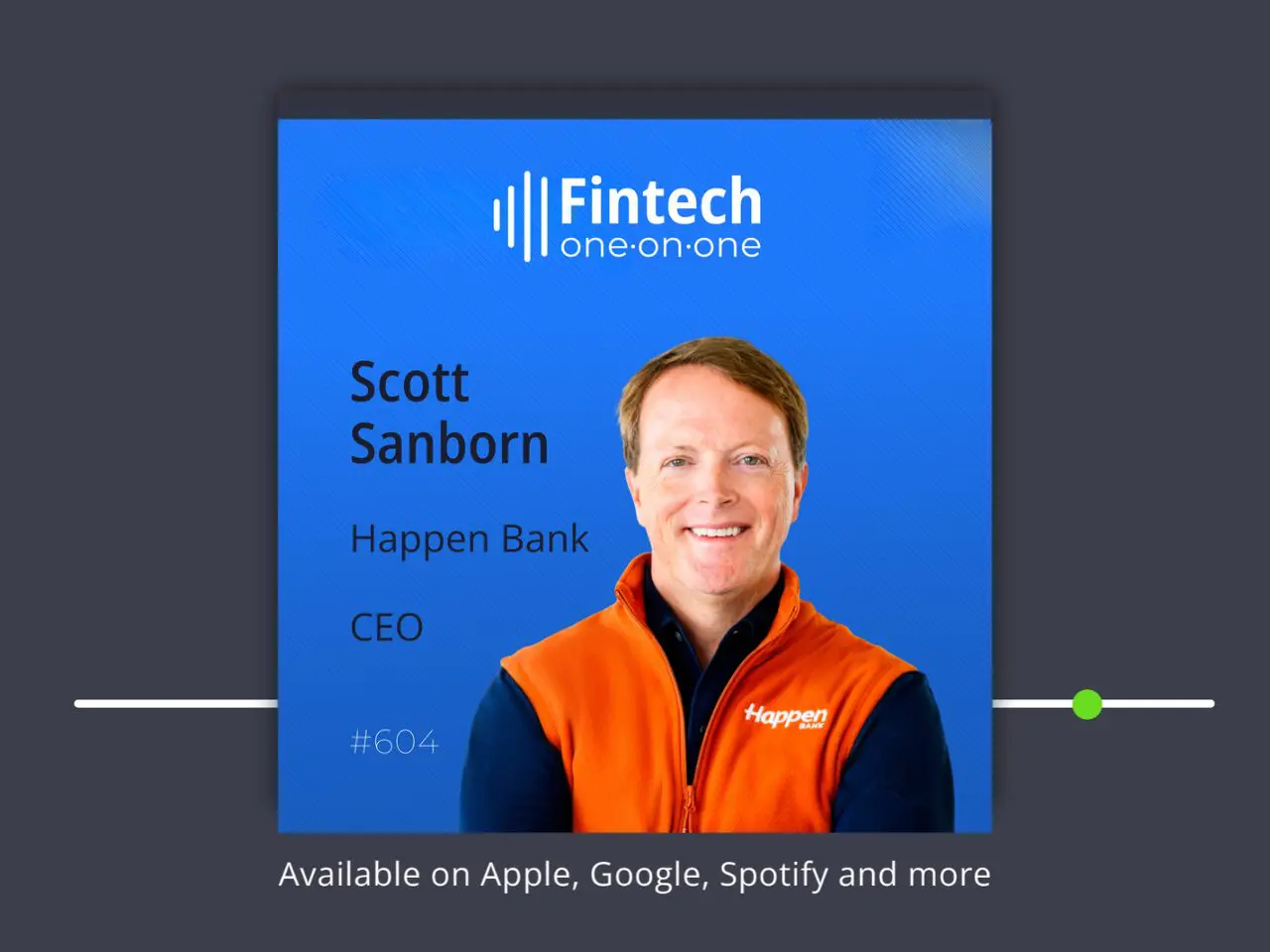
Scott Sanborn is the CEO of Happen Bank, the company known until this summer as LendingClub. He is the first guest to appear on the show four times, and each visit has caught the company at a turning point. This time it is the rebrand: we talk about why the LendingClub name no longer fit, what six years of running a chartered bank has taught him, and how he is preparing for a world where AI agents shop for financial products on a consumer’s behalf.
What We Covered
- Ten years as CEO and why it has never been the same job
- Why the LendingClub name no longer fit the business
- The customer research behind the Happen Bank brand
- How they will measure whether the rebrand is working
- What it took to get a bank charter six years ago
- Shepherds, not sheriffs: building the risk and governance team
- LevelUp Savings, LevelUp Checking and DebtIQ
- Innovating on the loan product with their own balance sheet
- The balance sheet and marketplace mix
- The switch to fair value accounting
- How AI is changing operations and discovery
- Getting ready for AI agents that shop on consumers’ behalf
- Home improvement lending and home equity
Key Takeaways
- A brand is a promise, and the old name could not carry it. Customers told the company two things: they did not know it was a bank, and they did not want the word “lending” on a debit card that holds their own money. The rebrand waited until the product suite, and the financial returns, were there to back it up.
- The charter let them innovate more, not less. With its own balance sheet and a direct line to regulators, the company can test new loan terms and features like TopUp on its own portfolio, then bring investors the results a year later. It holds about 40% of originations on balance sheet.
- Simple incentives drive engagement. LevelUp Savings pays a 100 basis point rate kicker for depositing $250 a month. It has gathered billions in deposits, 20% of accounts come from borrowers, and borrowers who have paid off their loan hold an average balance of around $19,000 to $20,000.
- Agentic shopping favors lenders who already compete on value. Most Happen Bank customers already arrive through comparison sites, so Scott sees agents hunting for the best deal as a tailwind. The open questions are legal, such as what happens when an agent signs a loan disclosure.
About Scott Sanborn
Scott Sanborn has been CEO of Happen Bank, formerly LendingClub, since 2016, having joined the company in 2010 as Chief Marketing Officer. He led the acquisition of Radius Bank, the first time a fintech bought a chartered bank, and the 2026 rebrand to Happen Bank. Before LendingClub he held senior marketing and revenue roles at eHealth, RedEnvelope and the Home Shopping Network.
Cleaned Transcript
Scott (00:10):
We didn’t undertake this lightly. It wasn’t my personal opinion that said, Hey, this name is not right for where the business not only is going, but actually is today, right? We got that from talking to the customers. You know, one, you guys are a bank. I didn’t know you were a bank. That’s great. I feel much better knowing you’re a bank. Two, well, yeah, I’d like to work with you as a bank, but I really don’t want the name LendingClub on my debit card. It makes it feel like I’m borrowing money. This debit card is my money. So, you know, we got to this place by talking to consumers. We really thoroughly researched, tested, measured, quantified to land on the new brand positioning that we did, which was, you know, Happen Bank, clearing the way for people going places. That really came out of talking to customers about what they felt we did for them.
Peter (01:04):
This is the Fintech One-on-One Podcast, the show for fintech enthusiasts looking to better understand the leaders shaping fintech and banking today. My name is Peter Renton, and since 2013 I’ve been conducting in-depth interviews with fintech founders and banking executives. My guest today is Scott Sanborn, the CEO of Happen Bank, the company formerly known as LendingClub. Now I’ve had Scott on the show many times before, but it is the first time since early 2020, after they announced they were acquiring a bank, becoming the first fintech company to go down that route. In our conversation today, we talk about why now was the time to retire the LendingClub name and how they will measure whether the new brand is working. We get into what it really takes to run a bank as a fintech and why the charter has let them innovate more, not less. And new products like LevelUp Savings, LevelUp Checking, and DebtIQ.
We also cover the switch to fair value accounting, how AI is changing their operations, getting ready for AI agents that shop on consumers’ behalf, and the move into home improvement and home equity lending. Now, let’s get on with the show.
Welcome back to the podcast, Scott.
Scott (02:26):
Peter, wonderful to see you and hear you again.
Peter (02:29):
Yes, likewise. Well, you have broken the record now. You are now the first person to be on the show four times. So congratulations.
Scott (02:39):
Well, thank you. As long as you’re not calling me old.
Peter (02:43):
Of course not. Of course not. I think it’s interesting that, you know, we first chatted on the podcast. It was like back in 2014. And I’ve had you on two other times since then. Our last time I had you on was when you actually went and acquired the bank. That was the big news right as COVID was hitting. It’s been more than 10 years since Mother’s Day of 2016. What do you attribute your longevity in the role as CEO?
Scott (03:10):
Man, I mean, you know, there’s a few ways to think about that question. One way of like, why am I still here? I’d start with challenge. The challenge that initially excited me remains as true today, which is continue to believe and see every single day examples of the traditional financial models are just not serving consumers and their financial lives are changing and business needs to keep up and remain very, very excited that a data driven, customer obsessed company that rewards good behavior can also be good business. So that challenge is even more true today, frankly, than it was when I took the wheel. In addition to that, you know, the challenge has not been consistent. And you and I were talking before you started recording that this has never been the same job for more than two or three years at a time.
You know, I assumed a leadership role in a crisis, acquiring the bank, leading through COVID, managing through the inflationary period, now, you know, really a period of growth and product expansion and a new brand, so it’s never been the same job. And then three would be the people. And probably one of the things I’m most proud of is the culture here, which is really carefully crafted to find high intellect, low ego people who care about the mission the way I do makes it a great place to work. And it’s part of the staying power of the company is we just have, we have people that are really committed and really resilient. And last year, I’m not even sure how many awards or recognitions we got. I mean, it was like USA Today, Wall Street Journal, Newsweek, American Banker all saying, you know, recognizing Happen as, you know, most loved, top workplace, all that. So when you’re working alongside people you respect, admire and also like, it makes, you know, work less work.
Peter (05:14):
Right, for sure. So, I mean, the catalyst for this conversation was the rebrand. The LendingClub was the brand for many, many years, and now it’s Happen Bank. You talked about the LendingClub brand as being a little limiting and somewhat transactional. So why is now the time to rebrand the company?
Scott (05:36):
Lots of reasons, but maybe just starting with first off, you know, the LendingClub name as it was originally imagined referred to a business model that obviously no longer exists, which is individual retail investors funding loans. That’s who was in the LendingClub. And so the name didn’t even reflect the core customer that we have today, nor the business model we have post-bank. So why not when we acquired the bank? You know, to me, you probably remember, Peter, in a prior life I was a marketer. And a brand is a promise. It’s a promise about a value you will get, an experience that will be delivered by the company entity you’re interacting with. And when we acquired the bank, we were kind of still LendingClub. You know, we did not really have products that filled in a brand more broadly beyond that name. And so when we first acquired the bank, job number one was absorb this new organization, take over the issuance of the loans through the bank, fund those loans through, frankly, what was a plain vanilla high yield savings and a plain vanilla CD that just needed to be retooled to operate at the scale that we operate at direct to consumer. That took a bit and then let’s not forget that inflationary cycle we managed through in the meanwhile, which caused us to really have to retrench a little bit short term on our ambitions. When the rates stabilized, the consumer stabilized, we really started to go after not the financial benefits of the transaction, which were already well underway, but the strategic benefits of the transaction, which is, you know, leveraging our capabilities as the bank to both innovate on the product loan side by introducing lots of new experiences and features that are really hard to do when you’re using other people’s money, but also innovating away from the lending side, right? So we launched LevelUp Savings, we launched LevelUp Checking, we launched DebtIQ. These were all experiences that were other ways for us to reward people for engaging in good financial behavior that went beyond lending. So, you know, the promise was being delivered and we were ready. And let’s also not forget, we’re also in a place where we are delivering the financial returns that investors expect and require. So, you know, we’re at a place where loan volumes growing nicely, we’re delivering really strong returns to shareholders.
And the product suite warrants it. So all of those factors came together, enabling us to make the change.
Peter (08:20):
But then you’re also going to have, you know, many of your customer base, I think it was like five million members now. Many of them would have signed up under the LendingClub brand. In fact, some of them going back to the peer-to-peer days. How are you gonna determine whether the new brand is strong and the rebrand has actually worked well for them?
Scott (08:42):
Yeah, we’re gonna do that the same way we do everything else by measuring everything very, very carefully. First is getting here. We didn’t undertake this lightly. It wasn’t my personal opinion that said, hey, this name is not right for where the business not only is going, but actually is today, right? We got that from talking to the customers. You know, one, you guys are a bank. I didn’t know you were a bank. That’s great. I feel much better knowing you’re a bank. Two, well, yeah, I’d like to work with you as a bank, but I really don’t want the name LendingClub on my debit card. It makes it feel like I’m borrowing money. This debit card is my money. So our actual debit card, our initial debit card, didn’t even have our name on it. It just had the logo, just the bug, if you remember, because of consumer feedback. So, you know, we got to this place by talking to consumers. We really thoroughly researched, tested, measured, quantified to land on the new brand positioning that we did, which was, you know, Happen Bank, clearing the way for people going places. That really came out of talking to customers about what they felt we did for them, which was they felt like, hey, I’m me, I’m the one who took action. I decided it was time to do the home improvement project, get braces for my kid, pay off my credit card debt. You guys just made it easy. You guys made it happen.
So that was all thoroughly researched. And now, like we didn’t just surprise, new website. We really worked towards this. We had, for I think three months, “LendingClub is becoming Happen Bank.” We started to move towards the new colors to make sure that we weren’t losing anything in translation by taking our top performing champion creatives and loan funnel experiences and all that and started to move them to the new colors to make sure that they would deliver the same performance. And we saw that in fact they did. And now post live, you know, there’s obviously short-term friction with this stuff. Like your login credentials that used to pre-populate might not always pre-populate on a new domain or lose a little authority in Google. Those are short term. Long term we’re very confident and have put in place the brand tracking, which by the way we didn’t used to have, we put it in place so that we could measure this, both for members and prospects, awareness of the brand, awareness of our status as a bank, favorability, intention, and all of those things. So we’ll be measuring that very, very carefully as we build this new brand out.
Peter (11:18):
Let’s talk about running a bank. Unlike many of your fintech competitors, I mean, it seems like every week or two there’s another one of the fintech lenders who is announcing they’re acquiring a bank, or most of them are filing for a bank charter. But you’ve been doing this now for many years as a fintech CEO running a bank. What are some of the things that are harder than you maybe expected before you did it?
Scott (11:43):
Yeah, you know, it’s interesting because a lot has changed in the process. It’s probably worth touching on a little bit. But when we announced, I think no one should be under any illusion that the process of obtaining a charter six years ago, it was a much, much more challenging process. The benefit of that, though, was you had to be ready. You had to be ready.
So a lot of the work that we went through was up front, right? Before, you know, today they give you conditional approval. Now go do all the work. In the past, it was go do all the work and then we’ll give you the approval. So, you know, we had to make sure we had bank ready audit. We had to make sure we had, for those who aren’t familiar with the term, a robust second line and enterprise risk function that, you know, was providing oversight to credit, operational risk, vendor management risk, cybersecurity risk, all of these things. There’s a lot of build that is required to get that in advance. We added a really great team and put all of those things in place for a bank, frankly, much larger scale than we were. So we were pretty darn ready to go. And I think the acquisition path versus de novo was also, you know, everything has its pros and cons, but it was also made it a lot smoother because we were quite good at lending. We had already been doing, you know, lending for fifteen plus years, had the right controls and management and governance around that, but we hadn’t been doing money movement, right? And all the treasury functions. So acquiring an institution that at least had the tools, the systems, the talent and the foundation to do that made it easy because we didn’t have to build from scratch a bunch of operations to do something we weren’t doing and had never been tested.
That’s the situation everyone’s in today. Like, go hire a bunch of people, write a bunch of procedures, but don’t use them until the switch. So and we were very careful as well. I talk a lot about culture. I was very careful to hire people in the functions, those risk and governance functions that I called shepherds, not sheriffs. Right. Like I want someone who can help lead the company. Not to don’t do that, that’s wrong. But here, let me explain why. We need to be thoughtful about whenever onboarding a new vendor. They’re an extension of the bank. If they don’t have good controls, we are going to be liable for that. So, like, that’s why this process is important.
So we did a good job of saying, hey, we’re Tony Stark. The bank charter is our Iron Man suit. That’s going to come with some consequences in terms of how we operate, but this is the right thing because we can do better for the customer. And we’ve really, we’ve really delivered on that. I mean, the value we’ve been able to give to the customer, the products we’ve been able to launch are because we got the charter. So I would say it’s a very, very heavy lift. I won’t say it was harder than we expected. We expected it to be hard. So it was as hard as we expected. We got out of our operating agreement, which is kind of a very rigid sort of framework they put you in, which is you draft a business plan in advance of your approval, and you do not deviate from that plan without prior written consent. That is very constraining when you’re moving at the pace of fintech. We got out of that agreement in the three-year timeframe, which to our knowledge, we’re the only fintech that has done that. So I think that’s a little bit of an external validation that we were pretty ready and were operating with a lot of discipline through that process.
Peter (15:23):
Okay. So then let’s just take us through kind of the different products. You’ve still got your core lending product for borrowers that has served you now for coming up on 20 years, but you mentioned the LevelUp Checking and Savings. Like how do you describe the product suite today?
Scott (15:44):
Maybe I’ll start with the new products, but I don’t want to skip over some of the things we’ve been able to do with the existing ones. Take big picture statement. Having the bank charter has allowed us to innovate more, not less, than being a pure play fintech. And the big reason for that is we have our own balance sheet. We have a direct line of conversation with our regulators, and therefore can just do more. So let’s take LevelUp Savings. Very simple, very simple idea.
You get a great rate when you open a LevelUp Savings account. If you engage in ongoing monthly savings behavior, you put in $250 a month, you get a hundred basis points rate kicker. That’s it. Treat your savings like a bill, and you will get rewarded for it. That product has gotten so many awards, so much press, and it’s so simple. That rate is competitive with the best rates in the market. Some of the other ones don’t require that. And people are choosing us.
Because they like being, you know, frankly, incented, slash, air quotes, forced into doing the right thing. I want to save. I want to treat my savings like a bill. So like this is incenting me to do it. So that’s LevelUp Savings. We’ve gathered, you know, billions of dollars into that since we launched it. 20% of the accounts are coming from borrowers. And those borrowers who’ve paid off their personal loan have an average $19 or $20,000 balance.
So you think about someone who came to us with credit card debt, paid off the debt, and now they’ve built up a savings. How would you feel about the company or the brand that helped you do that? So that’s savings. LevelUp Checking. Very simple again. Get rewarded for using money you have to pay for your essentials, gas, grocery, and pharmaceuticals, and get rewarded for staying on top of your loan payments. So cash back on gas, groceries and pharmaceuticals, double cash back when you stay on top of your loan payments. Very simple, you know, 60% of those accounts are coming from borrowers. So those two products are new. DebtIQ, given that our customer, the motivated middle, we call them, they are high income, very good credit, but heavy users of credit. DebtIQ gives them a central place to see their debt and to manage their debt, especially their credit cards, which are the only bill they don’t have on auto pay. You know, the amount they owe changes every month. The min pay, the total balance is different every month. This gives rather than log in and out of, you know, Chase, Discover, Wells, Cap One, see everything in one place, see all your transactions, see your statement balance, see your min pay, see when it’s all due. You can automate your payments, you can set up your payments from a LevelUp Checking account, and it’s free. So there, what do we see? Well, people who are using DebtIQ or using LevelUp Savings or using LevelUp Checking interact with us more often and are more likely to take another product from us. So those are all kind of the non-lending side. But the balance sheet also allowed us to innovate on the lending side. We could do things like, hey, we’ve been doing you know three and five year loans forever. We want to do four and seven year loans.
Rather than going out and convincing a dozen investors why, you know, here’s the shape of the curve we expect and here’s why we’re convinced. And will you pay us the same for that as you pay for everything else? We just do it. And then we go to them after a year and say, here’s the results. It’s now part of the program. And, you know, investors, because we’re the largest holder of Happen Bank loans, there’s just inherently a trust that we care deeply about the performance of these loans. And the results show that aligned incentive is working. Same thing with the product top-up we launched, which was we saw a behavior where someone would have a loan, get almost all the way to the end, and then decided they needed a second loan. They would take out a second loan, then use part of the proceeds to pay off the first loan. And we didn’t make that easy for them. Like we made them go, like go do that on their own. Top up just says, you know, click a button, we’ll pay off the first loan, create a second loan. You hold on to one monthly payment.
Same thing. We just tested it on our own portfolio, let it run, a huge consumer response to it. And then we made it part of the core program.
Peter (20:08):
How much are you keeping on your balance sheet today versus the marketplace and, like, the structured certificates that you innovated several years ago? What’s the mix?
Scott (20:20):
Yeah, so we hold about forty percent on a quarterly basis on our balance sheet. There’s, you know, that can range based on, you know, what the mix of loans is we’re bringing in, what our objectives are, but it’s roughly 40. The benefit of the marketplace is twofold. One is it’s obviously capital light. Two is there’s a subset of loans that go to the marketplace that wouldn’t be appropriate at large scale on the bank balance sheet. I mean, we do hold a bit of everything we produce, but you know, for the, you know, a small amount of our loans that are call it 600 to 660, we’re not going to build a big bank balance sheet position on that. So the marketplace still adds value there in helping us serve those customers with people who have the risk appetite. And to your point on the structures, you know, the loans we sell, there’s a variety of structures. We sell the whole loans, we have a structure called LENDR, which is optimized for insurance where we basically sell the whole loan but broken out into tranches to meet, you know, it’s a rated structure that meets the needs of insurance and we just keep a vertical slice. And then we have the HAPS program, the what was formerly the structured certificate program, where we effectively finance the buyer and we hold an A note on our balance sheet, which is very capital efficient for us and very efficient for them because there’s not a third party and, you know, it’s match funded for them over the duration of the loan. So we have a variety of structures also enabled by being a bank, right? We couldn’t offer those structures easily prior to us being a bank.
Peter (21:59):
So I want to dig into the weeds just for a little bit on accounting because there’s a change that you made in January that I just want to dive into. You moved to fair value accounting on newly originated loans. It’s what many other fintech lenders do, but not often what banks do. What should we understand about how that changes the way you report your quarterly numbers?
Scott (22:26):
Yeah. So one thing worth noting, Peter, is that my understanding is most of the new banks being formed are electing fair value. So you can elect fair value or CECL. Both you know, fair value’s been around a long, long time. CECL is obviously post the financial crisis. So the first thing people should understand is the economics are the economics, right? A loan will deliver a certain cash flow over time. What changes is the timing of recognition, and for any growing bank, but especially our model, right, which is unsecured lending that has an origination fee and versus secured lending, a relatively higher loss content, fair value just better aligns the timing of the recognition of revenue with what is actually happening. So under CECL, the origination fee we collect, we did not recognize. We deferred that. And the losses that haven’t happened yet, we would take on day one.
Right. So it created this kind of disincentive to add to the balance sheet, to grow the balance sheet, because the in period economics were very, very punitive, even though, you know, from a risk management perspective, having a larger balance sheet, having a net interest income stream, which is now the majority of our revenue today, is actually better because it is a more predictable recurring income stream.
And you know, it just made it very, very hard to grow the balance sheet, which was a big goal for acquiring the bank. Whereas fair value doesn’t work that way, right? We get to recognize the fee. We also recognize the marketing that we spent, which again intuitively makes some sense. And you mark the value of the loans based on the overall expectation of a spread versus a risk-free rate, which reflects, you know, the marketplace value. Now, this wasn’t a new methodology for us, even when we first acquired the bank, we were still using fair value accounting for the loans we were selling to investors and the loans we were pooling to investors. So what changed is we just brought the on balance sheet portfolio to the same basis, whole company reports using one methodology instead of two. So it’s much simpler for us internally, and it’s more comparable for those people externally when they’re looking at us versus some of the other public competitors who are under fair value as well. It just makes it all make more sense.
Peter (24:56):
Okay, I want to switch gears and talk about AI. And I’m curious because you’re a marketing guy at heart and the way that people are discovering lenders now is different because many, many people are starting with ChatGPT or Claude or one of the LLMs to sort of begin their journey of discovering what type of loan they should get. How are you kind of working with the major LLMs to ensure that Happen Bank comes up in their inquiry?
Scott (25:27):
Yeah, I mean the AI story internally is very broad and very deep. And there are really significant opportunities we are actively pursuing and there are real risks that we are, you know, working hard to protect against. So yeah, I mean, opportunity side, we’re pretty far down the adoption curve internally. We’ve got a gateway in place that allows guardrailed, monitored, controlled, measured access to the models. Those models are connected to our internal data sources and tools. So whether you’re in finance and you know, you want to use Claude for Excel to build a model, or you’re in products and you want to use to help design Figma and then take those Figma designs into production ready code. There’s a lot happening. And you know, the innovation we’ve identified 38 AI champions across the company representing each of the business areas, giving them and the bigger places where we’re seeing it move the numbers are in operations where we reported, you know, last quarter that our loan volume was up close to 30%. And we have roughly 20% less people taking calls. So that’s just a combination of automating. We’re over 90% fully automated on the loans. We’ve got because AI monitors all the calls and all the issues, we’re able to identify things that are causing questions and friction and move upstream and fix them. So we just don’t get calls. Our propensity is coming down. We obviously have an agent that’s taking a subset of the calls. Like when somebody just wants to check their balance, we don’t need a person for that. And then of course, you know, in engineering, there’s a lot of work to increase productivity, speed of both code production, but also QA. So lots happening there, including on the external side, which is where you started your question of hey, what’s happening as people move away from search as a starting place into the models. So yeah, we have got a team dedicated to making sure we are visible to, relevant to the models. And that requires similar to the SEO of old, thinking through your page architecture, thinking through your content and your connectivity. So all of that is underway. I think the legal questions around how far you can go from discovery through to actuation are yet to be resolved. Like I don’t know what happens if an agent signs a TILA, but we are certainly looking to be on the safe leading edge of that curve.
Peter (28:06):
I mean, I can tell you what’s likely happened already is that an AI agent has filled out the borrower application on your website. That’s almost certain to have happened already. Do you have a plan in place for when AI agents are making decisions?
Scott (28:19):
Yeah, we do. We have a team that we’ve got cordoned off to be thinking exactly about this question. I’d say as a broad statement, there’s lots to noodle here and think through, but go back to the mission of the company and say most people are not getting the value they deserve. And a big part of that is inertia. And another big part of that is lack of awareness. Our whole business, the whole brand, is trying to change that, right? Make it happen. Like, you know what? It’s not that hard to change your checking provider. It’s not that hard to pay off your credit card debt. Make it happen. So to us, we feel like we’re very well positioned for a world where there are agents going out and looking for value for you. Like we’ve built our whole business to deliver that value. So we need to be discoverable. We need to be able to interact, but at its core, we’re pretty well positioned because we compete in a value-driven world already today. That’s where most of our customers come from is shopping around on whatever, Bankrate or LendingTree or Credit Karma or you know any one of the many sites where you can compare and find the best value. So really the focus for us now is okay, we know we have a great product and experience. How do we set ourselves up to be visible to and able to be engaged with by agents?
Peter (29:47):
Okay, so last question then. What’s on the priority list going forward? I mean, there’s obviously a lot of areas of finance you’re not in, a lot of areas of lending you actually don’t have a product yet. So what’s on the priority list?
Scott (29:59):
Yeah. So first we were very excited this year to launch into the home improvement vertical. It’s basically taking our underwriting, unsecured credit expertise and applying it to another use case that is a responsible use of credit. So huge, you know, 500 billion purchase market. People, especially with the rate environment, are going to be stuck in their homes even longer and making it easy for them to be able to afford to build and invest in one of their largest assets, I think, is really a great use case. You know, first loan started in April. We’re very excited about the response we’re getting from the market there. And we’ve got a pipeline and a queue of partnerships lined up that we expect to be launching every quarter as we get into next year. So that’s something we’re super excited about. And the other thing we have mentioned is we did some testing earlier this year on home equity and we’re very, very pleased with the results, meaning the number one and two use cases of home equity loans are home improvement and debt consolidation. Those are two businesses we’re actively in. So, as I think you’ve come to know from us and me over the years, is we don’t throw spaghetti at a wall. We really focus on the customer need and launch adjacent products and experiences where we believe we have a right to win. So we feel really good about that as a next product category for growth.
Peter (31:32):
Okay, we’ll have to leave it there, Scott. It’s always great to chat with you. Thanks for coming on the show again. And best of luck for Happen Bank.
Scott (31:40):
Great to talk to you, Peter. Thanks for having me.
Peter (31:47):
What struck me from my conversation with Scott was one statistic about LevelUp Savings. Borrowers who have paid off their personal loan are carrying an average savings balance of around $20,000. Now, as someone who used to invest in loans issued by LendingClub, I love seeing that statistic. Taking out a debt consolidation loan can save people a ton of money on credit card interest, and I like seeing evidence of people improving their financial lives through that product.
Scott said people choose their savings account because it nudges them into doing the right thing, depositing $250 a month to get the interest rate kicker. Sometimes the most powerful product is a well-designed incentive that is simple for the customer to realize.
Anyway, that’s it for today’s show. If you enjoy these episodes, please go ahead and subscribe, tell a friend, or leave a review. And thanks so much for listening.


