
Mastering the Future of Finance With Michelle Beyo, CEO of Finavator
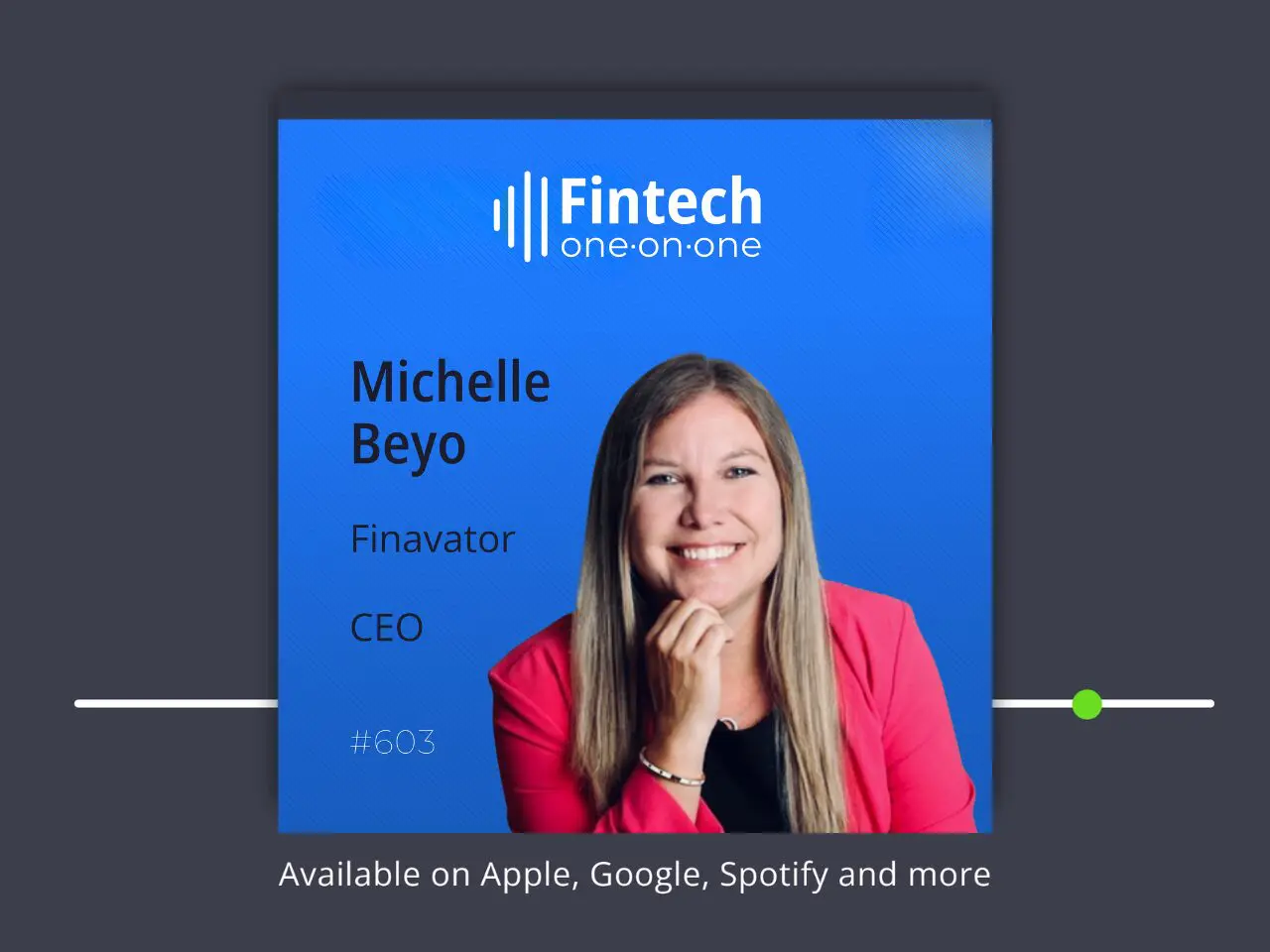
Michelle Beyo is the founder and CEO of Finavator, a consultancy that helps banks, fintechs, and corporates step into the future of finance. Her new book, Mastering the Future of Finance, just published this week by Wiley, breaks the industry into nine elements across data, trust, and technology. We talk about why she wrote it, why she believes there should be a human data right, and how she kept the AI chapter current in a market that moves every month.
What We Covered
- Michelle’s path from telco and online shopping to prepaid infrastructure at InComm
- Piloting one of the first WeChat top-up tests at 7-Eleven in 2017
- Why she concluded the future of finance was being built in Asia
- Surviving crypto winter at a blockchain startup
- Winning Money20/20 RiseUp and starting Finavator in 2019
- How Finavator works with banks, fintechs, and corporates
- The masterclass that led to a Wiley book deal
- The nine elements of the future of finance across data, trust, and technology
- Open banking, open finance, and open data explained
- The case for a human data right
- Keeping the AI chapter relevant as agentic payments took off
- Ending each chapter with a subject matter expert interview
Key Takeaways
- Number portability is the template for open data. Your phone number was the first piece of data you could take with you when you switched providers. Michelle sees open banking, open finance, and eventually open data as the same right extended to your financial life, and she wants it codified as a human data right at the ISO level, including the right to delete consented data.
- Trust is the core layer. In Michelle’s framework, open data, digital identity, and cybersecurity with AML compliance sit at the center. Get that trust layer right and fintech, BaaS, and embedded finance can accelerate on top of it.
- Agentic payments are moving faster than the internet ever did. Memory, auditability, liability, and returns are still open questions. Until credential tokenization matures, Michelle suggests giving AI agents prepaid credentials rather than your core credential.
- Frameworks outlast specifics. Michelle finished writing in May and agentic payments had already moved by publication. The nine elements are built to hold up even as individual examples date.
About Michelle Beyo
Michelle Beyo is the founder and CEO of Finavator, which she started in 2019 after winning Money20/20 RiseUp. Before that she spent six years in telco, eight years running online shopping and affiliate marketing programs for major airlines, led sales, marketing, distribution, and innovation for InComm Canada, and worked at a blockchain startup focused on digital identity and consent. She is the author of Mastering the Future of Finance: How Data, Trust, and Technology Are Reshaping the Global Economy (Wiley).
Cleaned Transcript
Michelle (00:10):
If you’re a student and you’re just trying to understand finance, I think this book can help you step in to understand these nine elements of the future of finance. But if you’re in banking, usually your head is down, let’s say in deposits. So you won’t exactly know what’s happening in the sense of prepaid infrastructure, fintechs, BaaS, embedded finance. So I think it can help everyone from a student to a professional who’s living in their everyday career, but maybe looking down, and then board members who are working at these innovative organizations, but there’s so much happening all at once.
Peter (00:49):
This is the Fintech One-on-One Podcast, the show for fintech enthusiasts looking to better understand the leaders shaping fintech and banking today. My name is Peter Renton, and since 2013, I’ve been conducting in-depth interviews with fintech founders and banking executives. Today on the show, I’m delighted to welcome Michelle Beyo, the founder and CEO of Finavator, a consultancy that helps banks, fintechs, and corporates step into the future of finance.
Michelle spent six years in telco and eight years in online shopping before moving into prepaid infrastructure at InComm, where she ran sales, marketing, distribution, and innovation for Canada and piloted one of the first WeChat top-up tests at 7-Eleven. She founded Finavator in 2019 shortly after winning the Money20/20 RiseUp. The catalyst for our conversation today is her new book, Mastering the Future of Finance, published by Wiley just before this episode goes live. We dig into the nine elements that she uses to frame the industry, why she believes there should be a human data right, the differences between open banking, open finance, and open data, and how she handled AI in a book she finished writing back in May. Now let’s get on with the show.
Peter (02:16):
Welcome to the podcast, Michelle.
Michelle (02:17):
Yeah, thank you so much, Peter. Really happy to be here.
Peter (02:20):
Great to have you. And let’s kick it off by giving the listeners a little bit of background about yourself. I mean, you’ve been in fintech for a little while. Tell us a little bit about the high points of your career to date.
Michelle (02:34):
Definitely. My career, if I could sum it up really quickly, I spent six years in telco, eight years in online shopping, affiliate marketing, ran Alaska, Lufthansa, Delta, United online shopping malls pretty early on, and then jumped into prepaid infrastructures, working for InComm, which is one of the largest prepaid companies globally, and was working out of their international office in Toronto for 30 countries. So I actually ran sales and marketing, distribution, and eventually innovation for InComm Canada.
And I think one of the high points was facilitating a WeChat first ever top-up functionality test pilot at 7-Eleven. And though it didn’t go to full execution, it did in Japan, but it didn’t in Canada with InComm. It was a really interesting experience because I didn’t know what WeChat was, hadn’t heard of a super app, and didn’t know what a QR payment was in 2017. So implementing that and watching that work was pretty impressive and actually got me thinking: the future of finance is living in Asia. And back in 2017 specifically, we were extremely far behind in North America. And it’s actually one of the reasons I then took a course focused on blockchain, digital identity, and fintech. And it was an 80-hour pre-read at an Ivy school.
And I ended up with all of these executives from across the board. And in those three days, I truly validated that the future of finance was looking elsewhere. And we were kind of acting like Kodak holding moats in North America, which was concerning. And then I went and quit my job and took a position at a blockchain company focused on digital identity, consent on blockchain back in 2018, and took the leap into this new world.
Unfortunately or fortunately, crypto winter came six months into that role. So I learned so much of what never to do at a startup, but I also learned how to survive in a startup in a really difficult time. And then I won Money20/20 RiseUp right then, a year into that role. And I didn’t want to give them the PR. So I just looked to my husband that morning and I said, I have to start a company. This announcement at Money20/20 is not coming out under this title.
Michelle (04:55):
So I started Finavator back in July 2019.
Peter (04:59):
Just to touch on the WeChat for a moment, because I did events in China in the 2010s and we had large-scale fintech events where we’d bring fintech executives from the US, and it was like 2014 through 2018. And I think some of the things that they showed us in China in 2018, we still haven’t caught up to. Eight years later, it’s amazing. So anyway, being part of RiseUp at Money20/20 was the impetus to start your company. So what was it that you wanted to do?
Michelle (05:34):
So both my parents were entrepreneurs. So I think it was always in my blood to realize that I wanted to own a company. Two things happened to me. One, my best friend in the world passed away from colon cancer. So I really truly realized how short life is. And two, being part of that startup and leaving my safe and secure job with two kids and a husband was a nerve-wracking roller coaster. I learned so much. And I think it was the experience I needed to truly take the leap myself. Like if I was going to already be on this roller coaster ride, I’d rather it be my roller coaster than someone else’s. So I think learning what a startup was and how many hats you had to wear. And even at InComm, I ran three departments. I was used to pivoting often. And I think that both of those experiences were pivotal in making Finavator what it is today.
Peter (06:30):
So then tell me what it is you actually do. Tell us the sort of broad range of things that you focus on.
Michelle (06:36):
Yeah, so proud. It’s been eight years. Can’t believe time has passed really quickly. Finavator, I started largely because when I did the application for Money20/20, I had to describe all of my experience. And when I looked back, I was looking at this career and everything I touched touched the future of finance, from being in telco to running online shopping infrastructures to working on prepaid rails that ended up being challenger banks and buy now, pay later infrastructure and gig economy payments.
And then touching QR payments and then working on digital identity and blockchain infrastructures. I was like, many people don’t understand these ecosystems. And I’ve got to live in them and experience the front row seat, I guess, on the innovation trail of trying to drive out new cell phones, from the brick phone to the smartphone. So I got to be there to watch that experience happen in real time. And then going from no one shopping online to basically, why would you go to a store if you could shop online? So I’ve just kind of seen this evolution of infrastructures and wanted to create an organization where I could help not one company drive into the future of finance, but multiple companies.
So what Finavator does is kind of fourfold. We help with strategic go-to-market in North America specifically, as I want North America to get to the future of finance. So I’ve helped a couple of UK companies that are quite innovative come into the US market. I’ve helped a Canadian bank become a BIN sponsor bank because they wanted to create their own prepaid card and they were going to be their own backer bank. So it’s like, please be a backer bank to the ecosystem. We need companies, banks like you who have good brands to come and help the fintech ecosystem. Also helped companies with strategic growth and digital identity, anybody that is part of the future of finance, utilize the Finavator ecosystem to drive out more trust, stronger partnerships, strategic growth, as well as innovative marketing, intimate kind of dinners, as well as podcasts and different discussions. Because really I think the future of finance, Peter, is all about trust.
Peter (08:48):
Indeed. So then are you working with banks and fintechs, or is it primarily fintechs?
Michelle (08:53):
I’m working with both. I’m also working with corporations that are trying to figure out how do they touch fintech or figure out what products should they add to help and delight their customers. I’m really trying to be a bridge of helping these organizations step into the future of finance, hence the podcast, hence the masterclass, and now the book.
Peter (09:17):
When you’re talking with a potential client, what are you looking for that determines whether someone’s a good fit for you?
Michelle (09:28):
Yeah, when I go to events in London or in the US and I hear a company that’s driving innovation. Like one of my clients is actually in the open finance ecosystem and they do secure payments and validation to help with iGaming, to ensure that they’re not overspending past limits. And to me, that is a huge unlock of the future of finance, giving control back to the consumer.
So that just excites me about wanting to help that team succeed and grow and get to that next level. So helping them find their first stages, their first clients, some partners, maybe some BIN sponsorships or FBO accounts that they need as they come into the US market, really trying to help them with strategic growth as quickly as possible.
Peter (10:13):
Okay, so let’s dive into the book, which you were kind enough to send me a preview copy of. And we’re recording this on September 8th, but the book is coming out, I believe, is it the 22nd? Is that correct?
Michelle (10:28):
Yes, but I have many book signings just in advance.
Peter (10:33):
I know we were chatting before we recorded and you’re about to head off on a six-city tour over ten days. I feel like the book is a great service to the industry, but let’s dive into it. Maybe we can start off with why? What was the catalyst for creating this book?
Michelle (10:53):
Yeah, good question. I love helping people understand complex problems and simplifying them. And I think I realized that helping people with cell phones back in the day and really just trying to figure out how you can use this technology, how can it benefit me? And how can you take away the really complex words and make me understand this new innovation? And I think that’s something that I really enjoy doing. And I ended up building this masterclass back in 2024, really because I was training my staff and I said to them, okay, great, you have an MBA. What do you know about prepaid technologies? Nothing. Tell me, what do you know about payments? Nothing. Tell me a little bit about what you might understand on digital identity. Not part of the course. Okay, why don’t we just do an hour where I’ll just tell you a little bit about the prepaid technology, what it enables. And then it was really helpful. And I was like, why don’t we just turn this into a quiz?
Why don’t we turn this into a deck? Why don’t we turn this into, who could I find in the world that I could ask to be part of this expertise so I could simplify prepaid? So it ended up being this 10-course masterclass that I built in Kajabi to help professionals understand the future of finance. And then Wiley reached out and we spoke for many months. And then they said, okay, I think it’s time that you write a book. And then they gave me a seven-month mandate to write 80,000 words.
Peter (12:21):
That is a heck of an undertaking. And then when you were writing the book, who did you have in mind as the reader exactly?
Michelle (12:32):
Yeah, I think it’s broad, because if you’re a student and you’re just trying to understand finance, I think this book can help you step in to understand these nine elements of the future of finance. But if you’re in banking, usually your head is down, let’s say in deposits. So you won’t exactly know what’s happening in the sense of prepaid infrastructure, fintechs, BaaS, embedded finance. So I think it can help everyone from a student to a professional who’s living in their everyday career, but maybe looking down, and then board members who are working at these innovative organizations, but there’s so much happening all at once. This six- or seven-hour course or the book can really help them at least get a grasp of what’s happening without being intimidated.
Peter (13:21):
So tell us a little bit about it. It’s called Mastering the Future of Finance. How did you decide what to include and what not to include?
Michelle (13:29):
Great question. Iteration. I would say I am a Type A. So I just thought I would do an hour of writing a day and I would achieve this accomplishment, but that is not how writing flows. There were a lot of 3 a.m. voice notes and walks just iterating. What do I want to simplify? And I think you’re right. Even in one of the parts of the book, I write: while you’re reading this, I’m quite sure the market has moved. And this could be old news, even though I finished my last pen in May of this year. And so much has changed in agentic.
So really what I was looking at is Mastering the Future of Finance: How Data, Trust, and Technology Are Reshaping the Global Economy. So I was really trying to focus on data, trust, and technology. And then I brought it down to the nine elements that I think are influencing all three of those aspects of the future of finance. So really broke down the book into this three-part infrastructure. So the beginning of the book is the first, I kind of call it a chemical chart, because my daughter was doing chemistry at the time and I was looking at all these different elements. And there’s actually kind of an element breakdown of these nine into a chemical chart. And the first is fintech and the power of fintech.
And then you can’t talk about fintech without the next element, which is really about BaaS and prepaid infrastructures. So the technology behind fintech that has allowed it to be driving the ecosystem. And then embedded finance, which can only occur because we have fintechs and BaaS infrastructures to a large degree. So those three were kind of the how we’re enabling data to drive out innovation.
And then trust is the middle core of the book, really talking about open data and how the rights of owning your data and moving your data is enabling empowerment for consumers, followed by digital identity and how important some form of validating that I am who I say I am in this digital trust world is, so crucially important, followed by cybersecurity, AML compliance, and that working together in a defense-by-design kind of ecosystem.
Michelle (15:40):
So if you get the trust layer right, you know, you can really accelerate the front part. But then the last part of the book is really about AI being a superpower in touching so many different parts of the future of finance, as well as blockchain being able to be an audit trail that’s unchangeable and usable, not just in the sense of one mechanism. It could actually be utilized in so many different ways when we look at the future of finance.
And then looking at digital currencies and how digital currencies, from stablecoins to crypto, can be utilized to truly help money move instantaneously around the world without being shut down on bank hours. But it talks about how the old world and the new world work together to truly drive out the future of finance.
Peter (16:30):
Maybe we could touch on open banking, because you give that its own space. And I know you’ve spoken about this many times. I’ve seen you on stage many times talking about open banking. And you distinguish between open banking, open finance, and open data. So maybe just take us through this framework that you really go in depth with in the book. And tell us a little bit about the journey that this country’s on and other countries are on towards open data.
Michelle (17:07):
Hundred percent. It’s one of my favorite topics. I think there should be a human data right. And that is my belief because I come from telco. So this kind of goes back to the beginning of my career. I remember giving people cell phone numbers and spending an hour trying to figure out a number they could memorize and share with their friends. And then back then, if you left your telco, you had to leave your phone number and then get some randomized new number with some new area code. And at some point, truly around 2015, most countries enabled a number portability right, so that was the first piece of data the consumer got to take with them that was truly theirs. And these seven digits, you know, when we used to memorize them, it was part of your identity. So changing them meant that you had to email out all of your friends and family. And it was really a horrible feeling to have to lose something so entrenched in your identity.
So when I look at open banking, open finance, and open data, to me, we already started with number portability in telco. Open banking came out of Europe and the UK from some bad behavior, let’s say, going on in the financial crisis. And they came up with open banking so that people would be allowed to move their data so that they can go and work with a different bank or a fintech, or at least share a little piece of their data so they could open a micro account that they might be using just for travel with a fintech, or they might be utilizing their mortgage somewhere else. But it helped identify who they say they are in a valid way without actually having to screen scrape their data, which is a very unsecure way of moving any type of validation of I am who I say I am. So if we could do this in telco, we could do this in open banking and allow the data to empower me so that I can utilize different services and actually, potentially, in the best case scenario, have a dashboard with a company I truly trust, where I can give them access to my data. So I’m not looking at an Excel sheet for my financial breakdown, which is not ideal and manually entered. So open banking to me is a holistic way to see your current financial position and give you some advice on what you might be able to do to help that position, or help your retirement, or help your elderly parents in the UK ensure that they have enough money to pay their bills.
Michelle (19:34):
And have this overarching management infrastructure if needed. Open finance opens that to wealth. It opens that to my insurance. So if you look at markets like Brazil, they can have micro insurance that is just what’s needed. Instead of lumping you into a group of people from this age to this age that happen to be male or female and giving you a rate, they can actually utilize the data to give you a personalized rate, even in a micro insurance that’s very personalized. Open banking and utilizing this data can personalize the offers. So I can hopefully pay less and have more insight.
And then when you move this, like Australia doing the consumer data right in 2020, it allowed them to basically make the statement that they were eventually going to get to open data, and they were starting with the consumer data right and then going to have it launch across five different ecosystems. First with open banking, then open finance, open energy, open telco, and then eventually open data. So that’s really an open economy. In the UK, they call it smart data, which just came in last June, which is moving from open banking to open finance to more of an open data economy. So you can actually save on your energy bills when you actually know a little bit more and are able to utilize that data in a more holistic way.
So it’s an empowerment state for me. And if we had a human data right at the ISO level, we could actually mandate that, or we could have companies have better investments potentially, if they were to align to an ISO standard of a human data right, if that was where you wanted to put your investments. I don’t want to live in 1984. I would like to have an ability to have my data, utilize my data, know where my data is, and actually have the right for deletion at the same time. So there could be a full dashboard with deleting the consented data that I have given in the past that maybe helped me get a mortgage. So it’s giving a little bit more control back to the consumer. And I think it’s an important part of the future of finance.
Peter (21:35):
A lot of countries are taking leads here that are not the US, but I can see how passionate you are about it, and I think it’s a great thing, because I think data wants to be open. I like the direction that we’re heading, and I appreciate how you describe it in detail in the book. So you cover AI in depth, and I was reading through it and I was surprised by the fact that it didn’t seem dated at all. And, you know, I said, maybe that’s only because, I’m sure that was the last thing you edited before you put your pen down, because it is the area of finance that’s changing the most, or changing the fastest, shall we say. So how did you try and keep it relevant and timely, given the fact that there’s still multiple months going from writing to publication?
Michelle (22:28):
Definitely. I think this is the thing I lose sleep over, is people reading the book and it being outdated. So I really tried to get everything I possibly could, because agentic really kicked off in April of this year. And so that was definitely something I tried to cover: who’s working on agentic in what way, and what are the issues? So the issue is memory and auditability. Like, we took years to get to the internet, to the use case of almost 80% of the population utilizing the internet. That took us decades. We’re running at agentic and I think it’s been less than 24 months since the topic of agentic payments has come to the forefront. So to me, it’s really thinking about who can I talk to? I’m at 20 conferences a year and I moderate a lot of panels and I make sure that the topic is always different. So it’s really keeping me on my toes.
And having the ability to be with these experts and ask questions that I have, in hopes that it’s answering questions that others have. And I think that I’ve been very lucky to have some incredible AI experts as friends, like Theodora Lau and Russell Moore. So I’m able to ask them questions as I’m running through iterations of how do I protect myself in the world of AI? What does AI ethics look like? How do I ensure that data potentially doesn’t go to the cloud? How do I get device-based AI so that I can protect my IP and my PII? And how do I tell others to try and protect themselves while they’re utilizing this new technology that doesn’t have regulations over top of it? Especially you and me both being in payments. So crucial to have this mindset of, this is going to be regulated. What should we do and what should we not do?
Right now, as we’re trying to play with this new technology, to ensure that we’re always protecting our clients, to ensure that we have the audit trail of what’s happening with the transaction, who’s liable, what does a return look like? What if an agent goes rogue and ends up utilizing your credential? So maybe we should only use prepaid credentials when we talk about AI until we get to a point that we can have credential tokenization infrastructure.
Michelle (24:49):
And I never have to give the AI my actual core credential.
Peter (24:52):
One thing that I really appreciated about your book, which I wasn’t really expecting, is that you do put a lot of yourself into the book. It felt like part autobiography to me. And you end each chapter with an interview with a subject matter expert where you again share some of your own journey. Was that your intention in the book, to really make this about sharing your own personal journey?
Michelle (25:18):
I feel that when I get on stage, I try and share new technologies, stats that are extremely relevant and just happened, and something personal to ground it, because otherwise it’s hard to grasp technology infrastructure changing at this pace. So I think it’s something I’ve learned over the years, by grounding really complex infrastructure with something personal, I think it helps people along their journey, or I hope it does.
So that was intentional, though it took quite a bit to pull out different stories for every different element. But having an expert in there was a hundred percent a part of my masterclass in 2024. And I’m so honored to have 14 different incredible experts included in this book, many being friends like Carol Grensberg, as well as so many different people like David Birch, Francis Zelenzi. And I could name all of them, but they were just all so impressive and so gracious. And they all read the chapter after I put them in it. So I felt duly criticized, so I hope it also helped with the editing, because I think that’s the hardest part. I tried to keep every chapter to 6,000 to 8,000 words. And when it got to AI and blockchain, I think they ended up at 9,000. It’s just so hard to describe a technology like that in a box.
So I’m so happy to have other voices share their expertise, their insights on digital identity infrastructures, AI breakdowns. Carol goes into digital currency infrastructures. And then also, if you know him, Sebastian, who is the delivery man, is my fintech expert. And he’s touched so much in his career. So just honored to have him a part of the book. There’s so many people. They’re all good friends and they’re all going to be at the launch party.
Peter (27:08):
When and where is the launch party?
Michelle (27:11):
This week. So we’re having a pre-launch party in New York. Prove is sponsoring. It’s at Poslanelli’s office on Third. And David Birch is speaking, as well as Francis Zanelli and Jane Barrett. So just very, very lucky to have such an incredible discussion. And we’re talking about trust in the future of finance.
Peter (27:33):
Right, well obviously that will have happened by the time this podcast comes out, but I will make sure to link to any and everything that you’ve done around the book. Okay, so then maybe last question. You know, you’re going on this massive book tour. What comes after that?
Michelle (27:51):
Yeah, I floated with my husband if I write another book and he’s like, please no. I think my husband needs a couple of vacations first, because I would say as a writer, just like Theo, it’s a lot of late nights. It’s a lot of iteration, and it’s never not on your mind. So pretty much, even though I had a seven-month deadline, after that you get to edit. So really it was a year. And it was always a conscious part of our daily lives. And I have two kids, so I spent a lot of time in my basement writing this book.
I hope that this helps people, and I hope that Finavator can then come and do more in-person workshops to try and get companies to truly innovate into the future of finance. Because I think my ultimate goal is for North America to catch up to Asia in the sense of the future of finance infrastructure. And hence the book, the masterclass, and keynotes, and also workshops, because I feel like that’s how we get there, all interacting with each other and talking about the challenges we see and figuring out how we can get there.
Peter (28:58):
Okay, we’ll have to leave it there, Michelle. I know you’ve got a plane to catch as you start your whirlwind tour. So thanks so much for coming on the show. Best of luck with the book, and great to chat with you as always.
Michelle (29:10):
Thank you, Peter. Such a pleasure. And this was such a fun way to do a podcast as well. So thank you for having me.
Peter (29:21):
Writing a book, particularly about a fast-moving industry like fintech, means that there are going to be elements that will age quickly. She put her pen down in May, and agentic payments moved again before the book even reached the shelves. That is a strange position for an author to be in, but I think it tells you something about where we are right now. The specifics in fintech have a shelf life measured in months, which is exactly why the framework she created matters more than the examples. Her nine elements will still make sense in three years. Some of the AI chapter will probably be out of date by then, and I think that’s fine. The fundamentals will remain the same. Anyway, that’s it for today’s show. If you enjoy these episodes, please go ahead and subscribe, tell a friend, or leave a review. And thanks so much for listening.


